
ADVERTISEMENTREMOVE AD

Why Upper and North Assam Remain Crucial to NDA’s Prospects

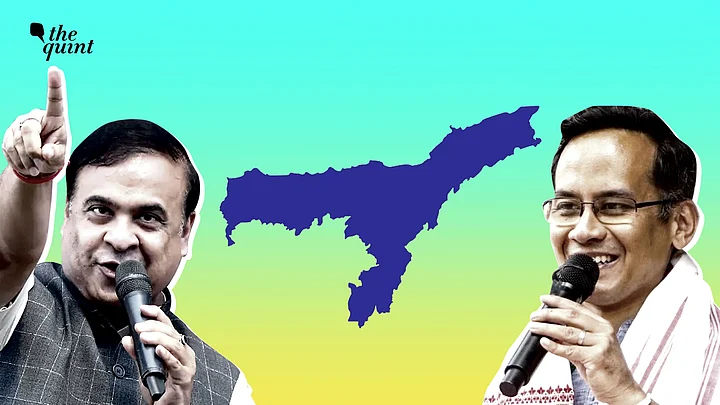
In Upper Assam, the Congress-led alliance is playing the Ahom card and positioning Gaurav Gogoi as the CM face.

Published
story-hero-img
i
Aa
Aa
Small
Aa
Medium
Aa
Large

As the 9 April election in Assam nears, the campaigning is gaining heat with the focus shifting to Upper Assam and North Assam. These two regions have played a crucial role in establishing the rule of the Bharatiya Janata Party (BJP)-led National Democratic Alliance (NDA) in the state.

In the last Assembly poll, the NDA secured 39 seats out of 49 in the region, with the Congress-led Grand Alliance managing only nine seats. The remaining seat was won by Raijor Dal, which contested the election in alliance with the Assam Jatiya Parishad (AJP) as a third front under the United Regional Forum. Raijor Dal is led by Akhil Gogoi and the AJP by Luringjyoti Gogoi—both parties which came out of the anti-Citizenship Amendment Act (CAA) protests.

Compared to the last Assembly election, the political equations have changed in the Upper Assam region consisting of Lakhimpur, Dhemaji, Golaghat, Jorhat, Majuli, Charaideo, Sivasagar, Dibrugarh, and Tinsukia districts.

The region accounts for 35 Assembly seats, an increase of one seat following delimitation.

ADVERTISEMENTREMOVE AD

Changing Equations in Upper Assam

While the BJP-led NDA secured a majority of the seats in the 2021 Assembly election, its winning margin was less than the combined votes of the Congress, Raijor Dal, and the AJP in 10 Assembly seats—Dhemaji, Lakhimpur, Sonari, Mahmora, Amguri, Jorhat, Dergaon, Sadiya, Dhuliajan, and Naharkatia.

Of this, following delimitation, Amguri doesn’t exist with its areas merged into Nazira (currently represented by the Congress's Debrabrata Saikia) and Sivasagar (currently represented by Raijor Dal’s Akhil Gogoi).

However, in  the 2024 Lok Sabha elections, the Congress allied with both Raijor Dal and the AJP.

While the BJP-led NDA led on 25 seats out of 35, cracks were visible, with the ruling alliance trailing in seats like Sonari, Mahmora, Demow, Jorhat, Teok, and Mariani—represented by the NDA—falling under the Jorhat Lok Sabha, where Assam Congress President Gaurav Gogoi was able to defeat the BJP’s Topon Kumar Gogoi. 

Congress Alliance Tests NDA in Upper Assam

Now, the Congress has once again allied Raijor Dal and the AJP under the banner Asom Sanmilito Mancha (ASOM). The alliance is playing the Ahom card by signalling that it aligns with the interests of the community. The three top leaders of the ASOM—Gaurav, Akhil, and Luringjyoti—are Ahoms.

The Opposition alliance is clearly portraying Gaurav as the chief minister face, increasing the challenge for the BJP-led NDA in the region.

The community is concentrated in the region’s six districts—Sivasagar, Jorhat, Charaideo, Golaghat, Dibrugarh, and Tinsukia. These six districts account for 26 seats. There has been dissent within Ahoms against the BJP for not granting the ST status since coming to power in 2016. Last year, the BJP government, led by Himanta Biswa Sarma, announced the creation of a new ST (Valley) for Ahoms and other five indigenous communities.

Sensing the dissent, the Congress has announced granting Ahoms the ST status if it comes to power, making the battle tough for the saffron party in the Ahom-belt.

Despite cracks in its support, the BJP-led NDA still dominates the region. This isn’t the first time that the three Gogois have come together. They came together in the last Lok Sabha elections.

Of the nine Assembly seats where the combined votes of the Congress, Raijor Dal, and the AJP exceeded the BJP-led NDA in 2021, the Congress-led alliance was able to retain the lead only in three seats—Sonari, Mahmora, and Jorhat—in the 2024 elections. The BJP-led NDA was ahead in the remaining six seats—Dhemaji, Lakhimpur, Naharkatia, Dhuliajan, Dergaon, and Sadiya. This shows how 2+2 doesn’t always equal 4 in politics.

Apart from that, this also shows that while Raijor Dal and the AJP do have some influence in the region, they aren't as strong. This time, the Congress has allotted six Assembly seats to Raijor Dal and four to the AJP in Upper Assam.

NDA Holds Edge in North Assam

On the other hand, North Assam consists of four districts—Udalguri, Darrang, Sonitpur, and Biswanath—and accounts for 15 seats. In the last Assembly election, the BJP-led NDA won 11 seats while the Congress-led Grand Alliance secured four.

However, in the last Lok Sabha elections, the BJP-led NDA was ahead in 13 of 15 seats, and the Congress and the Bodoland People’s Front (BPF) led in one each. Now, the Bodo-based BPF has joined the NDA, giving a boost to the bloc. Udalguri, which has three seats, is a Bodo-dominated district.

In this region, the Congress is contesting most of the seats, while leaving three for the allies—two for Raijor Dal and one for the Communist Party of India (Marxist-Lenninist) Liberation. On the other hand, the BJP is contesting 11 seats, leaving three for the BPF and one for Assam Gana Parishad (AGP), the state’s oldest regional party.

Campaign Focus Shifts to Upper Assam

While the BJP-led NDA seems to be less worried about North Assam, it is more worried about Upper Assam. This can be seen in Prime Minister Narendra Modi plucking tea leaves and spending time with tea gardeners in Dibrugarh (Upper Assam) on 1 April, and addressing two election rallies in Dhemaji (Upper Assam) and Biswanath (North Assam) districts.

On 6 April, Modi again visited Upper Assam to address a rally in Dibrugarh district. In this region, it is contesting most of the seats while leaving only three for the AGP.

While the BJP is highlighting various welfare schemes like Orunodoi for women and Nijit Moina Asoni for girl students, alongside its push for infrastructure development, the saffron party is also focusing on Hindutva woven into the Assamese identity. This becomes clear when Modi attacks the Congress for minority (read Muslim) appeasement, ignoring the Assamese identity and culture.

Modi plucking tea leaves is also part of identity politics, with tea tribes having a strong influence in Upper Assam. Himanta’s government, ahead of elections, has increased the daily wages of tea gardeners by Rs 30, taking them to Rs 280, in Brahmaputra Valley. However, there have been demands by tea workers for at least a minimum of Rs 350 as daily wage, which still remains unfulfilled by the BJP government.

ADVERTISEMENTREMOVE AD

The BJP-led NDA is dominant in North Assam, while having the edge in Upper Assam. On the other hand, the Congress-led ASOM is banking on dissent within communities like Ahoms and tea tribes in Upper Assam, where the contest isn’t going to be a cakewalk for the NDA as expected earlier.

The Congress is also likely to gain a section of anti-BJP Hindu Assamese votes this time, as it hasn’t allied with Badruddin Ajmal’s All India United Democratic Front, a party disliked by most Assamese Hindus. The final outcome will only become clear when the election results are declared on 4 May.

(Sagarneel Sinha is a political commentator and tweets @SagarneelSinha. This is an opinion piece and the views expressed above are the author’s own. The Quint neither endorses nor is responsible for them.)

Speaking truth to power requires allies like you.
Become a Member
Monthly
6-Monthly
Annual
Check Member Benefits
×
×