
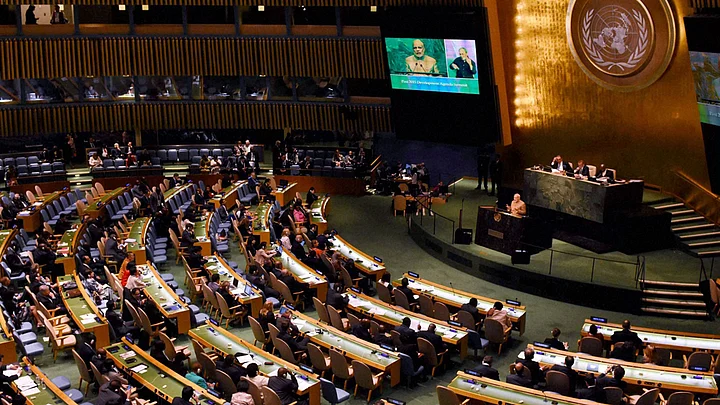
I’ve rarely seen senior diplomats openly angry. But one day in 2006, at the Permanent Mission of India to the United Nations, a senior Indian official could barely keep his fury concealed. The reason was that the then UN Under-Secretary-General Shashi Tharoor had just been announced as India’s candidate for the post of Secretary-General, a race that India’s emissaries to the UN had no idea they were to enter. It was a political decision and one the Foreign Service was taken aback with.
Tharoor, to his credit, secured increasing support from within the ranks of the members of the UN’s Security Council during his campaign, one in which the Permanent Mission of India (PMI) played a significant role, obviously, after having overcome the initial shock. But the greatest challenge he faced and was unable to scale was the resistance from China, predictably, and the United States.
Formally, the argument was that the post was traditionally the domain of smaller nations. It is likely that since Tharoor was seen as the outgoing Secretary General Kofi Annan’s protégé and the Ghanian wasn’t quite liked in Washington, the US decided to use its veto to stymie his chances. Ban Ki-moon, then the Korean Foreign Minister, and described as a “slippery eel” in Seoul, was elected.