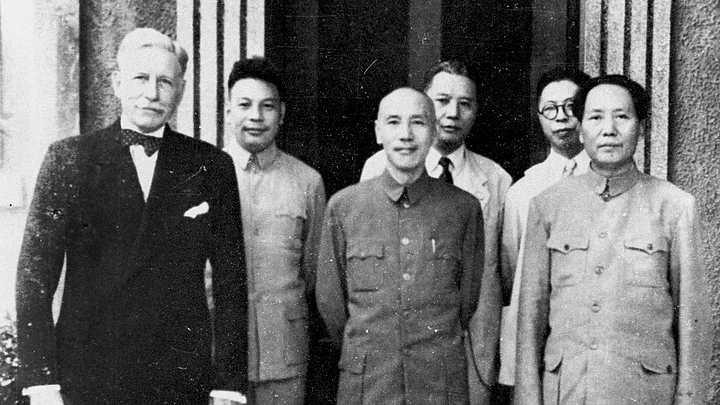
The presidents of China and Taiwan are meeting this weekend for the first time since the Chinese revolution ended in 1949, with the once-bitter Cold War foes testing years of rapidly warming ties.
The meeting, which was announced Wednesday and would have been unthinkable even a decade ago, marks a watershed in relations between Beijing and Taipei, whose enmity had once been feared as a possible flashpoint for another world war.
Chinese President Xi Jinping and his Taiwanese counterpart Ma Ying-jeou will meet on neutral ground in Singapore, whose government maintains friendly ties with both. The talks would be the first between the leaders since Taiwan split from mainland China at the end of the civil war.
Ma is stepping down as president next year after his maximum two terms, and the Democratic Progressive Party’s candidate Tsai Ing-wen is considered the front-runner to replace him.
Ma’s government has come under increasing criticism at home for cozying up to China, amid fears Beijing will eventually leverage economic relations to exert more power over the island.
Xi warned Taiwan in 2013 against putting off political differences from generation to generation. China has long advocated a Hong Kong-style one-country, two-system form of joint rule, in which Beijing controls Taiwan but the island of 23 million retains control of its political, legal and economic affairs.
The two presidents will meet to solidify Taiwan-mainland relations and keep the status quo across the Taiwan Strait. To hold a meeting across the Taiwan Strait is the consistent goal of leaders on both sides.President Ma Ying-jeou’s spokesman
Ma is likely hoping for some reassurance from Xi over the use of force and closer economic ties that could help Nationalist Presidential candidate Eric Chu in the polls, said Hong Kong Chinese politics expert Willy Lam. Xi, for his part, likewise hopes a friendly, non-threatening meeting could give the Nationalists a boost, while showing a Chinese domestic audience that he could be the best bet in decades for achieving unification.
“This could be good for his reputation and a feather in his cap,” said Lam.
While the meeting is meant to showcase the Nationalist’s adeptness at dealing with China, it carries significant risks for the party, said Sean King, senior vice president with the consultancy Park Strategies in New York and a frequent commentator on Asian affairs.