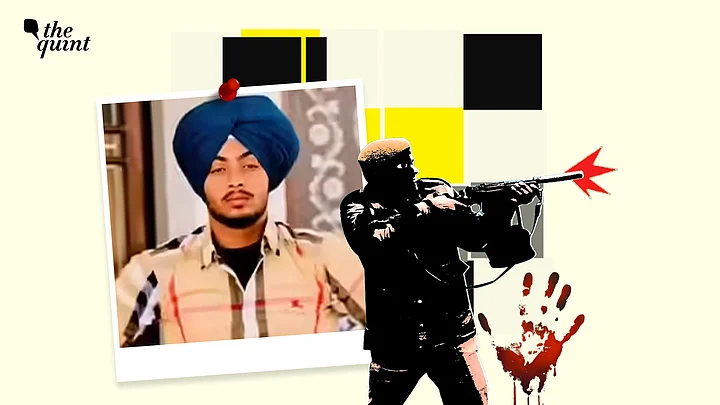
Punjab's Director General of Police (DGP) Gaurav Yadav on Thursday appeared before the Punjab and Haryana High Court after it took suo motu cognisance of the controversial police encounter that claimed the life of 19-year-old Ranjit Singh in Gurdaspur district on 25 February. A division bench of Justices Anupinder Singh Grewal and Deepak Manchanda had directed the DGP to personally appear before it via video conferencing. The court has asked the Punjab Police to file a detailed reply on the sequence of events within two weeks.
In Punjab, the word “encounter” carries a heavy and complicated legacy. During the militancy period of the 1980s and 1990s, extrajudicial killings became a tool of counterinsurgency, leaving a shadow over policing that remains today. The Ranjit Singh case in Gurdaspur, officially described as an exchange of fire, has revived memories of that era.
In the early hours before sunrise, near Purana Shala in Punjab’s Gurdaspur district, gunfire ended the life of 19-year-old Ranjit Singh.
Police described it as a pre-dawn “exchange of fire.” Ranjit, they said, was one of three men involved in the killing of Assistant Sub-Inspector Gurnam Singh and Home Guard Ashok Kumar, who had been shot dead days earlier at a border checkpost. According to the official account, officers had taken Ranjit for a recovery operation when he allegedly opened fire, prompting retaliation.
He was declared dead shortly after.
A third accused, Dilawar Singh, is currently in police custody. Another man, Inderjit Singh, is said to be absconding.
But even as the encounter was presented as a breakthrough, fresh questions began to surface.
“He Was Taken From Home”: Family Disputes Police Version
In Adhian village, Ranjit Singh’s family contests the entire sequence of events presented by the police.
His mother, Sukhwinder Kaur, said, “Police personnel came to our home late on February 24, questioned my son, and took him away, assuring us that he would be brought back. I learned of his death the next day through media reports.”
The family denies that Ranjit had a criminal background and disputes the claim that he fired upon police.
The deceased's relatives have also alleged that CCTV cameras in parts of the village were removed on the same night. According to his uncle, Harwinder Singh, digital video recorders were also taken away.
The family says CCTV footage from their own locality shows unidentified men on motorcycles near the scene of the killings, but not Ranjit.
“We have no proof he was involved,” his mother said, refuting police claims that a weapon was found with him. “He was young, he had no criminal record and he was taken from home.”
Opposition parties and several local voices have echoed the family’s demand for a judicial or independent investigation.
Congress MLA from Bholath, Sukhpal Singh Khaira, who visited the house of Ranjit Singh, strongly questioned the official account of the encounter. He said,"Police have demolished the evidence as they have destroyed the DVR and CCTV footage. Ranjit Singh had no criminal background. The police have just clubbed him with ISI; I consider this story as false and an afterthought. Police is injured through a self-inflicted injury. Punjab has become a police state. I also feel that a CBI enquiry should be done in this case."
The police have not responded to these specific allegations. The claims remain unverified. However, the allegations do strengthen the case for an independent probe.
A Wider Pattern Emerging
The Gurdaspur encounter is not an isolated event. It comes amid a measurable surge in police encounters across the state.
A recent investigation found that between November 2025 and January 2026, Punjab Police reported 34 encounters, about one every three days. Five people were killed and over 45 were injured in that period alone. Nearly 15 incidents occurred within a single month.
The report observed that in several cases, suspects were shot during “recovery” operations.
The Punjab DGP has previously stated that since April 2022, the force has recorded over 300 encounters involving gangsters, leading to multiple deaths and hundreds of arrests. Officials describe this as an "aggressive crackdown on organised crime and narcotics networks".
Yet the sharp spike in a compressed timeframe has drawn attention from civil liberties groups.
Justice Ranjit Singh, Chairman, Punjab Human Rights Organisation, said, "This incident is extremely concerning. I have serious doubts regarding the circumstances surrounding the death of young Ranjit Singh and the police’s claims of an encounter. In a democracy, the police cannot assume the role of judge and executioner. I urge the government and the administration to ensure an immediate and thorough impartial judicial investigation, led by a designated judge or judicial commission. This will not only restore the trust of the family and civil society but also safeguard the fundamental judicial rights of all citizens."
Punjab Police's Response
According to the Punjab Police, Ranjit Singh was one of the accused in the killing of two police personnel and was taken by the police team for the recovery of the weapon allegedly used in the crime. During the recovery operation, he reportedly tried to escape and opened fire at the police team, after which the police retaliated in self-defence, leading to his death.
During the hearing of the matter before the Punjab and Haryana High Court, Punjab DGP Gaurav Yadav, who appeared through video conferencing, informed the court that the action taken by the police was in line with the guidelines laid down by the Supreme Court in the People’s Union for Civil Liberties (PUCL) vs State of Maharashtra (2014) case concerning encounter deaths. The court was told that the procedures mandated in such cases are being followed, including the conduct of a magisterial inquiry and other steps required under the guidelines.
For the family’s allegations regarding the encounter, The Quint also attempted to contact the SSP Gurdaspur for an official response. However, despite attempts to reach the SSP’s office, no response has been received so far.
Punjab’s Long History of Encounters
Punjab’s traumatic relationship with the word “encounter” dates back to the years of militancy in the 1980s and early 1990s. As insurgency spread across the state, particularly in the Majha belt, districts such as Amritsar, Tarn Taran and Gurdaspur. The police were placed on the frontlines of a brutal counter-insurgency campaign. Officers were given sweeping powers. Arrests were frequent, often based on suspicion or intelligence inputs that were rarely made public. In that climate of fear and urgency, “encounters” became a common official explanation for deaths.
For many families, however, the official story did not match their lived reality. Parents and siblings would recount how young men were picked up from their homes or fields, only to vanish without formal arrest records. Days later, police statements would declare that these same individuals had been killed in a gunfight after opening fire on security forces. The repetition of this script - suspects firing first, police retaliating in self-defence, began to sound disturbingly formulaic. It was in this atmosphere that questions slowly turned into documentation. The work of human rights activist Jaswant Singh Khalra proved to be a watershed moment. In the mid-1990s, Khalra uncovered records suggesting that thousands of “unidentified” or “unclaimed” bodies had been cremated by police in Amritsar district alone. He alleged that many of these were victims of illegal detentions and staged encounters. His findings challenged the official narrative that all those killed were hardened militants. Then Khalra himself was abducted in 1995 and later murdered.
The revelations triggered judicial scrutiny. The Supreme Court and the Punjab and Haryana High Court intervened in several cases, directing investigations and, in some instances, handing probes to the Central Bureau of Investigation (CBI). Over time, patterns began to emerge in courtrooms: missing arrest memos, doctored logbooks, identical FIR language, and post-mortem reports that contradicted claims of crossfire. In a number of cases from the early 1990s, courts concluded that the so-called encounters were staged, that the victims had been in custody before being killed and later projected as militants slain in armed exchanges.
Justice, however, came slowly. Many of these cases took more than two decades to reach conclusion. Witnesses aged, some evidence faded, and families fought long legal battles.
Advocate Navkiran Singh, Punjab and Haryana High Court, said, “False encounters are an affront to the legal system. Such short cuts are counter productive and lead to resentment in society. The manner in which the Gurdaspur police has killed a youth in an encounter reminds us of the 1990s when thousands of young boys were killed through such process. It seems the Punjab police in order to cover up its failure to deal with deteriorating law and order situation in Punjab now wants to use extra constitutional methods in hope to maintain law and order in a short time.”
The Ban on Punjab 95 and the Politics of Memory
The continuing sensitivity around this chapter of Punjab’s history is reflected in the controversy surrounding the film Punjab 95. The movie, inspired by the life and work of Jaswant Singh Khalra and the issue of enforced disappearances, has faced prolonged delays and objections over its release.
The debate over the film’s release is therefore not just about cinema it is rather about who gets to narrate Punjab’s past. In a state where memories of militancy, counter-insurgency and alleged fake encounters continue to shape present-day politics, even cultural representations of that period can reopen old wounds.
Law, Scrutiny and the Stakes
In 2014, the Supreme Court of India laid down detailed guidelines in PUCL vs State of Maharashtra to govern investigation for every encounter death: registration of an FIR, independent investigation by a separate agency, a magisterial inquiry, forensic examination, and intimation to human rights bodies.
The credibility of the Gurdaspur encounter, like others before it, will ultimately depend on whether these safeguards are visibly and independently followed.
Punjab’s past stands as a lesson in how quickly such cycles can spiral into prolonged unrest. The state has lived through a period when “encounter” policing blurred the line between enforcement and execution, and the consequences were lasting and painful.
Punjab Police must adhere strictly to the rule of law. Because when those entrusted with upholding the law are seen as breaking it, the cost is immense.
In Punjab, encounters are never just encounters. They are tests of the rule of law.
(Harsimran Kaur is a journalist based in Punjab, reporting on politics and governance.)