
ADVERTISEMENTREMOVE AD

Modi, Rahul & the Road to 2029: What Surveys Tell us and What They Don't

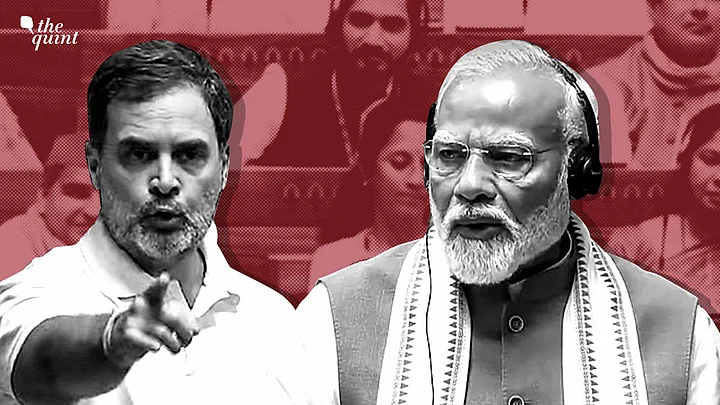
Recent surveys show that a fall in PM Modi's popularity isn't leading to a direct increase for Rahul Gandhi. Why?

Published
story-hero-img
i
Aa
Aa
Small
Aa
Medium
Aa
Large

The recent Mood of the Nation survey by India Today and CVoter brought out an interesting paradox: a decline in Prime Minister Narendra Modi's popularity hasn't led to an equal increase in the appeal for Rahul Gandhi. But the BJP's losses appear to have led to gains for the Congress.

As Prime Minister choice, preference for PM Modi declined from 55 percent to 49 percent between January and August 2026, Rahul Gandhi stayed unchanged at 27 percent. However, seat projection for BJP fell by 24 seats while it increased by 26 for the Congress. The gap between the two parties still remains substantial with the BJP's seat projection at 261 and the Congress at 106.

So why isn't a fall in PM Modi's popularity leading to a corresponding increase in Rahul Gandhi's popularity but a fall in the BJP's numbers are leading to an increase in those of the Congress?

And what does this trend mean in the run-up to the 2029 Lok Sabha elections?

We'll answer these questions in this piece.

ADVERTISEMENTREMOVE AD

The Vijay Factor

The CVoter survey reveals volatility in the ratings of non-BJP, non-Congress leaders as well. Mamata Banerjee, Arvind Kejriwal and Akhilesh Yadav witnessed a decline as PM preferences, while newly elected Tamil Nadu CM Vijay catapulted to number three position with as many as 9 percent people picking him as their PM choice.

Now, Tamil Nadu accounts for about 6 percent of India's population. Even if an overwhelming majority of the respondents from Tamil Nadu picked Vijay as their PM choice, at least part of those who chose him were from other states.

Therefore, Vijay's nine percent may have come from largely two sources: Tamil Nadu voters who had earlier picked Rahul Gandhi or PM Modi, and non-Tamil Nadu voters who may have picked another regional leader like Mamata Banerjee or Arvind Kejriwal.

Before this survey, Rahul Gandhi has consistently polled very good numbers in the PM choice question in Tamil Nadu.

Therefore, it is likely that Rahul Gandhi may have lost some support on the PM question to Vijay in Tamil Nadu, but gained at the expense of both Modi and regional leaders at the national level. These two trends would have cancelled each other out, leading to his remaining at 27 percent.

The Bengal Factor

The BJP's national losses in terms of seat projection are partly being concealed due to its rise in West Bengal. The BJP was projected to win 14 seats in West Bengal in the January 2026 Mood of the Nation survey, it is now projected to win 35, an increase of 21 seats.

The bulk of the INDIA bloc's losses are also coming from the Trinamool Congress in West Bengal.

Since the BJP's overall tally has reduced from 285 to 261 in this period, despite the increase of 21 in Bengal, it must have lost 45 seats in rest of India.

Another significant aspect about the Bengal data is that the breakaway Trinamool faction has proven to be a non-starter. CVoter founder Yashwant Deshmukh said on India Today that only 3 percent voters in Bengal said they plan to vote for the party.

"The Trinamool means Mamata Banerjee, for the voter," Deshmukh said.

ADVERTISEMENTREMOVE AD

BJP Decline in the Hindi Belt

According to the survey, the BJP has lost 10 seats in Uttar Pradesh since January.

CVoter founder Yashwant Deshmukh later commented that a major chunk of the BJP's losses are "coming from the Hindi heartland".

According to him, the UGC regulations are becoming a major issue against the BJP in the Hindi belt.

However, since this has mostly agitated Upper Castes, one of the party's most solid vote banks, it is likely that this section may not necessarily shift when elections actually take place.

This is an interesting aspect to the paradox. A chunk of voters dissatisfied with the BJP come from Upper Castes in the Hindi belt, who may eventually go with the party. And a sizable chunk of voters whose shift is constraining the rise of Rahul Gandhi in the CVoter survey, are supporters of Vijay, a Congress ally. If Congress and Vijay form a pre-poll alliance for the Lok Sabha elections in Tamil Nadu, this vote would also go with the Congress in the end.

Even if there's no pre-poll tie-up between the two parties, Vijay's TVK isn't a factor in rest of India and this rise in support is likely to be restricted to surveys with no electoral implications.

ADVERTISEMENTREMOVE AD

The Main Issues for the People

According to the Mood of the Nation survey, the top three issues for voters are related to the economy: price rise, unemployment and agrarian distress. This goes against the government's claims of rapid economic growth. PM Modi on 1 September put out a video hailing 7.8 percent economic growth for the country. Irrespective of the growth figures, the public perception is one of economic strain. If indeed there is economic growth, it doesn't seem to be reflected in people's livelihoods.

The survey figures are similar to the responses around 2018, when the impact of demonetisation and the Good and Services Tax were being felt acutely and there were farmers' agitations such as in Mandsaur, MP.

Despite the government's claims of economic growth, the people continue to list economic issues like price rise, unemployment and agrarian distress as the main problems. Similar sentiments in 2018 had led to Congress victories in Madhya Pradesh, Rajasthan and Chhattisgarh and a rise in Rahul Gandhi's popularity. Eventually, this was reversed only after the Pulwama Attacks shifted public focus to national security.

ADVERTISEMENTREMOVE AD

What Lies Ahead?

The big picture can be summarised into the following points.

  • There is some reduction in support for PM Modi but it isn't to the extent that the Opposition may have hoped, especially after the Cockroach Janta Party protest. This could partly be due to the fact that portion of the polling sample is from before Dharmendra Pradhan's resignation. However, it is also likely that the CJP protest has mainly led to people in the 18-25 age group turning against the government. It hasn't impacted older voters, who have consistently been Modi's strongest backers. It is also possible that seeing Modi under attack from youngsters could even have led to some sympathy.

  • The graph of the Congress and Rahul Gandhi is on the rise. For once, it is directly capitalising on the BJP's losses in the Hindi heartland. Rahul Gandhi personally seems to be gaining from the decline in popularity of regional leaders with national aspirations such as Arvind Kejriwal and Mamata Banerjee. Despite the CJP movement coming from outside the mainstream political space, Rahul has maintained his position as Modi's main challenger. However, the BJP's organisational advantage and resilience of Brand Modi are major obstacles for him. Gandhi is bound to hit a ceiling unless he actively tries to win over BJP voters.

  • There's a need to watch the non-BJP, non-Congress space as well. Mamata Banerjee and Arvind Kejriwal may have suffered some losses in national appeal after losing their own states, the third space is very much alive. The AAP will again be in focus when Punjab and Goa go to polls early next year. We need to watch out for two other players in this space: CJP and Vijay.

  • CJP has so far restricted its criticism to the BJP and hasn't challenged the Congress. However, eventually the two are bound come into competition in the battle to capture the GenZ's imagination. Another player in this is Vijay, who came to power following a youth surge in Tamil Nadu. It needs to be seen whether Vijay remains content in governing Tamil Nadu or if he has national ambitions as well.

  • Finally, despite the Modi government's claims of economic growth, people's anxieties are largely economic. The government may need to take concrete policy measures to ensure that the benefits of economic growth also reach the people and not just its claims.

Speaking truth to power requires allies like you.
Become a Member
Monthly
6-Monthly
Annual
Check Member Benefits
×
×