
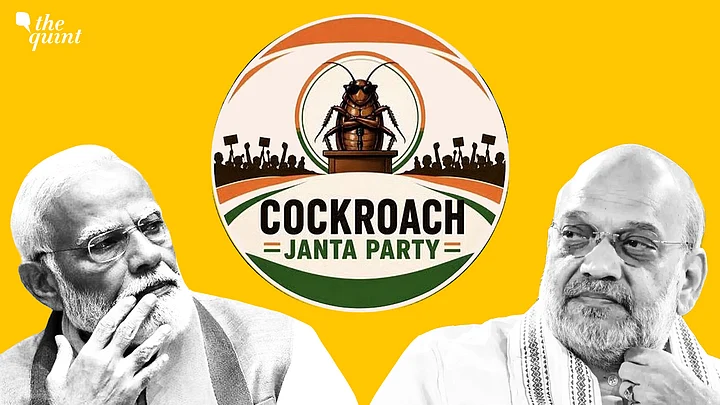
One aspect that stood out during the Cockroach Janta Party (CJP) protest at Jantar Mantar on 6 June, Saturday, was the approach of the Union government, under which the Delhi Police falls. By all accounts, the police were cooperative, all the permissions were duly granted, and there were no major complaints of the police intimidating protesters or preventing people from reaching the protest site.
Does this support the conspiracy theories that the Narendra Modi government is tacitly backing the protests? Not necessarily.
What it shows is that, for now, the Modi government has allowed the protest to happen. This could be for one or more of these three reasons:
To provide a safety valve against public anger on paper leaks.
To send the message that setup in India is democratic and that the government "allows" protests if they abide by certain rules.
To ascertain the strength of the CJP beyond social media.
Their past track record indicates that PM Narendra Modi and Amit Shah take youth-led protests very seriously. One of their biggest concerns has been the prospect of youth-led protests turning into political opposition with electoral consequences. To prevent that from happening, they have followed a diversity of strategies: from brutal crackdowns on one hand to forgiving the worst insults from anyone who later shows the willingness to be co-opted by them.
The BJP's strategy can be broadly broken down into two Cs and two Ds: Crush, Co-opt, Divide and Deligitimise.