(The Quint has consistently desisted from Delhi-centric coverage of Punjab. Instead, our work foregrounds voices and perspectives from Punjab. Power our Punjab coverage by becoming a member.)
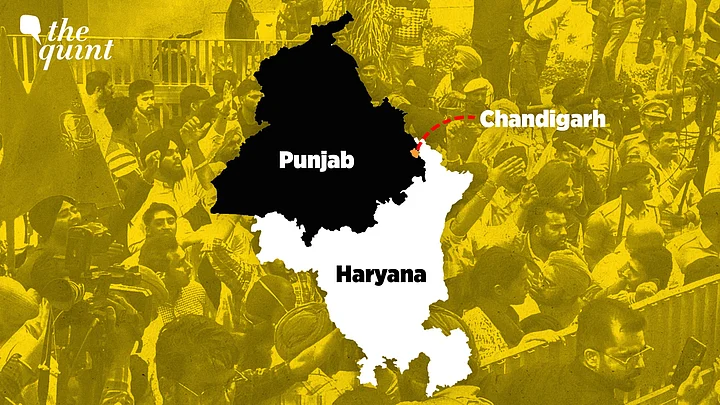
As the Union government’s proposal for the 131st Constitutional Amendment Bill aimed at bringing Chandigarh fully under Article 240 and placing it more firmly under Central control sparked outrage in Punjab, it reopened an old wound. For many Punjabis, the move was not an isolated administrative step but part of a long pattern: a systematic weakening of Punjab’s claim over its own capital. Even though the move was withdrawn, it brought out how Chandigarh remains an emotive issue in Punjab.
Nearly eight decades after Independence, Punjab is still fighting to fully assert its rights over Chandigarh, a city built on its soil, for its people, after it lost Lahore to Pakistan.
Explained: From Nehru to Modi, Why Chandigarh Remains a Wound for Punjab
1. Promises Made Before Independence
In July 1946, at an All India Congress Committee meeting in Calcutta, Jawaharlal Nehru declared that the Sikhs of Punjab were “entitled to special consideration” and that he saw nothing wrong in creating an area in the North where Sikhs could “experience the glow of freedom.”
This was not an isolated remark. Several Congress leaders repeatedly assured Sikh representatives that Sikhs would enjoy greater autonomy and a significant measure of sovereignty in the new India.
However, when Sikh leader Master Tara Singh later reminded Nehru of these assurances after Independence, Nehru’s reply was blunt: “Circumstances have changed.”
Expand2. Sikh Choices at Partition: Between Congress and the Muslim League
Before Partition, Master Tara Singh was a key Sikh leader who engaged with British officials, the Muslim League, and top Congress leadership.
The Muslim League made several attempts to woo Sikh leaders with the idea of a separate Sikh homeland within or adjacent to Pakistan. There are suggestions that Muhammad Ali Jinnah even offered to carve out a Sikh state, sometimes referred to as “Sikhistan.”
Sikh leadership rejected the Muslim League’s overtures because of deep mistrust and the belief that Congress was more secular and democratic. The assurances of protection and autonomy from Nehru and other Congress leaders played a major role in this decision.
These assurances would sharply contrast with the political realities that unfolded after Independence.
Expand3. Building Chandigarh: A Capital for a Partitioned Punjab
After Partition, Punjab lost Lahore, its historic capital, to Pakistan. The Nehru government decided to build a new, modern capital for Indian Punjab: Chandigarh.
Chandigarh was envisioned as a symbol of modern, democratic India. But its construction came at a heavy local cost. Twenty-eight villages in the Puadh region were uprooted to make way for the new city.
Residents resisted, but the project moved forward. Landowners were compensated, but the compensation was low and did not match the loss of land and community.
Expand4. Punjabi Suba Movement and the First Assault on Darbar Sahib
By the mid 1950s, the demand for a Punjabi-speaking state gathered momentum under the Akali Dal. Master Tara Singh and Sant Fateh Singh emerged as central leaders in the Punjabi Suba movement.
On 4 July 1955, the police entered the Darbar Sahib (Golden Temple) complex, lathi charged peaceful protesters, and arrested Akali workers who were staging a sit-in. This became the first assault on Darbar Sahib in independent India.
Akali leaders now found themselves confronting an increasingly centralised Indian state. Nehru, Arya Samaj leaders, and the Jana Sangh opposed the Punjabi Suba demand, fearing it would create a Sikh-majority state and lead to communal tensions.
Expand5. Sant Fateh Singh’s Fast and Unfulfilled Assurances
On 18 December 1960, Sant Fateh Singh began a hunger strike to demand Punjabi Suba and the recognition of Sikh political and linguistic rights.
After negotiations with the central government and assurances from Nehru, he ended his fast on 9 January 1961. Despite the assurances, the demand was left unresolved.
Expand6. Punjab Reorganisation and the Loss of Chandigarh
The Punjab Reorganisation Act came into force on 1 November 1966. Punjab was reorganised on linguistic lines but in a manner that deeply angered Sikh leadership.
Haryana was carved out as a separate state.
Himachal Pradesh became a Union Territory and later a full state.
Several Punjabi-speaking regions were removed from Punjab.
Chandigarh was declared a Union Territory and placed under direct Central control.
Chandigarh was made the shared capital of Punjab and Haryana.
For many Punjabis, this was a second loss of a capital after Lahore.
Expand7. Fasts, Threats of Self-Immolation, and Martyrdom
The discontent did not subside.
On 17 December 1966, Sant Fateh Singh began another fast, demanding that Chandigarh and Punjabi-speaking areas be fully transferred to Punjab. He declared publicly that he would self-immolate on 27 December if the demand was not met.
On the announced day, he called off the plan after receiving new assurances from the Centre. Once again, these assurances were never implemented.
In 1969, Darshan Singh Pheruman, a prominent Akali leader, began a hunger strike on 15 August demanding the transfer of Chandigarh to Punjab. He accused the Centre of betraying Sikh leaders and their sacrifices. Refusing food, water, and medical intervention, he continued his fast for 74 days, ultimately attaining martyrdom.
In his final message, he spoke of truth, honour, sacrifice, and his refusal to accept the erosion of Sikh and Punjabi rights. He is remembered as Shaheed Darshan Singh Pheruman.
Expand8. Anandpur Sahib Resolution and Dharam Yudh Morcha
In 1973, the Akali Dal articulated the need for greater federal autonomy through the Anandpur Sahib Resolution. The status of Chandigarh remained a central point.
When the Akali Dal launched the Dharam Yudh Morcha in 1982, the demand for Chandigarh’s transfer to Punjab remained non negotiable. For Punjab, Chandigarh was both a political symbol and a test of the Centre’s credibility.
Expand9. The Rajiv-Longowal Accord
The closest Punjab came to regaining Chandigarh was in 1985, in the aftermath of the tragic events of 1984.
The Rajiv Longowal Accord proposed that Chandigarh be transferred to Punjab and that Abohar and Fazilka be given to Haryana in exchange.
The proposal faced strong opposition from Haryana leaders, particularly Bhajan Lal. The assassination of Harchand Singh Longowal further derailed the process. The Accord was never implemented.
Expand10. Centralisation in Chandigarh and the Erosion of Punjabi Language
In recent years, several decisions by the Centre have further diluted Punjab’s practical control over Chandigarh.
One major move came in 2022, when the Centre replaced Punjab Service Rules with Central Service Rules for employees in Chandigarh.
Punjabi also began disappearing from the city’s public and administrative spaces.
Punjabi was removed as a compulsory subject in schools.
Punjabi proficiency was dropped as a qualification for many jobs.
Punjabi faded from internal communication.
Administrative forms and documents gradually eliminated Punjabi.
This reflected a broader pattern of removing Punjab and the Punjabi language from Chandigarh.
Expand11. Panjab University and the Struggle for Autonomy
The crisis surrounding Panjab University fits into the same pattern.
When the Centre dissolved the University’s Senate and Syndicate, there was widespread uproar. The move was seen as an attack on the university’s autonomy and an attempt to distance it from Punjab’s influence.
Although the notification was withdrawn, students continued to protest and demand elections, transparency, and autonomy.
Expand12. The 131st Amendment Proposal: A New Flashpoint
The Centre’s recent proposal of the 131st Constitutional Amendment Bill, intended to bring Chandigarh fully under Article 240 and place it under an independent Administrator, intensified the growing discontent in Punjab.
With protests already ongoing, the move was perceived as another step toward distancing Chandigarh from Punjab. Political pressure forced the Centre to state publicly that it would not pursue the amendment for the time being.
Still, for many Punjabis, the pattern of centralisation is becoming increasingly clear.
Recently, thousands of Punjabis responded to a call by the Panjab University Bachao Morcha and broke through the gates of Panjab University. The protests were filled with powerful slogans:
“Mithi Dhun Rabab Di, Punjab University Punjab Di”
“Soohah Phull Gulab Da, Chandigarh Punjab Da”These slogans represented not only political resistance but cultural pride and collective memory. The protesters invoked the sacrifices of Master Tara Singh, Sant Fateh Singh, and Shaheed Darshan Singh Pheruman, linking the present struggle with the long history of contestation over Chandigarh.
After decades, the articulation of Punjab’s rights had returned to the streets with renewed vigour.
Expand13. Haryana’s Attempt to Secure Land in Chandigarh for a Separate Assembly, and Why It Was Stopped
The Union ministry of home affairs (MHA) recently rejected the Haryana government’s proposal to secure land in Chandigarh for constructing its additional assembly building.
This development is significant because it reinforces Punjab’s long-held argument that Chandigarh cannot be further alienated from Punjab or its territorial identity.The issue gained prominence after Union home minister Amit Shah announced in July 2022 that land would be provided to Haryana for a new assembly. In 2023, Chandigarh even agreed in principle to allot a 10-acre plot along Madhya Marg, valued at around ₹640 crore.
Haryana proposed a land swap, offering 12 acres in Saketri, Panchkula, but a detailed survey by the UT administration found the land unsuitable—low-lying, cut by a natural drain, and lacking proper access. The offer was rejected.
During a recent meeting, Amit Shah advised the Haryana chief minister to drop the matter entirely due to the political and legal sensitivity of transferring Chandigarh land. Officials noted that such a deal may violate both the Capital of Punjab (Development and Regulation) Act, 1952, and the Punjab Reorganisation Act, 1966.
The Punjab government also intervened firmly, submitting a memorandum stating that “Chandigarh belongs solely to Punjab and not an inch of land will be allowed to be given to Haryana.”
Currently, Punjab and Haryana continue to share the Vidhan Sabha in the Capitol Complex, a UNESCO World Heritage Site where new construction is restricted, further complicating Haryana’s demands.
From the assurances given before Independence to the unfulfilled promises that followed, from the loss of Lahore to the contentious status of Chandigarh, Punjab’s struggle for its capital has been long and painful.
Successive governments at the Centre, and often in the state, have failed to address the psychological and historical wounds that Punjab has carried since Partition.
For many Punjabis, Chandigarh is more than a city. It is a symbol of promise and betrayal, of aspiration and loss, and of a history whose wounds were never allowed to heal.
(Nishtha Sood holds a degree in Politics and International Relations from SOAS, London, and writes on terrorism laws in India, linguistic movements, and issues of identity. Jagpreet Singh is an activist and social worker based in Chandigarh, known for his work on the ground and his active involvement in Punjab’s protest movements. This is an opinion article and the views expressed above are the author’s own. The Quint neither endorses nor is responsible for them.)
Expand
Promises Made Before Independence
In July 1946, at an All India Congress Committee meeting in Calcutta, Jawaharlal Nehru declared that the Sikhs of Punjab were “entitled to special consideration” and that he saw nothing wrong in creating an area in the North where Sikhs could “experience the glow of freedom.”
This was not an isolated remark. Several Congress leaders repeatedly assured Sikh representatives that Sikhs would enjoy greater autonomy and a significant measure of sovereignty in the new India.
However, when Sikh leader Master Tara Singh later reminded Nehru of these assurances after Independence, Nehru’s reply was blunt: “Circumstances have changed.”
Sikh Choices at Partition: Between Congress and the Muslim League
Before Partition, Master Tara Singh was a key Sikh leader who engaged with British officials, the Muslim League, and top Congress leadership.
The Muslim League made several attempts to woo Sikh leaders with the idea of a separate Sikh homeland within or adjacent to Pakistan. There are suggestions that Muhammad Ali Jinnah even offered to carve out a Sikh state, sometimes referred to as “Sikhistan.”
Sikh leadership rejected the Muslim League’s overtures because of deep mistrust and the belief that Congress was more secular and democratic. The assurances of protection and autonomy from Nehru and other Congress leaders played a major role in this decision.
These assurances would sharply contrast with the political realities that unfolded after Independence.
Building Chandigarh: A Capital for a Partitioned Punjab
After Partition, Punjab lost Lahore, its historic capital, to Pakistan. The Nehru government decided to build a new, modern capital for Indian Punjab: Chandigarh.
Chandigarh was envisioned as a symbol of modern, democratic India. But its construction came at a heavy local cost. Twenty-eight villages in the Puadh region were uprooted to make way for the new city.
Residents resisted, but the project moved forward. Landowners were compensated, but the compensation was low and did not match the loss of land and community.
Punjabi Suba Movement and the First Assault on Darbar Sahib
By the mid 1950s, the demand for a Punjabi-speaking state gathered momentum under the Akali Dal. Master Tara Singh and Sant Fateh Singh emerged as central leaders in the Punjabi Suba movement.
On 4 July 1955, the police entered the Darbar Sahib (Golden Temple) complex, lathi charged peaceful protesters, and arrested Akali workers who were staging a sit-in. This became the first assault on Darbar Sahib in independent India.
Akali leaders now found themselves confronting an increasingly centralised Indian state. Nehru, Arya Samaj leaders, and the Jana Sangh opposed the Punjabi Suba demand, fearing it would create a Sikh-majority state and lead to communal tensions.
Sant Fateh Singh’s Fast and Unfulfilled Assurances
On 18 December 1960, Sant Fateh Singh began a hunger strike to demand Punjabi Suba and the recognition of Sikh political and linguistic rights.
After negotiations with the central government and assurances from Nehru, he ended his fast on 9 January 1961. Despite the assurances, the demand was left unresolved.
Punjab Reorganisation and the Loss of Chandigarh
The Punjab Reorganisation Act came into force on 1 November 1966. Punjab was reorganised on linguistic lines but in a manner that deeply angered Sikh leadership.
Haryana was carved out as a separate state.
Himachal Pradesh became a Union Territory and later a full state.
Several Punjabi-speaking regions were removed from Punjab.
Chandigarh was declared a Union Territory and placed under direct Central control.
Chandigarh was made the shared capital of Punjab and Haryana.
For many Punjabis, this was a second loss of a capital after Lahore.
Fasts, Threats of Self-Immolation, and Martyrdom
The discontent did not subside.
On 17 December 1966, Sant Fateh Singh began another fast, demanding that Chandigarh and Punjabi-speaking areas be fully transferred to Punjab. He declared publicly that he would self-immolate on 27 December if the demand was not met.
On the announced day, he called off the plan after receiving new assurances from the Centre. Once again, these assurances were never implemented.
In 1969, Darshan Singh Pheruman, a prominent Akali leader, began a hunger strike on 15 August demanding the transfer of Chandigarh to Punjab. He accused the Centre of betraying Sikh leaders and their sacrifices. Refusing food, water, and medical intervention, he continued his fast for 74 days, ultimately attaining martyrdom.
In his final message, he spoke of truth, honour, sacrifice, and his refusal to accept the erosion of Sikh and Punjabi rights. He is remembered as Shaheed Darshan Singh Pheruman.
Anandpur Sahib Resolution and Dharam Yudh Morcha
In 1973, the Akali Dal articulated the need for greater federal autonomy through the Anandpur Sahib Resolution. The status of Chandigarh remained a central point.
When the Akali Dal launched the Dharam Yudh Morcha in 1982, the demand for Chandigarh’s transfer to Punjab remained non negotiable. For Punjab, Chandigarh was both a political symbol and a test of the Centre’s credibility.
The Rajiv-Longowal Accord
The closest Punjab came to regaining Chandigarh was in 1985, in the aftermath of the tragic events of 1984.
The Rajiv Longowal Accord proposed that Chandigarh be transferred to Punjab and that Abohar and Fazilka be given to Haryana in exchange.
The proposal faced strong opposition from Haryana leaders, particularly Bhajan Lal. The assassination of Harchand Singh Longowal further derailed the process. The Accord was never implemented.
Centralisation in Chandigarh and the Erosion of Punjabi Language
In recent years, several decisions by the Centre have further diluted Punjab’s practical control over Chandigarh.
One major move came in 2022, when the Centre replaced Punjab Service Rules with Central Service Rules for employees in Chandigarh.
Punjabi also began disappearing from the city’s public and administrative spaces.
Punjabi was removed as a compulsory subject in schools.
Punjabi proficiency was dropped as a qualification for many jobs.
Punjabi faded from internal communication.
Administrative forms and documents gradually eliminated Punjabi.
This reflected a broader pattern of removing Punjab and the Punjabi language from Chandigarh.
Panjab University and the Struggle for Autonomy
The crisis surrounding Panjab University fits into the same pattern.
When the Centre dissolved the University’s Senate and Syndicate, there was widespread uproar. The move was seen as an attack on the university’s autonomy and an attempt to distance it from Punjab’s influence.
Although the notification was withdrawn, students continued to protest and demand elections, transparency, and autonomy.
The 131st Amendment Proposal: A New Flashpoint
The Centre’s recent proposal of the 131st Constitutional Amendment Bill, intended to bring Chandigarh fully under Article 240 and place it under an independent Administrator, intensified the growing discontent in Punjab.
With protests already ongoing, the move was perceived as another step toward distancing Chandigarh from Punjab. Political pressure forced the Centre to state publicly that it would not pursue the amendment for the time being.
Still, for many Punjabis, the pattern of centralisation is becoming increasingly clear.
Recently, thousands of Punjabis responded to a call by the Panjab University Bachao Morcha and broke through the gates of Panjab University. The protests were filled with powerful slogans:
“Mithi Dhun Rabab Di, Punjab University Punjab Di”
“Soohah Phull Gulab Da, Chandigarh Punjab Da”
These slogans represented not only political resistance but cultural pride and collective memory. The protesters invoked the sacrifices of Master Tara Singh, Sant Fateh Singh, and Shaheed Darshan Singh Pheruman, linking the present struggle with the long history of contestation over Chandigarh.
After decades, the articulation of Punjab’s rights had returned to the streets with renewed vigour.
Haryana’s Attempt to Secure Land in Chandigarh for a Separate Assembly, and Why It Was Stopped
The Union ministry of home affairs (MHA) recently rejected the Haryana government’s proposal to secure land in Chandigarh for constructing its additional assembly building.
This development is significant because it reinforces Punjab’s long-held argument that Chandigarh cannot be further alienated from Punjab or its territorial identity.
The issue gained prominence after Union home minister Amit Shah announced in July 2022 that land would be provided to Haryana for a new assembly. In 2023, Chandigarh even agreed in principle to allot a 10-acre plot along Madhya Marg, valued at around ₹640 crore.
Haryana proposed a land swap, offering 12 acres in Saketri, Panchkula, but a detailed survey by the UT administration found the land unsuitable—low-lying, cut by a natural drain, and lacking proper access. The offer was rejected.
During a recent meeting, Amit Shah advised the Haryana chief minister to drop the matter entirely due to the political and legal sensitivity of transferring Chandigarh land. Officials noted that such a deal may violate both the Capital of Punjab (Development and Regulation) Act, 1952, and the Punjab Reorganisation Act, 1966.
The Punjab government also intervened firmly, submitting a memorandum stating that “Chandigarh belongs solely to Punjab and not an inch of land will be allowed to be given to Haryana.”
Currently, Punjab and Haryana continue to share the Vidhan Sabha in the Capitol Complex, a UNESCO World Heritage Site where new construction is restricted, further complicating Haryana’s demands.
From the assurances given before Independence to the unfulfilled promises that followed, from the loss of Lahore to the contentious status of Chandigarh, Punjab’s struggle for its capital has been long and painful.
Successive governments at the Centre, and often in the state, have failed to address the psychological and historical wounds that Punjab has carried since Partition.
For many Punjabis, Chandigarh is more than a city. It is a symbol of promise and betrayal, of aspiration and loss, and of a history whose wounds were never allowed to heal.
(Nishtha Sood holds a degree in Politics and International Relations from SOAS, London, and writes on terrorism laws in India, linguistic movements, and issues of identity. Jagpreet Singh is an activist and social worker based in Chandigarh, known for his work on the ground and his active involvement in Punjab’s protest movements. This is an opinion article and the views expressed above are the author’s own. The Quint neither endorses nor is responsible for them.)