
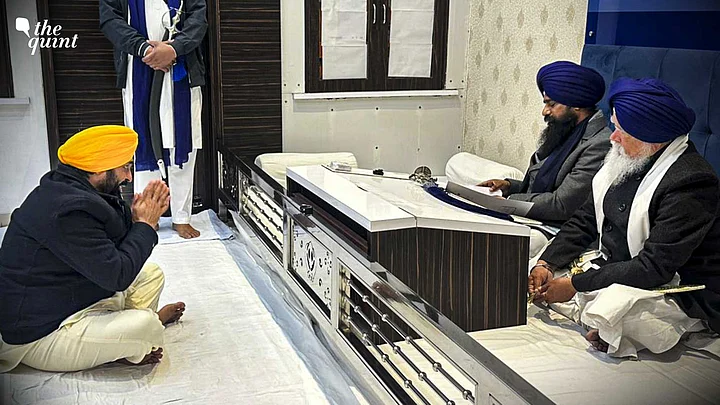
When Punjab Chief Minister Bhagwant Mann appeared before Sri Akal Takht Sahib on 15 January, the moment was less about personal faith and more about institutional authority. At a time when political legitimacy is increasingly defined by electoral mandates and executive control, the episode reopened an older, Punjab-specific question: who gets to hold elected power morally accountable?
The Akal Takht is not a constitutional body. It cannot overturn elections, dismiss governments, or impose legal penalties. Yet, for over four centuries, it has functioned as a parallel moral institution: one that political leaders across parties and eras have found difficult to ignore.
Mann’s appearance, following a summons linked to remarks and governance-related conduct, sparked predictable political reactions and social media debate. Some described it as religious overreach; others viewed it as a legitimate assertion of moral authority. In Punjab, political power has long existed alongside institutional moral scrutiny rooted in Sikh tradition, and the relationship between the two has never been simple.