
"We must give death a chance. We can’t keep cheating it."Dr Nagesh Simha, Medical Director, Karunashraya Hospice, Bengaluru
The Supreme Court's landmark ruling permitting the withdrawal of life support for a patient in a vegetative state for the past 13 years has been widely hailed by the medical fraternity.
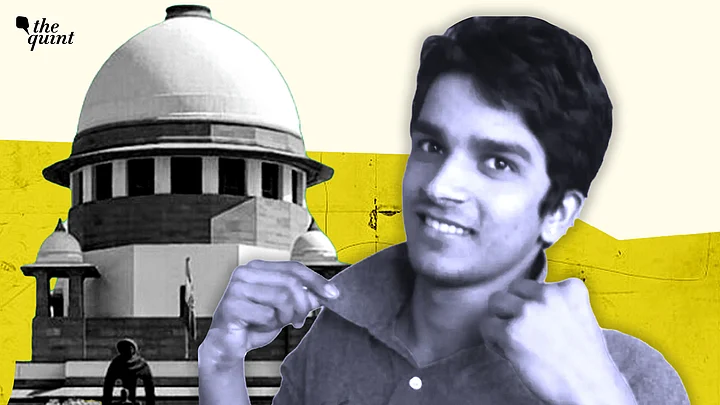
In accordance with its 2018 Common Cause judgment, which recognised an individual's right to die with dignity, the top court on 11 March 2026 allowed the removal of 32-year-old Harish Rana’s life support, noting that his life was being artificially prolonged by way of clinically administered nutrition and hydration (CANH) administered through surgically installed PEG tubes.
Calling it an “enlightened judgment”, Dr Nagesh Simha said that "while we can fight till there is hope, a point may come, sometimes, when one must allow nature to take its course.”
The bench comprising Justices JB Pardiwala and KV Viswanathan said the continuation of treatment was simply prolonging Harish’s biological existence without any therapeutic improvement.
Permitting the withdrawal of life support, the court directed Harish’s transfer to All India Institute of Medical Science (AIIMS)'s palliative care department where he will be looked after from now on.
The top court’s ruling on designating CANH as a medical treatment paves the way for many who are in similarly placed medical states. At the same time, the Harish Rana case is a culmination of the legal journey of the debate over withdrawal of life support for terminally ill patients. Although the court has given rulings and observations on this issue in Gian Kaur, Aruna Shanbaug, and two Common Cause judgments—in 2018 when it allowed withdrawal of life support and ‘living wills’; and in 2023 when it simplified the legal process—the judgment essentially is the first implementation of the guidelines.
“We approached the [Supreme] Court once we recognised that our son (Harish)'s condition was irreversible and incurable,” Harish's father Ashok Rana told The Quint. Recalling the top court’s 2018 Common Cause judgment, he said, “We wanted these guidelines to be applied to our son's case as well.”
“Today, the Supreme Court has done exactly that,” Ashok added.
'Decision Comes From Love, Not Logic'
The Supreme Court’s decision on Harish Rana’s plea comes almost two months since it reserved its judgment. During the hearings, and while dictating the order, the bench was cognisant and sensitive to the issue it was ruling on.
“God asks no man whether he will accept life. That is not the choice. You must take it. The only choice is how,” Justice Pardiwala said, quoting Henry Ward Beecher. The judge said the 19th century American social reformer’s quote “assumes great significance in the present case, more particularly when the courts are asked to give their decision on the question whether an individual can choose to accept life by preferring to die.”
“The famous Shakespearean dilemma of ‘to be or not to be’, which had so far remained a literary quote, is now being used for judicial interpretation to canvass the liberty to die.”Justice JB Pardiwala
“Our decision today does not neatly fit in logic and reason alone; it sits in a space of love, loss, medicine and mercy. This decision is not about choosing death, but rather one of not artificially prolonging life,” he said as he dictated the order in open court.
In a concurring opinion, Justice Viswanathan said the “best interest of the patient is the only interest to be considered.” He explained that this becomes crucial, especially when patients are unable to speak for themselves.
Taking a humane approach, the court acknowledged that the family had already waited 13 years and waived the mandatory 30-day waiting period in such cases.
Advocate Rashmi Nandakumar, who represented the Rana family, was visibly emotional as the verdict was being read out in court. “Professionally, this judgment is a reminder of the humane role courts play when it comes to dignity,” she told The Quint.
“What truly stands out for me is the sensitivity that the Supreme Court has shown in affirming that the law must always respond to suffering with compassion,” she added. “Personally, it reinforces my belief that dignity is at the heart of all values. The judgment also acknowledges the pain and courage of Harish's family, who have cared for him for over a decade. I hope it will offer clarity and solace to other families facing similar circumstances.”
Who is Harish Rana?
In 2013, Harish Rana—then 20 years of age— was “a young, bright boy” pursuing BTech from Punjab University when he met with a “tragic life-altering accident after a fall from the fourth floor of his paying guest accommodation.”
Harish’s brain injury left him in a persistent vegetative state with 100 percent quadriplegia.
Since 2024, Harish, through his parents, moved constitutional courts—the Delhi High Court and later the Supreme Court, seeking withdrawal of life support. The Delhi High Court in July 2024 denied him relief after observing that Harish “was not being kept alive mechanically and that he was able to sustain himself without any extra or external medical aid.”
Challenging the high court order, Harish moved the Supreme Court, which also denied him his petition, and resolved the matter by ensuring that the Uttar Pradesh government would provide adequate care and necessary treatment.
A year later, in November 2025, Harish moved the Supreme Court again when there was no improvement in his condition. In his plea, Harish said his condition is “irreversible and incurable”.
The petition said that since his accident, Harish has been “entirely bed-ridden” and underwent numerous hospitalisations for various complications arising out of his condition. He is “unable to carry out any bodily functions on his own; he is catheterised and diapered”, and has to be artificially fed through surgically inserted tubes that need frequent replacement.
Although he receives the “most attentive nursing care from his mother”, he develops bedsores which sometimes bleed and are unavoidable. Since his hands involuntarily jerk, he is bound to prevent him from accidentally taking out the tubes.
“He receives multiple medications, including anti-seizure drugs, on a regular basis. He exhibits no evidence or awareness of his surroundings,” the plea, filed by advocate Nandakumar, read.
The top court took note of the petition, and the medical reports which show no improvement in his condition.
Euthanasia Not Same as Withdrawal of Life Support
At this point it is important to clarify the difference between euthanasia and withdrawal of life support.
Euthanasia simply means “active killing”, Dr Simha said. Euthanasia, in legal parlance, is also recognised as of two distinct types: active and passive, where death is caused by the administration of a lethal injection or drugs.
Active euthanasia—which also includes physician-assisted suicide—is the act of killing a patient by way of physician-supplied drugs, while passive euthanasia involves the withdrawal of life-sustaining treatment.
However, Dr Simha said, “Passive euthanasia is an archaic definition that must be consigned to the dustbin of history.”
“Withdrawal of life support is a compassionate decision to end suffering and done under medical supervision,” he added.
While active euthanasia is illegal in India, the top court in its 2018 Common Cause judgment allowed passive euthanasia—or more appropriately "withdrawal of life support" under strict conditions.
Harish’s father Ashok said the Supreme Court’s judgment “emphasised that this order was not to be characterised as 'active euthanasia' in any way”.
He stressed that in Harish’s case, the “life-sustaining treatment that he currently receives in the form of PEG tubes will be withdrawn, and he will be provided with appropriate palliative and comfort care as nature takes its course.”
"As you can imagine, this is a very difficult decision for us as a family, but we want to do what is in Harish's best interests."Ashok Rana
The Aruna Shanbaug Dilemma
Harish’s medical condition is somewhat like that of Aruna Shanbaug, a nurse at the Mumbai-based King Edward Memorial Hospital, who survived a brutal sexual assault on 27 November 1973.
The assailant wrapped a dog chain on her neck and sodomised her. A cleaner found Shanbaug lying in her blood the next day. By then, her brain was already deprived of oxygen for many hours because of the strangulation. Despite treatment, Shanbaug was left in a permanent vegetative state. Though Shanbaug was not hooked onto any machine, she was kept alive by feeding her mashed food.
“Aruna cannot be said to be a living person, and it is only on account of mashed food which is put into her mouth that there is a facade of life which is totally devoid of any human element,” journalist Pinki Virani submitted in her 2009 plea seeking permission to “stop feeding” Shanbaug and “let her die peacefully.”
In 2011, the court allowed the withdrawal of life support, but did not extend its decision to Shanbaug, arguing that the nursing staff at the hospital who were looking after her for close to 40 years were her real next of friends, and not Virani, who had only visited her on a few occasions and written a book about the brutal assault.
'Right Thing to Do'
If the Aruna Shanbaug case was a foothold on issues of withdrawal of life support, the Harish Rana case has thrown it wide open. The medical fraternity said the Supreme Court’s decision was the “right thing to do”.
"His life was not being prolonged, rather his death was being delayed. Just because his heart was beating and he was breathing, does not mean he was alive. This was vegetative existence without any hope of recovery. It does not make any sense and the sooner such life ends, the better it is for all parties concerned,” Mumbai-based physician Dr Surendra Dhelia told The Quint.
Dr Dhelia is the Joint Honorary Secretary of the Society for the Right to Die with Dignity and has been long advocating the legalisation of euthanasia for years. Now that passive euthanasia and advance medical directives or “living wills” are legal, it’s time to legalise ‘voluntary euthanasia’ for those who are terminally ill without any hope of recovery, he added.
Dr Simha, a prominent member of the palliative care community, said he welcomed the top court’s directive to the government to enact a law on withdrawal of life support because people should not “suffer unnecessarily”.
However, he added that this is “low priority” for the government since it is “hesitant to bring in a law on this issue because people assume it is taking away one’s life.”
A law, however, would strengthen the hands of those involved in palliative and end of life care, he explained.
Dr Dhelia concurred, adding that proper laws are needed with appropriate safeguards to prevent its misuse.
