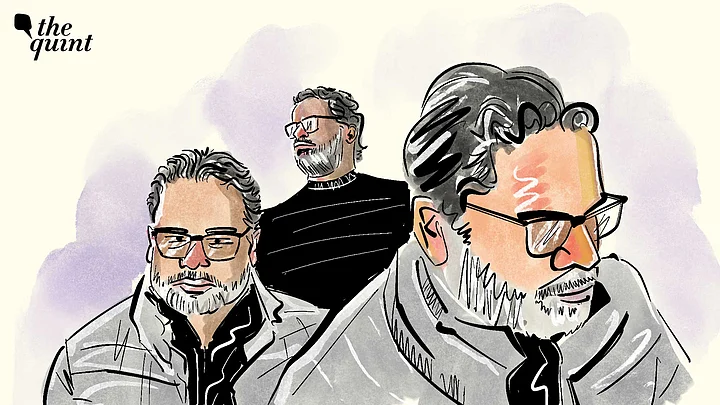
After a disappointing start to his political journey in Bihar in 2025, Prashant Kishor—who had been struggling to find his footing—was handed a vital lifeline by the by-election for the high-profile Bankipur Assembly seat in Patna. This victory provides him with the stability needed to remain in the state and strengthen his party over the next four years.
Prashant Kishor secured 64,117 votes, defeating Bharatiya Janata Party (BJP) leader Neeraj Kumar by a margin of 19,324 votes. While the victory margin may not be massive, the result is historic because Kishor triumphed in a constituency held by the BJP for at least two and a half decades.
This win is particularly significant for him given that, in the assembly elections held just last year, his candidate Vandana Kumari had garnered only 7,717 votes—a mere five percent of the total votes cast.
Advantage PK
A look at electoral history reveals that Kishor’s victory echoes the outcomes of the 1967, 1985, and 1990 elections. In 1967, Chief Minister Krishna Ballabh Sahay was defeated in this constituency by Mahamaya Prasad Sinha of the Jan Kranti Dal, a relatively obscure party at the time. Similarly, in the 1985 and 1990 elections, independent candidate Ramanand Yadav secured victory by defeating the established traditional parties.
Voting for this constituency, which has an electorate of approximately 3.79 lakh, took place on 30 July; the voter turnout was 34 percent—the lowest recorded in the area over the past two or three decades.
Clashes between BJP and Jan Suraaj Party workers at more than half a dozen polling booths on election day had already signalled that the primary contest was between Prashant Kishor and the BJP—and that is precisely how it played out.
When vote counting began on the morning of 3 August, Kishor established a lead over his closest rival, BJP candidate Neeraj Kumar, right from the first round—a lead he maintained until the very end.
But the question remains: what did the Jan Suraaj Party—which had lost the security deposits of over 90 percent of its candidates in October-November of last year—do to trigger such a surge in its support base?
The answer to this question lies within Prashant Kishor’s election campaign itself.
In fact, preparations to contest this seat had been underway since the time Nitin Nabin became the party's national president and his move to the Rajya Sabha was considered a certainty. To ensure victory, the party adopted a micro-level election management strategy and deployed over two hundred workers into the campaign.
Meanwhile, the BJP got off to a weak start. Initially, the party named Abhishek Bunty as its candidate. He even filed his nomination, but the BJP later withdrew the ticket and fielded Neeraj Kumar instead. It is reported that the names of Abhishek’s parents had appeared in the infamous Fodder Scam, which is why the BJP revoked his ticket. This incident put the BJP on the back foot, as the party had no defence to offer.
The Samrat Factor
On the other hand, Prashant Kishor used this to his advantage in his campaign, claiming that the BJP could not find a suitable candidate to challenge him. He also cited a remark allegedly made by BJP leaders—that even if the party gave a ticket to a dog or a cat, it would still win. The BJP, however, denied that any of its leaders had made such a statement.
Additionally, the 'Samrat factor' is being viewed as a major contributing factor. Throughout the campaign, Prashant Kishor relentlessly targeted CM Samrat Chaudhary.
He repeatedly asserted that a BJP defeat in the Bankipur election would effectively serve as a public verdict against Samrat Chaudhary, potentially leading the BJP to replace the Chief Minister. Kishor’s strategy was to win over upper-caste voters who were disgruntled with the BJP following the alleged encounter of Bharat Tiwari. It appears that this strategy has yielded results on the ground.
A former Rashtriya Janata Dal (RJD) MLA, who was overseeing a ward within the Patna Municipal Corporation area, said,
"While we were working in the ward, we realised that Prashant's candidacy was strong. A section of the 'Savarna' (upper-caste) community had already started building momentum in his favour."
Political analyst Prof. Pushpendra observes that Prashant Kishor successfully wooed a faction of the upper castes by framing the BJP's defeat in the Bankipur election—specifically citing the 'Bharat Tiwari encounter'—as a public mandate against Samrat Chaudhary. He added, "Prashant Kishor's victory was a foregone conclusion; I would have been surprised had he not won."
Fracture in the RJD Vote Bank
Meanwhile, a significant section of Muslim and Yadav voters also cast their ballots for Prashant Kishor. Political aspirations among Muslims have risen, prompting them to explore political alternatives beyond the RJD. Simultaneously, there was resentment among Yadavs towards Samrat Chaudhary due to the killings of Yadavs in police encounters and his derogatory remarks regarding the 'green scarf' (a symbol often associated with the community).
Another leader involved in the RJD's campaign remarked, "This seat is not an RJD stronghold, nor does the party have a robust organisational presence here. Consequently, Yadavs held no expectations from the party and turned towards Prashant Kishor instead."
With both upper castes and Yadavs rallying behind Prashant Kishor, the Backward Class and Dalit populations followed suit, enabling 'PK' to script his victory.
Another political analyst, Mahendra Suman, said, "In fact, the Rashtriya Janata Dal failed to capitalise on the intense resentment prevailing among the 'upper castes' and Yadavs against the BJP—and specifically against Samrat Chaudhary. It was Prashant Kishor who leveraged this sentiment."
Furthermore, the partner parties of the INDIA alliance did not put in much effort during this by-election. One faction of the Congress quietly supported Prashant Kishor, while the CPI (ML) remained preoccupied with the Gen-Z movement.
After receiving his certificate of victory, Prashant Kishor stated that this win was a testament to the trust placed in him by the people of Bankipur. He noted that the public had shown faith in the politics of change, thereby increasing his responsibility. He pledged to make every effort to live up to the expectations of the people of Bankipur.
Meanwhile, Samrat Chaudhary said, "The people have chosen Jan Suraaj in the Bankipur Assembly by-election. Respecting the public's decision, I extend my heartfelt congratulations to Prashant Kishor on his victory."
Amidst all this, the final question remains: how should this mandate be viewed at the state level, and what message does it hold for other parties?
Mahendra Suman observes, "This result is unlikely to have any far-reaching political impact; however, it certainly serves as a 'wake-up call' for both the RJD and the BJP."
Former RJD MLA Bharat Mandal remarked, "This will teach a lesson to political parties. We firmly believe that the RJD now needs to place itself at the forefront of mass movements. We must take to the streets to fight for the rights and reservation of the poor, Dalits, and backward classes."
(Umesh Kumar Ray is an independent journalist covering news and politics from Patna, Bihar.)