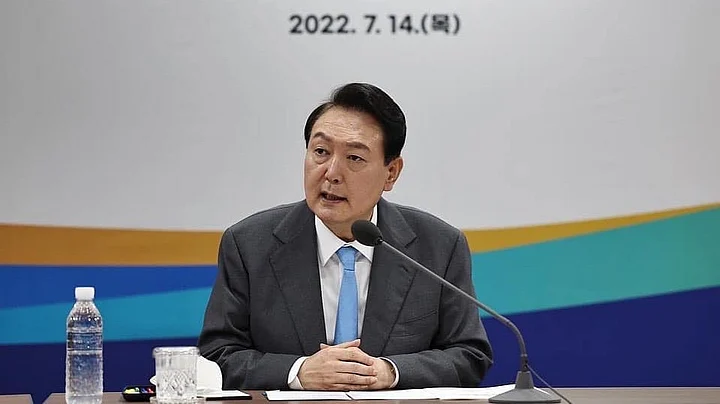
Former South Korean president Yoon Suk Yeol has been sentenced to 30 years in prison by the Seoul Central District Court for sending drones into North Korea in October 2024. The court found Yoon guilty of abuse of power and aiding the enemy, determining that he conspired in the drone operation, which prosecutors argued was intended to create a pretext for his failed martial law declaration later that year. Yoon, already serving a life sentence for insurrection, has denied any wrongdoing and is expected to appeal the latest verdict.
According to The Guardian, prosecutors maintained that Yoon’s drone operation was designed to fabricate wartime conditions and escalate tensions with North Korea. The court concluded that Yoon’s actions undermined state security and contributed to the leak of classified information after some drones crashed. The sentencing adds to a series of judgments against Yoon, who was removed from office following his impeachment and a snap election.
As reported by Deutsche Welle, Yoon’s legal troubles began after his short-lived martial law declaration in December 2024, which led to his impeachment and subsequent removal from office in April 2025. The court found that Yoon’s attempt to declare martial law was intended to paralyse the National Assembly, and he was previously sentenced to life imprisonment for leading an insurrection and undermining the constitution.
Further details emerged as coverage revealed that Yoon’s former defence minister Kim Yong-hyun, former head of the Defense Counterintelligence Command Yeo In-hyung, and former head of Drone Operations Commands Kim Yong-dae were also convicted. Kim Yong-hyun received a 30-year sentence, Yeo In-hyung was sentenced to 15 years, and Kim Yong-dae received a three-year sentence with a five-year suspended term. The court stated, “The defendants used the guise of a military operation to induce provocations from North Korea with the aim of creating a state of emergency.”
“The defendants used the guise of a military operation to induce provocations from North Korea with the aim of creating a state of emergency,” the court said.
Yoon’s lawyers argued in subsequent statements that the drone flights were a legitimate response to North Korean provocations, specifically referencing the North’s use of balloons filled with rubbish sent across the border. However, the court determined that Yoon bore the greatest responsibility for escalating the situation and increasing the risk of military conflict between the two Koreas.
Drone flights have remained a flashpoint in inter-Korean relations as analysis showed, with both countries accusing each other of provocative actions. The October 2024 incident involved drones allegedly dropping propaganda leaflets over Pyongyang, which North Korea described as a serious provocation. Despite heightened tensions, the incident did not result in direct military clashes.
Yoon’s removal from office and subsequent convictions have led to significant political changes in South Korea as reporting indicated. The snap election following his impeachment resulted in a victory for opposition leader Lee Jae Myung, who has since expressed regret over the drone operations and called for improved inter-Korean relations.
Yoon’s lawyers stated, “He neither ordered nor later approved the operation, which they said was unrelated to martial law and instead a response to months of North Korean launches across the border of balloons stuffed with rubbish.”
The court’s decision marks a significant chapter in South Korea’s recent political history as details emerged, with Yoon’s case highlighting the ongoing volatility in inter-Korean relations and the domestic consequences of executive overreach. Yoon remains in custody and retains the right to appeal the latest ruling.
Note: This article is produced using AI-assisted tools and is based on publicly available information. It has been reviewed by The Quint's editorial team before publishing.