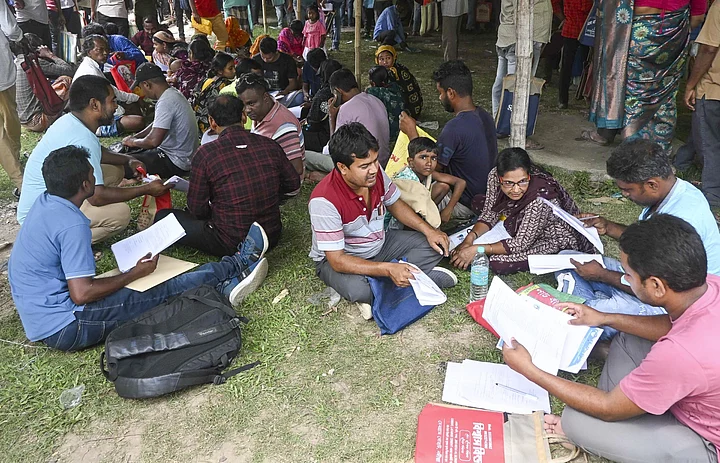
The Special Intensive Revision (SIR) of electoral rolls in West Bengal resulted in the deletion of millions of voter names ahead of the 2026 assembly elections. The process, which involved judicial scrutiny and subsequent appeals, has drawn attention due to the scale of deletions and the demographic patterns observed in certain constituencies. The Election Commission’s procedures and the functioning of appellate tribunals remain under close scrutiny as the state prepares for polling in two phases.
According to Hindustan Times, approximately 45% of the six million voters flagged under the “logical discrepancy” category during the SIR are likely to be deleted after adjudication. This equates to around 2.7 million names being removed from the rolls, with the process affecting districts such as Murshidabad and Malda most significantly. The electoral roll published on 28 February 2026 listed 70.46 million voters, following the deletion of 6.18 million names during the SIR.
As highlighted by Live Law, the Supreme Court declined to permit interim inclusion of voters whose names were deleted and whose appeals are pending. The Court emphasised that the appellate process must follow due procedure and cannot be expedited solely because individuals appeared in earlier rolls. The bench noted, “We cannot on that contemplation allow some people because they were earlier mapped.”
Analysis showed that in Nandigram, 95.5% of voters removed after the SIR were Muslims, despite Muslims constituting about 25% of the local population. This pattern was consistent across several supplementary lists, with non-Muslims accounting for only 4.5% of deletions. The Election Commission has not issued a public statement regarding the religious composition of these deletions.
Officials responded quickly in cases where urgent appeals were raised. For example, Congress candidate Md Mottakin Alam was reinstated to the voters’ list by an appellate tribunal just hours before the nomination deadline, following a Supreme Court directive. A similar order was issued for Congress candidate Mohtab Sheikh in Farakka, reflecting the ongoing legal recourse available to affected individuals.
“Voters whose names have been deleted after adjudication can appeal before the Supreme Court-appointed tribunals. They, however, won’t be able to cast their votes this year as the list for the first phase will be frozen at midnight. If the appellate tribunal clears their name, their names would be enrolled again, and they can vote in future elections,” said West Bengal chief electoral officer Manoj Kumar Agarwal.
Coverage revealed that the Election Commission issued directives to ensure compliance with statutory provisions, including freezing the electoral roll after the last date of nominations. Supplementary lists were published for voters whose cases were resolved by judicial officers, but only those cleared within the prescribed timeline were included in the final roll for each phase.
At the start of the appellate process, Opposition parties raised concerns about the SIR and the conduct of the Election Commission, alleging partisan behaviour and mass disenfranchisement. Notices seeking the removal of Chief Election Commissioner Gyanesh Kumar were rejected by parliamentary presiding officers without specific reasons, despite meeting the required threshold of signatures.
Further scrutiny emerged as the rejection of the impeachment motion against the Chief Election Commissioner was not accompanied by an explanation, prompting criticism from Opposition leaders. The SIR process and its outcomes have thus become a focal point in the broader debate over electoral integrity and administrative transparency in West Bengal.
“The adjudication process at the first level is largely complete, though technical issues—particularly delays in uploading digitally signed orders—created bottlenecks in the final stages,” a senior poll officer stated.
In the Supreme Court, judges reiterated that while supplementary electoral rolls would include those cleared during verification, appellate tribunals would continue to hear appeals separately. The process is ongoing, with tribunals expected to become fully operational soon and a software system under development to standardise procedures across West Bengal.
Note: This article is produced using AI-assisted tools and is based on publicly available information. It has been reviewed by The Quint's editorial team before publishing.