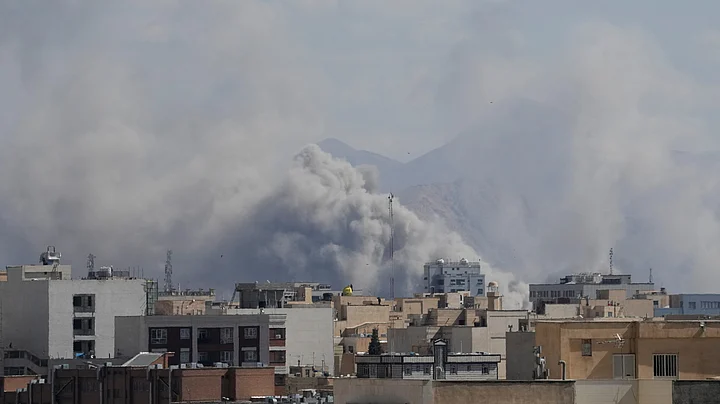
On 3 June, the United States military conducted strikes on Iran’s Qeshm Island following Iranian missile launches targeting US bases in Kuwait and Bahrain. Air raid sirens were activated in both countries, and defensive systems were deployed.
The US Central Command stated that all Iranian missiles and drones aimed at American and allied targets were intercepted or failed to reach their intended destinations. No US facilities reported damage from the attacks.
According to The Indian Express, the US described its actions as “self-defense” strikes, targeting Iranian military infrastructure on Qeshm Island after Iran launched several ballistic missiles toward regional neighbours.
The US military confirmed that two Iranian missiles fired at Kuwait fell short or broke apart, while three missiles aimed at Bahrain were intercepted by US and Bahraini air defense forces.
As reported by Deccan Herald, Kuwait’s military clarified that its air defence systems were activated to intercept incoming missiles and drones, and that explosions heard by residents were linked to these defensive operations. The Kuwaiti Army’s General Staff urged the public to avoid any debris from intercepted aerial threats for safety reasons.
As highlighted by Hindustan Times, Iran’s Islamic Revolutionary Guard Corps (IRGC) claimed responsibility for the missile strikes, stating they were in retaliation for a US attack on an Iranian commercial ship in the Sea of Oman.
The IRGC asserted that its actions were a response to what it described as US aggression and warned of more severe responses if hostilities continued.
Coverage revealed that the US military also targeted an Iranian oil tanker traveling toward an Iranian port, disabling it with a missile strike. The IRGC responded by launching missiles at a vessel identified as Panaya near the Strait of Hormuz. Oil prices surged to nearly $96 per barrel following these developments.
“All Iranian attacks on American forces failed. US forces remain vigilant and ready to defend against unwarranted Iranian aggression,” the US Central Command stated, as cited in official communications.
In the middle of the escalation, further analysis indicated that the IRGC’s missile launches were framed as a lesson to the US and its allies, with Iranian officials reiterating that any act of aggression would be met with a heavier response. The IRGC also warned that disrupting the security of the Strait of Hormuz would have significant consequences for the US military.
Ongoing hostilities were confirmed as tensions escalated after Iran reportedly ceased communication with mediators regarding a ceasefire extension. US President Donald Trump disputed claims of stalled talks, stating that discussions with Iran were continuing on a daily basis.
US Central Command denied Iranian claims of successful strikes on the US Fifth Fleet headquarters in Bahrain, stating that all threats were intercepted or neutralized according to official statements.
The US military also reported enforcing a blockade on vessels entering and exiting Iranian ports, with several commercial ships disabled or redirected since the blockade began.
“The era of ‘hit and run’ has ended, and the aggressor forces must bear the dire consequences of their ignorance and reckless adventures,” the IRGC stated, warning of further retaliation if provoked.
Explosions were also reported in Iraq and Erbil during the same period as regional tensions intensified. Authorities in Kuwait and Bahrain maintained heightened alert, urging residents to follow safety guidelines and rely on official sources for updates.
Note: This article is produced using AI-assisted tools and is based on publicly available information. It has been reviewed by The Quint's editorial team before publishing.