The United States military will begin enforcing a naval blockade on all maritime traffic entering and exiting Iranian ports starting 13 April, following the collapse of peace talks between the US and Iran in Islamabad.
The blockade, set to commence at 10 am Eastern Time (19:30 IST), will apply to vessels of all nations, but ships transiting the Strait of Hormuz to and from non-Iranian ports will not be impeded.
Oil prices surged in response, with Brent crude rising above $100 per barrel.
According to The Hindu, the US Central Command (CENTCOM) announced that the blockade would be enforced impartially against vessels entering or departing Iranian ports, including those on the Arabian Gulf and Gulf of Oman.
The US military clarified that freedom of navigation for ships not linked to Iran would be maintained, and additional information would be provided to commercial mariners before the blockade's implementation.
As reported by Scroll, the decision followed failed negotiations in Islamabad, where both sides accused each other of inflexibility.
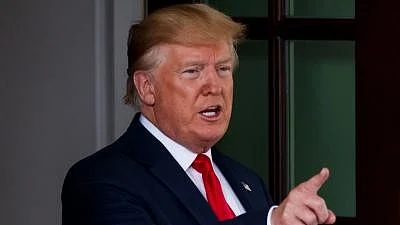
US President Donald Trump stated that the blockade aims to prevent Iran from profiting through maritime tolls, while Iran warned it retains full control over the Strait of Hormuz and would respond forcefully to any military vessels approaching the area.
As highlighted by Financial Express, Iran has threatened to escalate by targeting other strategic chokepoints, such as the Bab al-Mandeb Strait, which could further disrupt global trade.
Experts noted that Iran could leverage regional allies to expand the conflict's impact, potentially affecting energy infrastructure and shipping lanes beyond the Gulf.
"If the US proceeds with its plan to blockade the strait, Iran’s escalation strategy could dictate that it ensures Gulf countries can’t export, either," said Mona Yacoubian, a senior adviser cited in the coverage.
As noted in an article by Deccan Herald, President Donald Trump reiterated that US forces would intercept any vessel in international waters that had paid a toll to Iran, declaring that violators would not have safe passage.
The US Navy also plans to clear sea mines reportedly laid by Iran in the Strait of Hormuz, a critical route for about 20 percent of global oil supplies.
As reported by BBC, the United Kingdom has stated it will not participate in the US-led blockade, though it will continue to support freedom of navigation and deploy minesweepers in the region.
The UK government emphasised the need for de-escalation and the reopening of the Strait to stabilise global energy markets.
Analysis showed that the blockade is intended to cut off a key source of revenue for Iran and pressure Tehran back to the negotiating table.
The move has immediate implications for countries like India, which rely heavily on oil and fertiliser shipments through the Strait of Hormuz. Shipping costs and delays are expected to rise as a result of the new restrictions.
"The US wants to choke off a key source of money for Iran’s military by stopping ships from entering or leaving Iranian ports," the analysis indicated.
Oil prices have responded sharply to the blockade announcement. According to The Indian Express, Brent crude rose by more than 7 percent to $102.29 per barrel, while US crude climbed 8 percent to $104.24.
The volatility reflects concerns over potential supply disruptions, as around one-fifth of the world’s traded oil passes through the Strait of Hormuz daily.
Reporting indicated that CENTCOM has advised all mariners to monitor official broadcasts and maintain communication with US naval forces when operating near the Gulf of Oman and Strait of Hormuz.
The impartial enforcement of the blockade will apply to all nations, with exceptions only for vessels not linked to Iranian ports.
"CENTCOM forces will not impede freedom of navigation for vessels transiting the Strait of Hormuz to and from non-Iranian ports," the official statement clarified.
Note: This article is produced using AI-assisted tools and is based on publicly available information. It has been reviewed by The Quint's editorial team before publishing.