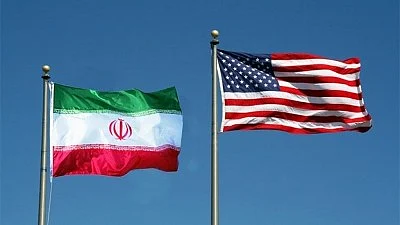
The United States and Iran have reached a peace agreement to end nearly four months of conflict in the Middle East.
The deal includes an immediate halt to military operations on all fronts, the lifting of the US naval blockade of Iran, and the planned reopening of the Strait of Hormuz.
A formal signing ceremony is scheduled for 19 June in Switzerland. Key issues, including Iran’s nuclear programme and the release of frozen assets, remain unresolved and are set for further negotiation.
According to The Indian Express, US President Donald Trump announced the agreement and confirmed that the Strait of Hormuz, a critical route for global oil shipments, will reopen. The deal was brokered with the involvement of Pakistan’s Prime Minister Shehbaz Sharif, who stated that both sides agreed to an immediate and permanent end to military operations, including in Lebanon.
As reported by The Guardian, the final text of the memorandum of understanding has not been published, leaving uncertainty about the specifics of access to the Strait of Hormuz, the future of Iran’s nuclear programme, and arrangements in Lebanon.
The US has insisted that the reopening of the strait must be unconditional, with unrestricted freedom of navigation, a position echoed by European leaders.
Coverage revealed that the European Union and other international actors have welcomed the agreement, emphasising the need for swift and full implementation. EU Commission President Ursula von der Leyen stated that restoring freedom of navigation in the Strait of Hormuz is essential for regional stability and the global economy.
In the hours following the announcement, market reactions included a sharp drop in global oil prices and a rise in US stock futures, reflecting investor optimism about reduced tensions. However, Israel has not officially endorsed the deal, and opposition has emerged within the Israeli political spectrum.
“The deal with the Islamic Republic of Iran is now complete. Congratulations to all!” US President Donald Trump posted on Truth Social.
Further details indicated that the release of Iranian frozen assets remains a contentious issue. Iranian sources claim that Washington will release $12 billion in frozen assets before negotiations begin, with the possibility of releasing up to $24 billion during the 60-day negotiation period. US officials, however, have denied any immediate release, stating that funds will only be unfrozen if Iran implements its commitments.
The agreement does not resolve the status of Iran’s nuclear programme. Analysis showed that nuclear negotiations will continue over the next 60 days, with the US maintaining that Iran must halt its enrichment activities as a condition for further progress. Iran has stated it has no intention of developing nuclear weapons but has not publicly committed to suspending enrichment.
International leaders, including those from France, Germany, Italy, and the UK, have called for the rapid and comprehensive implementation of the agreement. The leaders emphasised the importance of the urgent reopening of the Strait of Hormuz with unconditional and unrestricted freedom of navigation as statements confirmed.
“We congratulate the United States, the Iranian government and all those involved, including Pakistan, Qatar and all other mediators, on this diplomatic breakthrough,” the E4 group said in a joint statement.
Indian Prime Minister Narendra Modi welcomed the peace deal, expressing hope that it would restore peace and stability in the region. Reporting indicated that the agreement has also had social and cultural impacts, with Iranian footballers arriving in the US amid ongoing tensions and protests from the Iranian diaspora.
Note: This article is produced using AI-assisted tools and is based on publicly available information. It has been reviewed by The Quint's editorial team before publishing.