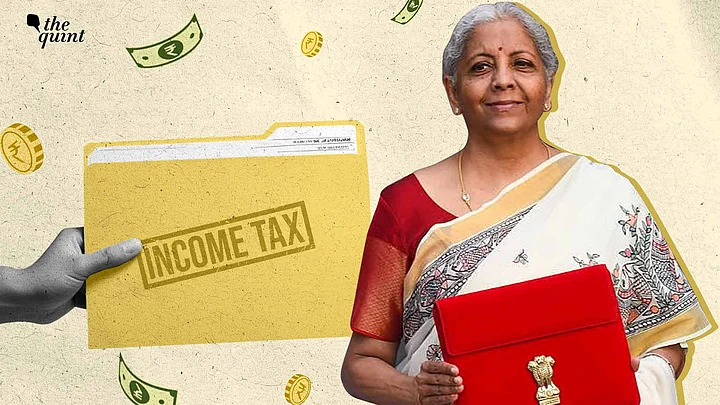
Union Finance Minister Nirmala Sitharaman presented the Union Budget 2026 in the Lok Sabha, announcing a series of direct tax measures.
The budget includes changes to Tax Deducted at Source (TDS) and Tax Collected at Source (TCS) rates, new income tax exemptions, and revised deadlines for filing income tax returns.
The new Income Tax Act will come into effect from 1 April 2026, and the government has extended the time limit for filing revised returns. No changes were made to the income tax slab rates for the current year.
According to The Indian Express, the budget proposes a nearly 9 percent increase in capital spending and maintains the government’s commitment to fiscal discipline.
The direct tax measures are designed to support economic growth while providing relief to taxpayers through targeted exemptions and compliance reforms.
As reported by Hindustan Times, the TCS rate on education and medical remittances under the Liberalised Remittance Scheme has been reduced from 5 percent to 2 percent. Similarly, the TCS rate on overseas tour packages has been cut from 5 percent to 2 percent, down from the previous 20 percent.
The deadline for filing income tax returns has been extended from 31 December to 31 March, subject to a nominal fee.
Coverage revealed that the previous year’s budget had already provided significant relief by changing slab rates under the new tax regime, making annual taxable income up to ₹12.75 lakh tax-free for salaried individuals after standard deduction.
The current budget continues this approach, with no further changes to slab rates but with additional compliance and exemption measures.
The government has also introduced a rule-based automated process for small taxpayers, aiming to simplify compliance and reduce the administrative burden as analysis showed.
The penalty for misreporting income has been increased to 100 percent of the tax amount, and buybacks will now be taxed as capital gains for all shareholders. The revised tax regime and new rules will be notified before the new act’s implementation.
“The finance minister also proposed to reduce the TCS (Tax Collected at Source) rate from 5 percent to 2 percent for education and medical education under the liberalised remittance scheme,” the budget speech stated.
Additional expectations from taxpayers included joint ITR filing, higher rebates beyond ₹12 lakh, and relief on capital gains, but the budget focused on fine-tuning existing provisions rather than introducing new headline changes as reported.
The Section 87A rebate remains unavailable for income taxed at special rates, such as equity capital gains, which some experts believe creates disparities for small investors.
Senior citizens continue to benefit from a TDS threshold of ₹1 lakh on interest income, though the deduction under Section 80TTB remains capped at ₹50,000 at the end of the analysis. Calls for aligning these limits and expanding medical expense deductions were noted, but no such changes were announced in this budget.
Note: This article is produced using AI-assisted tools and is based on publicly available information. It has been reviewed by The Quint's editorial team before publishing.