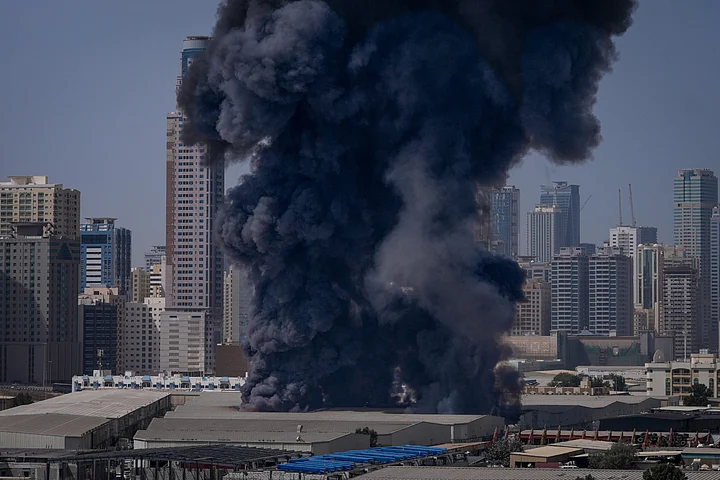
The United Arab Emirates reported that its air defence systems engaged multiple drones and missiles originating from Iran in the early hours of 8 May 2026. The incident occurred as the region’s fragile ceasefire between Iran, the United States, and Israel faced renewed challenges. The UAE Ministry of Defence advised residents to avoid any debris resulting from the interceptions and confirmed that the attacks were actively countered by the country’s air defence forces.
According to The Hindu, the UAE’s Ministry of Defence announced that air defences were “actively engaging” with the missile and drone attack, warning residents to stay away from any fragments. The ministry’s statement indicated that interception sounds were heard across various parts of the country, and the attacks were attributed to ongoing hostilities linked to the Iran war.
As reported by Deccan Herald, the attack on the UAE followed a day of exchanges between the United States and Iran near the Strait of Hormuz. The report noted that Iran has previously targeted Gulf countries hosting US bases since the conflict began in late February 2026. The UAE’s response was part of a broader pattern of regional escalation, with both sides accusing each other of violating the ceasefire.
Further details emerged as coverage revealed that US President Donald Trump maintained the ceasefire was still in effect, despite the renewed hostilities. Trump stated that negotiations with Iran were ongoing and that the US had not suffered damage in the latest exchanges. However, oil prices surged in response to the attacks, reflecting heightened market concerns.
Regional leaders responded to the incident by calling for coordinated action to address the energy and security implications. Following reports, the Association of Southeast Asian Nations (ASEAN) convened to discuss strategies for ensuring energy security amid disruptions caused by the conflict and the closure of the Strait of Hormuz.
“UAE air defences are currently engaging missile and drone attacks originating from Iran,” the Defence Ministry said, adding that interception sounds were heard “across various parts of the country.”
In the aftermath of the attack, analysis showed that the incident marked another test of the month-long ceasefire, which has been punctuated by sporadic exchanges of fire. The US and Iran have both accused each other of violating the terms, with Iran claiming its strikes inflicted significant damage, while US Central Command reported no losses.
Oil markets reacted swiftly as details emerged, with Brent crude prices rising above $100 per barrel. The escalation has intensified concerns over global energy supplies, given the strategic importance of the Strait of Hormuz for oil and liquefied natural gas shipments.
Broader military and technological trends have also been influenced by the conflict. Reporting indicated that lessons from the West Asia war, including the UAE incident, have prompted countries such as India to accelerate procurement of advanced air defence systems, drones, and counter-unmanned aerial technologies to address evolving threats.
“We must ensure regional energy security and resilience,” said Philippine President Ferdinand Marcos Jr, highlighting the need for practical collective measures to safeguard stable energy supplies.
At the diplomatic level, coverage revealed that negotiations between the US and Iran are ongoing, with both sides expressing willingness to reach a formal agreement. However, key issues such as Iran’s nuclear programme and the reopening of the Strait of Hormuz remain unresolved, contributing to continued uncertainty in the region.
Note: This article is produced using AI-assisted tools and is based on publicly available information. It has been reviewed by The Quint's editorial team before publishing.