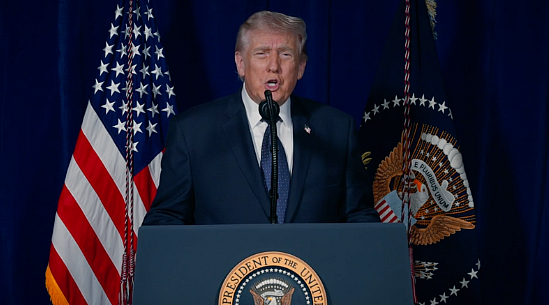
United States President Donald Trump has stated that the ceasefire between the US and Iran is on "massive life support," following a breakdown in negotiations over a permanent end to hostilities. The month-long truce, which began in April, has largely halted direct fighting but remains fragile as both sides exchange demands and threats. Oil prices have surged, and global energy markets remain volatile due to the ongoing blockade of the Strait of Hormuz and continued military posturing.
According to The Hindu, President Trump described the ceasefire as being on "massive life support," likening it to a patient with only a one percent chance of survival. He reiterated his goal of achieving "complete victory" over Iran and dismissed Tehran’s latest response to US proposals as "totally unacceptable." Trump is expected to use his upcoming visit to China to seek support from President Xi Jinping in pressuring Iran for concessions.
As reported by Financial Express, the deadlock in peace talks has led to increased instability in the region, with Brent crude oil prices rising above $104 per barrel. Iran’s demands include war reparations, recognition of its authority over the Strait of Hormuz, and an end to US sanctions. Trump rejected these conditions, calling Iran’s proposal a "piece of garbage" and accusing hardliners in Tehran of prolonging the conflict.
As highlighted by Deccan Herald, Iran has insisted on an end to the war on all fronts, including Lebanon, and the lifting of the US naval blockade. The US, meanwhile, has proposed ending hostilities before addressing more contentious issues such as Iran’s nuclear program. The near-closure of the Strait of Hormuz has severely disrupted global shipping, with oil producers forced to cut exports and OPEC output dropping to its lowest in over two decades.
"The ceasefire is on massive life support, where the doctor walks in and says, 'Sir, your loved one has approximately a one percent chance of living,'" Trump told reporters.
Analysis showed that Trump’s leverage in negotiations has diminished, with both China and Iran maintaining firm positions. The ongoing conflict has also impacted India, prompting Prime Minister Narendra Modi to urge citizens to reduce fuel consumption and imports to manage economic pressures resulting from the energy crisis.
Escalating frustration within the Trump administration has led to discussions about possible renewed military action against Iran as coverage revealed. Some officials advocate for targeted strikes to pressure Tehran, while others continue to support diplomatic efforts. The administration has also questioned the effectiveness of Pakistani mediation in conveying US positions to Iran.
Iranian officials have responded to Trump’s statements by asserting their readiness for any escalation. Following reports, Iran’s parliamentary speaker and military leaders have warned that their armed forces are prepared to respond decisively to any aggression, further heightening tensions in the region.
"Our armed forces are prepared to deliver a lesson-giving response to any aggression. We are prepared for every option. They will be surprised," said Iranian Parliament Speaker Mohammad Bagher Ghalibaf.
Trump’s remarks have also drawn attention to the humanitarian risks posed by the ongoing conflict. Reporting indicated that the continued blockade and fighting threaten to exacerbate food and energy shortages, with international agencies warning of a potential crisis affecting millions.
The fragile state of the ceasefire and the uncompromising positions of both the US and Iran have left the future of negotiations uncertain as details emerged. Trump’s insistence on a "complete victory" and Iran’s demands for recognition and reparations continue to impede progress toward a lasting resolution.
Note: This article is produced using AI-assisted tools and is based on publicly available information. It has been reviewed by The Quint's editorial team before publishing.