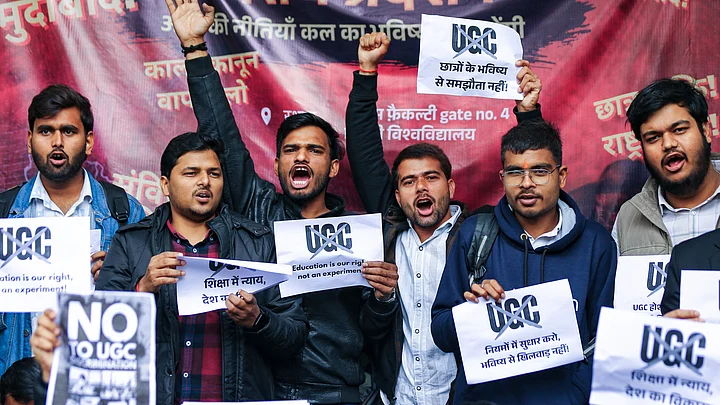
The Supreme Court of India has stayed the University Grants Commission's (UGC) 2026 equity regulations, which were designed to address caste-based discrimination in higher education institutions. The court's decision came after hearing multiple petitions challenging the constitutionality of these regulations, which were notified on 13 January 2026.
The bench, led by Chief Justice Surya Kant and Justice Joymalya Bagchi, found the regulations to be "vague" and "capable of misuse." The court has asked the Union government to redraft the regulations to prevent societal division.
The regulations have sparked protests, particularly from upper-caste students who argue that the framework could lead to discrimination against them. The regulations mandate the establishment of equity committees to address complaints of discrimination.
The court observed, "If we don't intervene, it will lead to dangerous impact, will divide the society and will have grave impact."
As highlighted by Bar and Bench, the regulations have been criticised for excluding general category students from the grievance redressal mechanism. The court has issued notices to the UGC and the Central government, with the regulations to remain in abeyance until further notice.
As noted in an article by Hindustan Times, the regulations were intended to create a "free, equitable and inclusive atmosphere" in educational institutions. However, the court expressed concerns that the new framework could divide society.
As coverage revealed, the regulations were a response to a 2019 petition seeking stronger anti-discrimination safeguards. The petitioners argued that the existing norms were inadequate in addressing caste-based discrimination on campuses.
The court's decision to stay the regulations has been met with mixed reactions. Analysis showed that while marginalized student groups welcomed the framework, several upper-caste organizations opposed it, citing potential misuse.
As details emerged, the regulations required higher educational institutions to establish Equal Opportunity Centers and Equity Committees. These measures aimed to promote equity and inclusion among stakeholders in higher education institutions.
The Supreme Court's intervention highlights the ongoing debate over the balance between promoting equity and preventing misuse of anti-discrimination regulations. Reporting indicated that the matter will be heard next on 19 March, with the court seeking a comprehensive review of the regulations.
Note: This article is produced using AI-assisted tools and is based on publicly available information. It has been reviewed by The Quint's editorial team before publishing.