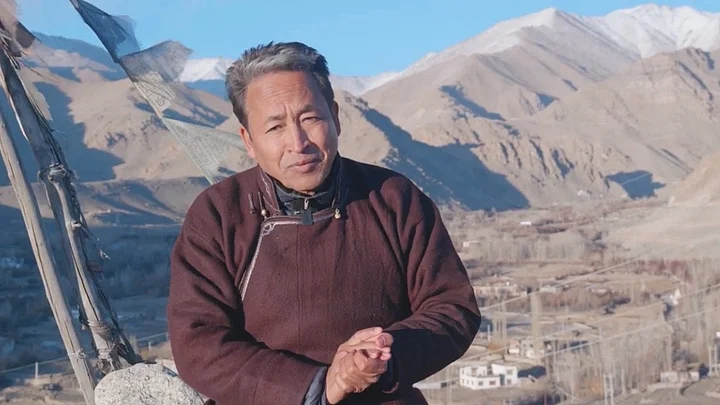
Ladakh climate activist Sonam Wangchuk’s plea challenging his detention under the National Security Act was heard by the Supreme Court on 29 January 2026.
The hearing addressed allegations regarding his statements, the grounds for his detention, and his current health condition in custody.
The bench, comprising Justices Aravind Kumar and PB Varale, also directed a specialist medical examination for Wangchuk following complaints of stomach issues.
According to Scroll, Senior Advocate Kapil Sibal, representing Wangchuk’s wife Gitanjali Angmo, argued that Wangchuk’s criticism of the government does not threaten national security and that his detention is not justified by any violent acts.
Sibal stated that all statements cited against Wangchuk were verbal and related to peaceful protest activities, such as padyatras and hunger strikes, which do not constitute grounds for preventive detention.
As reported by The Hindu, Sibal denied allegations that Wangchuk had called for the government’s overthrow like the Arab Spring, emphasising that the activist’s statements were misrepresented.
The court was informed that police had relied on selective video evidence and that Wangchuk’s actual remarks were allegorical and not incitements to violence. Sibal also refuted claims that Wangchuk had said Ladakhis would not help the Indian Army, asserting that such statements were either misattributed or taken out of context.
Bar and Bench highlighted that Wangchuk’s conduct was consistently peaceful and that the authorities had ignored videos in which he praised the government and Prime Minister Narendra Modi.
Sibal argued that the detention order was based on excerpts taken out of context and that the grounds cited were not proximate or relevant to the alleged threat to public order.
“A detaining authority relying on a statement must rely on the entire statement and cannot rely on a sentence or two... The whole detention order is based on excerpts, out of context, misleading, false, thereby suggesting a selective approach, malafide in nature, to ensure that I am detained,” Sibal told the court.
Midway through the hearing, the court reportedly questioned the timing of the detention, noting that some statements attributed to Wangchuk were made months before the detention order.
Sibal maintained that if these statements were genuinely considered a threat, action would have been taken earlier. The court also heard that Wangchuk had condemned violence during the Leh protests and had consistently advocated for peaceful means.
Arguments presented during the session included references to Wangchuk’s environmental activism and his calls for constitutional safeguards for Ladakh under the Sixth Schedule.
The plea contended that the detention was arbitrary, based on “stale FIRs, vague imputations and speculative assertions,” and violated Wangchuk’s fundamental rights.
The Supreme Court directed that Wangchuk be examined by a specialist doctor after he complained of stomach issues, reportedly due to water contamination in jail.
Following submissions, the bench ordered that a medical report be submitted in a sealed cover by 2 February 2026.
The state counsel stated that Wangchuk had been examined by a jail doctor 21 times in the past four months, but the court insisted on a specialist’s evaluation.
"He has problems in his stomach because of the water. He has been wanting a doctor to check. But nobody comes. Let him have a weekly check. And let him have the water we provide,” Sibal submitted to the court.
At the end of the session, as details emerged, the Supreme Court scheduled the next hearing for 2 February 2026, pending the specialist’s medical report.
The matter remains under judicial consideration, with the court yet to decide on the legality of Wangchuk’s detention and the associated allegations.
Note: This article is produced using AI-assisted tools and is based on publicly available information. It has been reviewed by The Quint's editorial team before publishing.