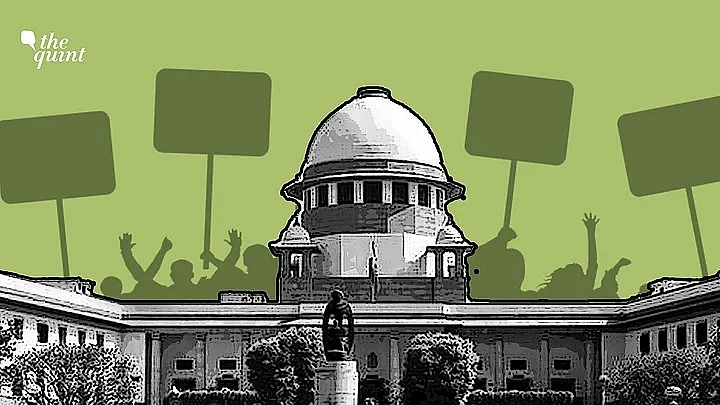
On 22 July 2026, the Supreme Court of India, presided over by Chief Justice of India Surya Kant, declined to urgently hear a plea alleging police excesses against student protestors during the Cockroach Janta Party (CJP) march in Delhi. The plea was raised in the context of ongoing demonstrations over alleged NEET examination irregularities and police action at Jantar Mantar and during a march towards Parliament.
According to The Indian Express, a lawyer appearing before the bench sought an urgent hearing, citing police brutality and the use of tear gas against protestors. Chief Justice Surya Kant responded by stating, “Don’t waste our time and your time. Your time is more valuable than ours,” and refused to watch videos of the demonstrations presented by the counsel.
As reported by Bar and Bench, the bench, which also included Justices Joymalya Bagchi and V Mohana, reiterated its disinclination to entertain the plea for urgent listing. The lawyer argued that students were seeking fair conduct of NEET exams and the dissolution of the National Testing Agency, but the court maintained its position, declining to view any video evidence.
During the proceedings, the bench made it clear that it was not interested in reviewing video submissions, with CJI Surya Kant stating, “We are not interested in videos. We don’t have time to watch.” The lawyer persisted, but the court moved on to the next matter as coverage revealed.
“We are not interested in videos; we don’t have time to watch,” the bench observed, refusing to grant an urgent listing.
In the aftermath of the Supreme Court’s decision, the Delhi High Court agreed to urgently list a public interest litigation (PIL) alleging excessive force by police during the CJP’s Parliament march. Following reports, the High Court bench led by Chief Justice Devendra Kumar Upadhyaya agreed to hear the matter after a lawyer stated that the incident had shocked the conscience of the nation.
Two PILs were filed before the Delhi High Court, flagging police action against Jantar Mantar protestors. The court agreed to hear the petitions after urgent mentioning by counsel, who described the incident as having “shaken the conscience of the nation” as analysis showed.
The CJP protests, which began as a response to alleged NEET paper leaks and examination irregularities, saw thousands of students and activists marching towards Parliament. The Delhi Police intervened, using barricades, tear gas, and lathi charges to disperse the crowd. Several protestors were injured, and multiple FIRs were registered in connection with the violence as details emerged.
“Student protest is going at Jantar Mantar. Police is taking brutal actions…” a lawyer told the Supreme Court, but the bench declined to intervene.
Political leaders, including Leader of Opposition Rahul Gandhi, demanded accountability and called for the resignation of Union Education Minister Dharmendra Pradhan and Union Home Minister Amit Shah. The protests and subsequent police action have led to ongoing legal and political debates as reporting indicated.
Note: This article is produced using AI-assisted tools and is based on publicly available information. It has been reviewed by The Quint's editorial team before publishing.