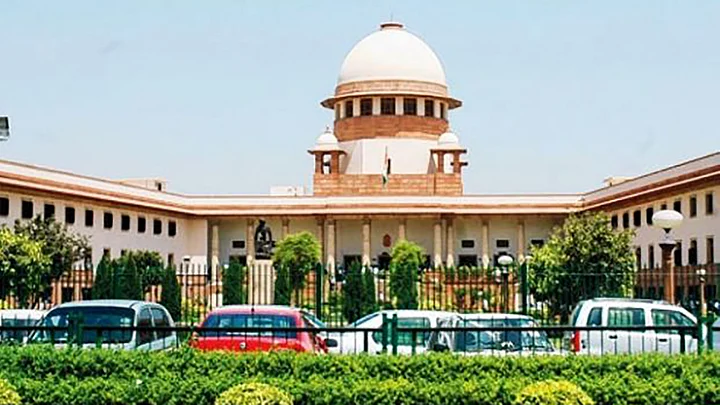
The Supreme Court of India has issued comprehensive, time-bound directions to address safety concerns on national highways, specifically targeting unauthorised parking of heavy vehicles and the proliferation of illegal dhabas and commercial structures. The directions were prompted by fatal accidents in Rajasthan and Telangana in November 2025, which highlighted systemic lapses in highway management and enforcement. The Court emphasized that the right to life under Article 21 of the Constitution includes the right to a safe commuting environment.
According to The Indian Express, the Supreme Court bench comprising Justices J K Maheshwari and Atul S Chandurkar noted that national highways, while constituting only about 2% of India’s total road length, account for nearly 30% of all road fatalities. The Court described high-speed roadways as “corridors of peril” when administrative or infrastructural gaps exist, and stressed that no pecuniary or administrative constraint can outweigh the sanctity of human life.
In its order, the Supreme Court categorically prohibited heavy or commercial vehicles from parking or stopping on any national highway carriageway or paved shoulder except at designated bays, lay-byes, or wayside amenities. Enforcement is to be achieved through Advanced Traffic Management Systems (ATMS), real-time alerts, GPS-timestamped photographic evidence, and integrated e-challan generation, with standard operating procedures and compliance required within 60 days as detailed in the coverage.
The Court also directed highway authorities to conduct consolidated inspections, surveys, and operationalise the Rajmargyatra complaint module and helpline 1033. Drone-based surveys and periodic reporting are mandated to ensure compliance and transparency. All new unauthorised dhabas, eateries, or commercial structures within the Right of Way are to be removed within 60 days, and no new licences or trade approvals are to be granted or renewed within highway safety zones without prior clearance. Existing licences must be reviewed within 30 days as enforcement measures.
Each district is required to constitute a Highway Safety Task Force, comprising administration, police, and highway authorities, with joint responsibility for enforcement and regular meetings. Land-use restrictions near highways are to be notified, and dedicated surveillance teams must be established within 30 days for regular patrolling, supported by vehicle tracking systems and continuous monitoring. The Court further mandated the full activation of ATMS across highways, including cameras, speed detectors, message boards, and emergency call boxes, with compliance affidavits due within 60 days as compliance requirements.
“A road, particularly a high-speed Expressway, must not become a corridor of peril due to administrative lethargy or infrastructural gaps. The loss of even a single life to avoidable hazards like illegal parking or blackspots etc., represents a failure of the State’s protective umbrella,” the Supreme Court stated.
Emergency response measures include the deployment of ambulances and recovery cranes at intervals not exceeding 75 km, ensuring timely response to accidents. The construction of truck lay-byes and operationalisation of wayside amenities with basic facilities such as rest areas, food, washrooms, and signage are also mandated. Additional lay-bye facilities may be provided wherever necessary to allow drivers adequate rest as outlined in the directives.
Authorities are instructed to identify and publish accident blackspots within 45 days, install lighting, speed cameras, and warning systems within prescribed timelines, and set up an inter-state coordination mechanism to standardise enforcement protocols, surveillance, and penalties across states. All agencies must ensure compliance within the specified timelines and submit consolidated reports before the Court within 75 days as compliance reports.
The Supreme Court’s directions are binding on all implementing agencies, including the National Highways Authority of India and state authorities. Copies of the order have been circulated to chief secretaries and police chiefs across states and union territories to ensure nationwide implementation. The matter is scheduled for further hearing after two months, with the Court’s intervention signalling a strong push towards systemic reform in highway safety and administrative accountability as the matter progresses.
Note: This article is produced using AI-assisted tools and is based on publicly available information. It has been reviewed by The Quint's editorial team before publishing.