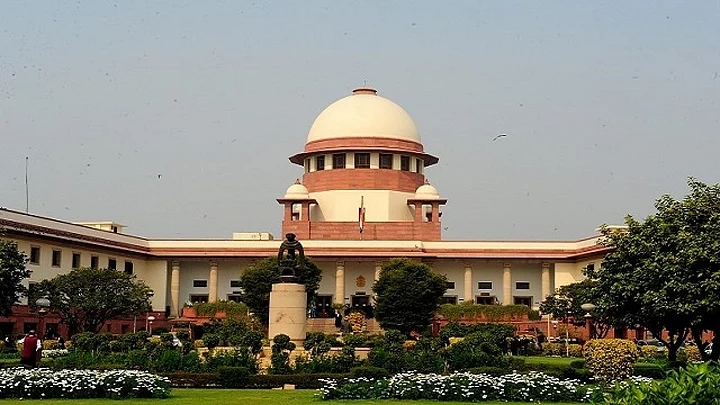
The Supreme Court of India has issued notices to the Union government and 12 state governments, seeking their responses to a petition challenging the validity of anti-conversion laws enacted in these states.
The petition, filed by the National Council of Churches in India, contends that these laws criminalise voluntary and conscience-based religious conversions and violate the right to privacy. The bench, headed by Chief Justice Surya Kant, has asked the Centre and the states to respond to the allegations.
According to Scroll, the states that have been issued notices include Himachal Pradesh, Odisha, Karnataka, Uttar Pradesh, Uttarakhand, Haryana, Arunachal Pradesh, Madhya Pradesh, Chhattisgarh, Gujarat, Jharkhand, and Rajasthan. The petitioners argue that the requirement for government approval for religious conversion infringes on citizens’ fundamental rights, particularly the right to privacy.
As reported by The Hindu, senior advocate Meenakshi Arora, representing the petitioners, submitted that the structure of these laws “incentivises certain vigilante groups to take action because there are rewards out there.”
She argued that this framework enables complaints and arrests even in the absence of substantive evidence, leading to potential misuse against religious minorities.
As highlighted by recent coverage, the petitioners have requested the Supreme Court to stay the operation of the anti-conversion laws while the matter is under judicial consideration. The Centre, represented by Solicitor General Tushar Mehta, stated that the government’s responses were ready and asserted that the petitioner’s claims were not factually accurate.
In the hearing, arguments presented by the government included references to a 1977 Constitution Bench judgment in Rev. Stainislaus v. State of Madhya Pradesh, which upheld the constitutionality of similar laws. The judgment clarified that the right to “propagate” religion under Article 25 of the Constitution does not extend to the right to convert another person, but only to spread or transmit one’s religion.
“If a person purposely undertakes the conversion of another person to his religion, as distinguished from his effort to transmit or spread the tenets of his religion, that would impinge on the ‘freedom of conscience’ guaranteed to all the citizens of the country alike,” the 1977 judgment reasoned.
Further analysis showed that the petitioners also cited the Supreme Court’s 2018 decision in Shafin Jahan, which emphasised that individual autonomy in matters of faith, belief, and marriage is paramount. The petitioners argue that the anti-conversion laws, by imposing procedural barriers and criminal penalties, infringe upon this autonomy.
The Supreme Court’s notice marks the beginning of a detailed judicial review of the anti-conversion statutes. The states and the Centre are expected to file their responses, after which the Court will examine the constitutional validity of the laws and the balance between freedom of religion and public order as proceedings continue.
Note: This article is produced using AI-assisted tools and is based on publicly available information. It has been reviewed by The Quint's editorial team before publishing.