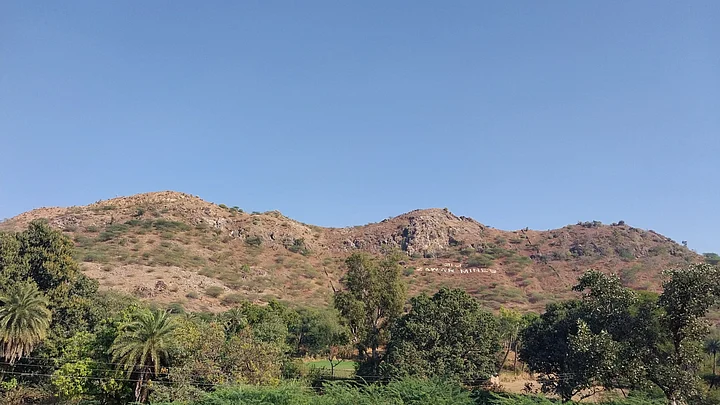
The Supreme Court of India delivered a significant judgment on 20 March 2026 regarding the ecological status of the Aravalli region, specifically addressing the classification of forest land and the redevelopment of railway land near Bijwasan in Delhi.
The bench, comprising Justices Dipankar Datta and Augustine George Masih, dismissed an appeal challenging the project and clarified the legal distinction between natural forests and areas dominated by invasive species.
According to The Indian Express, the Supreme Court examined the proliferation of Prosopis juliflora (Vilayati Kikar), an invasive species introduced during colonial afforestation efforts, which now covers large portions of the Aravalli ridge and Delhi.
The Court found that such invasive vegetation does not constitute a natural forest ecosystem and should not be the basis for legal protection as forest land.
The judgment emphasised that ecological quality, rather than mere tree density or green cover, determines whether land qualifies as forest. Analysis showed that the subject land consisted of approximately 70 per cent invasive species, which disrupt native biodiversity and ecological balance, rather than supporting it.
In its reasoning, the Court referred to official records and the Master Plan for Delhi, holding that the legal character of land must be determined based on its status at the time of the Master Plan’s formulation, not on subsequent changes in vegetation.
The Court stated, “The sanctity and statutory binding force of the Master Plan will have primacy.”
Tree cover alone, especially when comprised of invasive alien species, cannot transform agricultural or barren land into forest land for legal purposes as details emerged. The Court warned that allowing such reclassification would create uncertainty in urban planning and undermine statutory frameworks.
“The emphasis of environmental management, as reflected in governmental policy as well as ecological understanding, lies in the restoration and promotion of native species capable of sustaining biodiversity and ecological balance,” the Supreme Court observed.
Safeguards for the Bijwasan project include a mandatory 20 per cent green cover, transplantation of existing trees, and compensatory afforestation. Coverage revealed that authorities must obtain all necessary permissions before working on any patches identified as deemed forest, and compensatory afforestation must be undertaken in accordance with statutory provisions.
The Court directed that restoration efforts should prioritise planting native species and replacing invasive vegetation to maintain ecological balance.
Reporting indicated that the ruling sets a precedent for future urban development in ecologically sensitive regions, reinforcing that forest classification depends on ecological integrity, not just the presence of greenery.
Broader implications of the judgment include a clear directive that planned development under statutory frameworks cannot be derailed by later vegetation changes, particularly where such changes involve invasive species. The Supreme Court’s decision reframes the debate on Aravalli protection, focusing on restoring native ecosystems rather than preserving all green cover indiscriminately at the conclusion of the case.
“For restoration of forest to its natural ecosystem, trees of native species be planted in large numbers and preferably by replacing invasive species to save and sustain the ecological balance,” the Supreme Court directed.
Note: This article is produced using AI-assisted tools and is based on publicly available information. It has been reviewed by The Quint's editorial team before publishing.