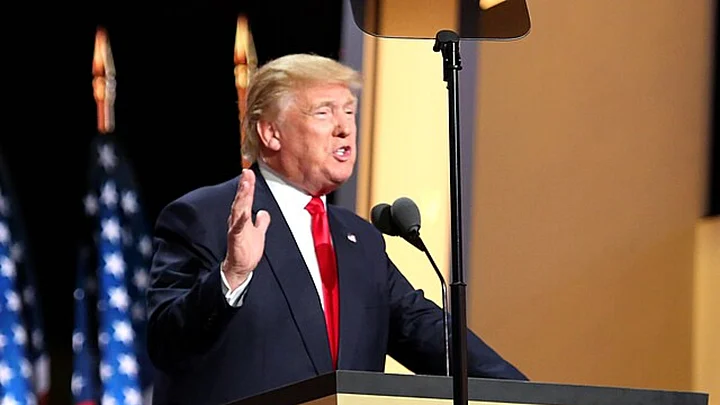
Seven prominent Indian CEOs have been invited to attend a high-profile reception hosted by United States President Donald Trump at the World Economic Forum (WEF) 2026 in Davos. The event, scheduled for Wednesday, will see participation from over 3,000 delegates representing more than 130 countries, including 64 heads of state and government. The Indian delegation features leaders from major conglomerates and technology firms, reflecting India’s growing influence in global business discussions.
According to Deccan Herald, the seven Indian CEOs invited to Trump’s reception are Natarajan Chandrasekaran (Tata Sons), Sunil Bharti Mittal (Bharti Enterprises), Anish Shah (Mahindra Group), Salil S Parekh (Infosys), Sanjiv Bajaj (Bajaj Finserv), Hari S Bhartia (Jubilant Bhartia Group), and Srini Pallia (Wipro). The agenda for the meeting remains undisclosed, but the gathering is significant amid ongoing global economic uncertainty and recent US policy changes.
As reported by Financial Express, the Indian business leaders’ meeting with Donald Trump comes at a time when Indian exporters are facing a 50% tariff imposed by the US administration. Additionally, recent changes to the H-1B visa programme, including a new weighted selection process and a $100,000 fee for new visas, have raised concerns for Indian IT firms, which are major users of the H-1B system. The revised rules are expected to impact hiring strategies for companies such as Infosys, Tata Consultancy Services, and Wipro.
As highlighted by Hindustan Times, Indian policymakers and industry leaders are also participating in high-level discussions on sustainable development at Davos. The Confederation of Indian Industry is organising a roundtable to address strategies for integrating sustainability into core economic activities, with a focus on energy transition, infrastructure, and technology deployment. The session aims to align public and private sector efforts to support long-term growth and environmental goals.
Coverage revealed that India is now among the top investment destinations globally, ranking just behind the US and on par with the UK and Germany. According to a PwC survey released at Davos, 77% of Indian CEOs expect domestic economic growth to improve in the next 12 months, and 57% are highly confident about near-term revenue prospects. However, Indian CEOs are increasingly cautious about macroeconomic volatility, cyber risks, and the rapid pace of technological change, especially in artificial intelligence.
“Indian CEOs remain more optimistic about growth prospects than their global counterparts, but that confidence is increasingly tempered by caution over rising risks, slower global momentum and the speed of technological change,” the PwC survey noted.
Analysis showed that Indian CEOs are more confident than their global peers regarding GDP and revenue growth. India has moved to the second position, after the US, as a preferred investment destination among global CEOs. The survey also found that Indian CEOs are more concerned about technological disruption and cyber risks than their international counterparts, with 66% expressing concern about keeping pace with AI advancements.
During the WEF, several Indian states signed memoranda of understanding with Indian companies, which sparked online debate about the necessity of conducting such agreements abroad. Reporting indicated that Maharashtra, Karnataka, Madhya Pradesh, Andhra Pradesh, and Telangana were among the states seeking investments and partnerships at Davos, with some agreements involving companies headquartered in India.
The broader Indian corporate presence at Davos 2026 includes over 100 CEOs, with a delegation led by Mukesh Ambani (Reliance Industries), Natarajan Chandrasekaran (Tata Group), and Sanjiv Bajaj (Bajaj Group), among others. Further analysis showed that Indian CEOs are more willing than their global peers to diversify into new sectors, including technology, manufacturing, and aerospace, but face challenges in innovation and execution.
“More than half say their companies have entered new sectors over the past five years, driven by a push to diversify revenues and reduce dependence on traditional markets,” the survey found.
At the same time, Indian banks are focusing on credit growth and portfolio diversification. Recent interviews with banking leaders at Davos highlighted strategies to increase retail and MSME lending while managing margin pressures amid changing interest rates.
Note: This article is produced using AI-assisted tools and is based on publicly available information. It has been reviewed by The Quint's editorial team before publishing.