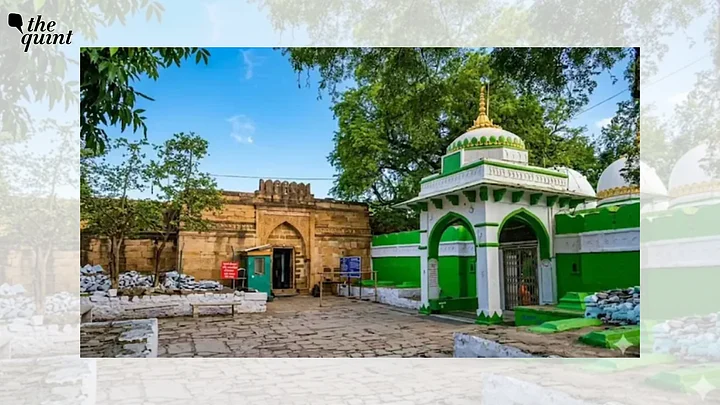
The Supreme Court has issued notices on appeals challenging the Madhya Pradesh High Court’s May 2026 judgment that declared the Bhojshala-Kamal Maula mosque complex in Dhar to be a Hindu temple. The apex court declined to restore the previous arrangement, under which both Hindu and Muslim communities were permitted to pray at the site on designated days. Instead, it directed the state government to provide an adjacent open space for Friday prayers by Muslims, pending a final decision.
According to Scroll, the Supreme Court bench, led by Chief Justice Surya Kant, refused to pass an interim order restoring the status quo that existed before the High Court’s verdict. The court instructed the Madhya Pradesh government to make available an open area next to the complex for Muslim prayers on Fridays between 1 pm and 3 pm, clarifying that this arrangement is temporary and subject to the outcome of the ongoing proceedings.
As highlighted by The Indian Express, the principal challenge to the High Court’s judgment is that it allegedly exceeded its writ jurisdiction by making determinations on complex historical and archaeological questions regarding the site’s original character. Petitioners argue that such matters should be addressed in civil court proceedings, not summary writ jurisdiction, and that the High Court’s findings have direct implications for worship rights under Article 226 of the Constitution.
The High Court’s decision relied on an Archaeological Survey of India (ASI) report, which found evidence of temple-style pillars and inscriptions from the Paramara period, leading the court to conclude that the disputed area was originally a temple. However, coverage revealed that the petitioners do not dispute the ASI’s findings but contend that the report was treated as conclusive without cross-examination and that other evidence, such as Arabic and Persian inscriptions, was not given due consideration.
Legal arguments also focus on the interpretation of the Places of Worship (Special Provisions) Act, 1991. The High Court held that Bhojshala is exempt from the Act’s protections due to its status as a protected monument under the Ancient Monuments and Archaeological Sites and Remains Act, 1958. However, analysis showed that petitioners argue this exemption does not permit courts to revisit the site’s historical-religious character or restrict religious practices that were ongoing as of August 1947.
“The petitioners further contend that preventing Muslims from offering prayers at the site is a direct and arbitrary violation of their fundamental rights to freedom of religion and to manage their own religious affairs,” the legal challenge states.
In addition, the petitioners assert that the Kamal Maula Mosque is a permanent and irrevocable Waqf under Muslim law. The High Court’s directions regarding the administration of the site, including the role of the ASI and the possibility of alternative land for a mosque, are also being contested as details emerged.
The Supreme Court has directed that no structural changes be made to the Bhojshala-Kamal Maula complex without its permission. The matter remains under consideration, with the interim arrangement for Friday prayers in place until a final ruling is delivered following reports.
Note: This article is produced using AI-assisted tools and is based on publicly available information. It has been reviewed by The Quint's editorial team before publishing.