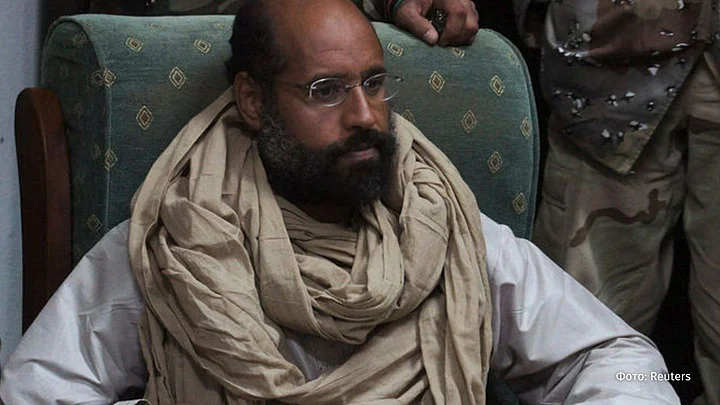
Saif al-Islam Gaddafi, the most prominent son of late Libyan leader Muammar Gaddafi, was killed in Libya on 3 February 2026. The incident occurred at his residence in Zintan, southwest of Tripoli. Forensic examination confirmed that he died from gunshot wounds. Authorities have initiated an investigation to identify the suspects and pursue a criminal case. Saif al-Islam was 53 years old at the time of his death.
According to Deccan Herald, the office of Libya’s attorney general stated that investigators and forensic doctors examined Saif al-Islam’s body and determined the cause of death as gunshot injuries. The office also confirmed that steps are being taken to identify those responsible for the attack and to bring a criminal case against them.
As reported by undefined, Saif al-Islam’s lawyer, Khaled al-Zaidi, and political adviser Abdulla Othman announced his death on social media. Local media cited that four masked assailants stormed his home, disabled security cameras, and shot him dead. The statement from his political team described the incident as a “cowardly and treacherous assassination.”
Coverage revealed that Saif al-Islam was well-known in Libya for his role in shaping policy before 2011, but his public profile had diminished in recent years. He was sentenced to death in absentia by a Libyan court in 2015 for his role in suppressing protests during the 2011 revolution. He was also provisionally charged by the International Criminal Court for alleged crimes against humanity.
As highlighted by The Hindu, Saif al-Islam registered as a presidential candidate for the December 2021 election, which was ultimately cancelled amid political deadlock. He had previously been released from detention in 2017 under a general amnesty and had remained largely out of public view due to security concerns.
“The office of Libya’s attorney general said investigators and forensic doctors examined the body of Saif al-Islam Gaddafi on Tuesday and determined that he died from gunshot wounds.”
Reporting indicated that Saif al-Islam was once considered his father’s heir apparent and played a significant role in Libya’s rapprochement with the West in the early 2000s. He was instrumental in negotiations that led to Libya abandoning its weapons of mass destruction programme and in talks over compensation for victims of the 1988 Lockerbie bombing.
His death was confirmed by his political team and lawyer, but there are conflicting accounts regarding the exact location of the attack, with some family members suggesting he died near the Algerian border. However, the majority of sources agree that the fatal incident occurred in Zintan.
Further details emerged as authorities continued their investigation, with no arrests announced as of 4 February 2026. The killing has raised concerns about potential instability in Libya’s already fragile political environment.
Saif al-Islam’s legacy includes his advocacy for constitutional governance and limited political liberalisation, as well as his controversial role during the 2011 uprising. He was educated at the London School of Economics and was often seen as a reformist voice, though his involvement in the violent crackdown on protesters remains a significant aspect of his public record.
“His candidacy was ultimately rejected due to his prior conviction, and disputes surrounding his appeal contributed to the collapse of the electoral process, pushing Libya back into a political stalemate.”
Additional context provided by recent analysis notes that since the fall of Muammar Gaddafi, Libya has remained divided between rival governments and militias. Saif al-Islam’s death is expected to have implications for the country’s ongoing political divisions and security situation.
Note: This article is produced using AI-assisted tools and is based on publicly available information. It has been reviewed by The Quint's editorial team before publishing.