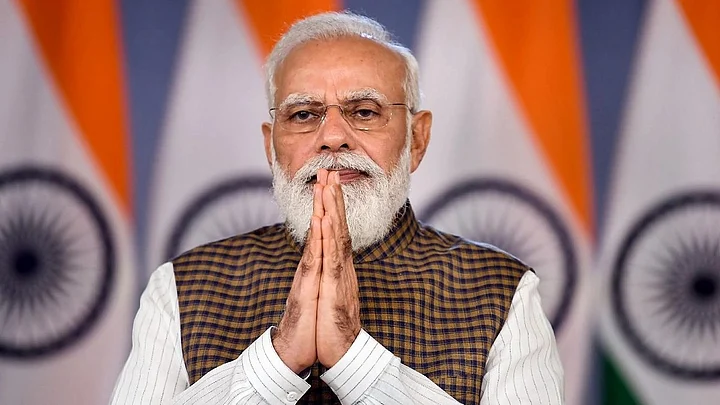
Prime Minister Narendra Modi has constituted a high-powered six-member task force led by Nandan Nilekani to recommend reforms for India’s public examination system.
The announcement followed the resignation of Education Minister Dharmendra Pradhan amid widespread protests over the NEET-UG 2026 paper leak.
The task force is mandated to suggest technology-driven and structural changes to restore trust and integrity in national examinations.
According to The Hindu, the task force will focus on making the examination system leak-proof and technology-driven.
The panel includes Nandan Nilekani, former ISRO Chairman S Somanath, former Intelligence Bureau Director Tapan Deka, IIT Madras Director V Kamakoti, former Education Secretary Anita Karwal, and logistics expert Amrit Lal Meena.
The government has stated that the panel’s recommendations will guide future reforms in examination processes.
As reported by Deccan Herald, the task force is expected to examine the functioning of examination bodies such as the National Testing Agency (NTA), recommend enhanced use of technology to prevent paper leaks, and improve security protocols.
The panel’s formation comes after the cancellation of the NEET-UG exam held on 3 May 2026 due to allegations of a paper leak, with a retest conducted on 21 June 2026.
As highlighted by Financial Express, the multidisciplinary group is tasked with recommending measures to revamp examinations conducted by the NTA, focusing on technology integration and structural reforms.
The Prime Minister has assured that the government will implement the task force’s suggestions promptly to ensure the credibility of future examinations.
The government has also announced the establishment of fast-track courts and the introduction of an anti-paper leak bill in Parliament.
As noted in an article by The Indian Express, Nandan Nilekani, the co-founder and chairman of Infosys, previously led the Unique Identification Authority of India (UIDAI) and played a significant role in developing India’s digital public infrastructure.
S Somanath, as ISRO Chairman, oversaw major space missions, while Tapan Deka contributed to national security through intelligence and counter-terrorism operations.
V Kamakoti is recognised for his work in computer architecture and cybersecurity, Anita Karwal for her leadership in education policy, and Amrit Lal Meena for his expertise in logistics and public administration.
“We should ensure that our exam system can be trusted, transparent and tech-savvy. Under the leadership of renowned technology expert Nandan Nilekani, a high-powered task force will be formed, which will focus on exam reforms,” Prime Minister Narendra Modi stated.
Judicial proceedings have acknowledged the formation of the task force, with the Supreme Court indicating it will review the panel’s recommendations regarding the online conduct of NEET and related cybersecurity safeguards.
The court is monitoring the situation following the NEET-UG cancellation and ongoing CBI investigation into the alleged leak.
Expertise from diverse fields is expected to inform the task force’s approach as coverage revealed, with emphasis on secure identity, interoperability, and trust—principles that underpinned previous digital infrastructure projects like Aadhaar and UPI. The government’s decision to appoint a technology architect rather than a career administrator signals a shift towards systemic redesign rather than incremental changes.
Further details on Nandan Nilekani’s background indicate his transition from private sector leadership at Infosys to public service roles, including the rollout of Aadhaar and advisory positions in digital payments and policy as analysis showed. His experience is considered central to the government’s strategy for restoring public confidence in examination systems.
The government’s announcement and the task force’s composition have been widely covered in recent updates, with the panel’s recommendations expected to shape the future of examination reforms in India.
Note: This article is produced using AI-assisted tools and is based on publicly available information. It has been reviewed by The Quint's editorial team before publishing.