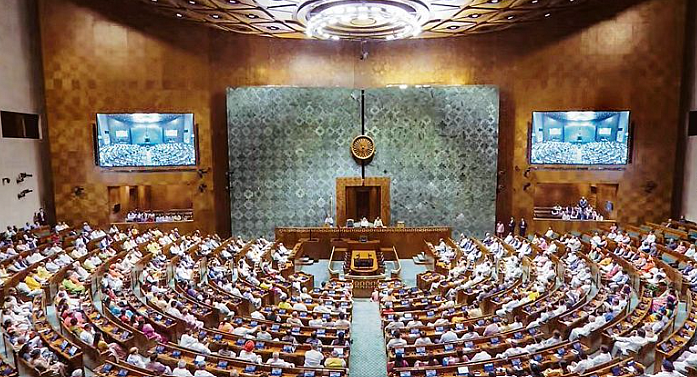
The Union government introduced the Transgender Persons (Protection of Rights) Amendment Bill, 2026 in the Lok Sabha on 14 March 2026. The bill narrows the legal definition of transgender persons, removes the right to self-identification, establishes medical boards for certification, and prescribes stricter punishments for offences such as kidnapping and forced mutilation of children.
The bill replaces the broader, more inclusive definition from the 2019 act with one based on biological or congenital conditions and traditional socio-cultural identities.
As reported by Hindustan Times, the new definition covers individuals with socio-cultural identities such as kinner, hijra, aravani, jogta, or eunuch, those with specified intersex variations, or persons with congenital variations in sex characteristics. The bill explicitly excludes persons with different sexual orientations and self-perceived sexual identities from its scope.
The amendment omits the right to self-perceived gender identity, which was previously recognised under Section 4(2) of the 2019 act and rooted in the Supreme Court’s 2014 NALSA judgment. Instead, the bill introduces a medical board, headed by a chief medical officer or deputy chief medical officer, as the certifying authority for transgender identity. The district magistrate may issue a certificate only after considering the board’s recommendation and, if necessary, consulting other medical experts.
According to coverage revealed, the bill also makes it mandatory for a transgender person who has undergone gender-affirming surgery to apply for a revised certificate. Medical institutions performing such surgeries must report details to the district magistrate and the new medical authority. The bill expands penal provisions, introducing a graded system of punishment for offences against transgender persons, with life imprisonment for kidnapping and grievous hurt to a child with the intent to compel a transgender identity.
Rights advocates and members of the transgender community have criticised the bill, stating that it shifts from a rights-based to a medicalised approach and excludes many transgender persons who do not fit within biological or traditional community categories. The bill’s stated aim is to protect only those facing severe social exclusion due to biological reasons beyond their control.
“The 2026 amendment narrows the definition of transgender persons, removes the right to self-identified gender, introduces medical boards for certification, strengthens government oversight, and significantly increases criminal penalties for forced mutilation or exploitation linked to transgender identity,” said Avinaba Dutta, a public policy researcher.
In place of the earlier system where a district magistrate directly issued identity certificates, the new process requires medical board certification. The bill also changes the composition of the National Council for Transgender Persons, mandating that state and Union territory representatives be not below the rank of director and be nominated by rotation from different regions. Reporting indicated that the government cited doubts and difficulties regarding the expanse of the previous definition and the identification process as reasons for the amendment.
The bill’s provisions have drawn concern from legal experts and activists, who argue that removing the right to self-identify contradicts the Supreme Court’s 2014 judgment and could exclude a significant portion of the transgender community from legal protections. The amendment’s focus on biological and traditional identities, rather than self-perceived gender, marks a significant shift in the legal framework for transgender rights in India as details emerged.
Note: This article is produced using AI-assisted tools and is based on publicly available information. It has been reviewed by The Quint's editorial team before publishing.