Prime Minister Narendra Modi delivered a national address following the defeat of the Constitution (131st Amendment) Bill in the Lok Sabha, which was linked to women’s reservation and delimitation. The bill failed to secure the required two-thirds majority, with 230 opposition MPs voting against it. The Prime Minister’s speech, delivered during the ongoing election period, drew immediate and coordinated criticism from opposition parties.
According to The News Minute, Prime Minister Narendra Modi compared the bill’s defeat to “female foeticide” and accused opposition parties, including the Congress, Dravida Munnetra Kazhagam (DMK), and Trinamool Congress (TMC), of stalling the legislation. He asserted that women across India would not forgive those responsible and framed the outcome as a setback for women’s representation in legislative bodies.
As reported by Hindustan Times, Congress president Mallikarjun Kharge criticised the Prime Minister for focusing on attacking the Congress rather than addressing substantive issues. Kharge stated, “Modi ji mentioned Congress 59 times and women barely a few times. That tells the country everything about his priorities.” He further alleged misuse of official machinery during the election period and called for immediate implementation of the 2023 Women’s Reservation Act.
As highlighted by Scroll, opposition leaders described the Prime Minister’s address as a political speech “full of mudslinging and outright lies.” They argued that the bill was primarily about delimitation, not women’s reservation, and accused the government of attempting to redraw the electoral map for political advantage. Communist Party of India (Marxist) MP John Brittas stated, “No prime minister had ever used an address to the nation to criticise and target the Opposition in this manner.”
“By...likening [the Opposition’s] actions to ‘foeticide’ and being ‘anti-women’, this speech has made it evident that the BJP is willing to go to any extent to undermine healthy parliamentary conventions and constitutional traditions,” Brittas said.
Opposition unity was further demonstrated through coordinated strategy using WhatsApp groups to ensure attendance and a unified voting bloc. Senior leaders instructed MPs to remain disciplined and avoid provocation during the heated parliamentary debate. The opposition’s narrative focused on the claim that the government was using women’s reservation as a pretext to push delimitation, which they argued would disproportionately benefit certain states.
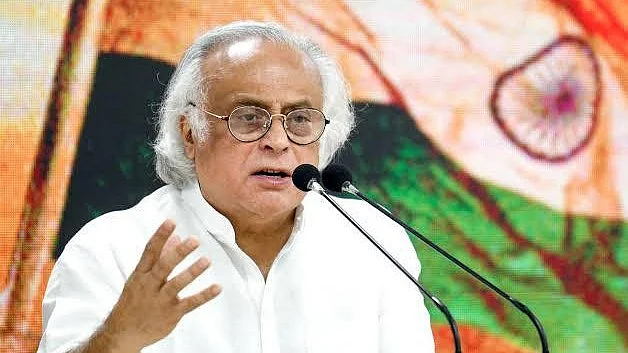
Strategic communication efforts were evident as opposition leaders accused the Prime Minister of violating the sanctity of a national address and the model code of conduct. Congress’s Jairam Ramesh described the speech as a “Distress Address rather than a National Address,” while TMC’s Derek O’Brien alleged that women were used as a “decoy” to advance the delimitation agenda.
“This was not an address to the nation, but an attempt to deflect responsibility through rhetoric. The blatant abuse of the model code of conduct in force in five states, through the use of public broadcasters like Doordarshan and Sansad TV for partisan messaging, is deeply condemnable,” CPI MP P Sandosh Kumar said.
Further reactions emerged after Tamil Nadu Chief Minister MK Stalin thanked opposition leaders for defeating what he called the “Black Law.” Stalin urged the immediate implementation of the Women’s Reservation Law without conditions and called for postponement of delimitation until 2051, reflecting concerns about the impact on southern states.
Additional opposition strategies included plans to submit a fresh notice seeking the removal of Chief Election Commissioner Gyanesh Kumar. Leaders from Congress, TMC, Samajwadi Party, and DMK were reportedly drafting a new notice, citing concerns about the independence and conduct of the Election Commission during the ongoing political developments.
“We want to make a statement. We first need to prove that the number last time was underestimated,” a senior opposition leader was quoted as saying regarding the impeachment notice efforts.
Efforts to challenge the Election Commission’s leadership continued with plans for another impeachment notice against Gyanesh Kumar. The opposition cited multiple grounds, including alleged partisan conduct and failure to maintain constitutional fidelity, though previous notices had been rejected for not meeting the constitutional threshold for removal.
Note: This article is produced using AI-assisted tools and is based on publicly available information. It has been reviewed by The Quint's editorial team before publishing.