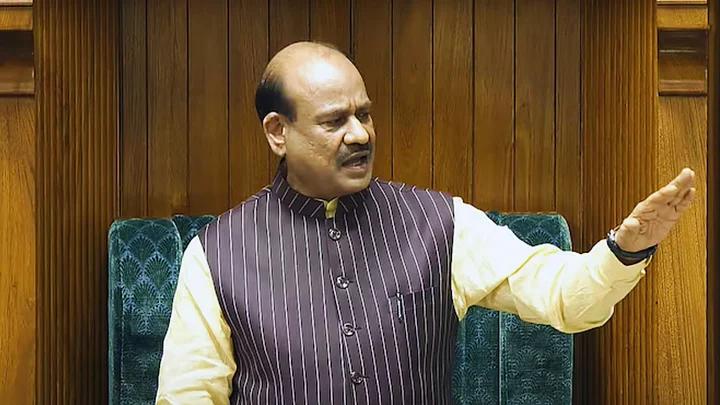
Opposition parties led by the Congress submitted a no-confidence motion against Lok Sabha Speaker Om Birla, on 10 February 2026. The motion, signed by 118 Members of Parliament, was handed to the Secretary-General of the Lok Sabha. The move followed ongoing disruptions in the Lower House, with the Opposition alleging that the Speaker had acted in a partisan manner and denied the Leader of the Opposition the opportunity to speak during key debates.
According to The Hindu, the Trinamool Congress (TMC) did not sign the resolution, opting for a more restrained approach. TMC’s national general secretary Abhishek Banerjee stated that the party preferred a constructive and calibrative strategy, reserving the option to support such a motion if other avenues were exhausted.
The Bharatiya Janata Party (BJP) criticised the Opposition’s move, with spokesperson Sambit Patra calling it an attempt to undermine constitutional posts.
As reported by Hindustan Times, Om Birla announced he would not preside over Lok Sabha proceedings until the no-confidence motion against him was resolved. The Speaker directed the Secretary-General to examine the notice and take appropriate action.
The motion was submitted under Article 94(c) of the Constitution, with the Opposition alleging a “blatantly partisan manner” in the conduct of the House and repeated denial of speaking rights to Opposition leaders.
As highlighted by Financial Express, the notice was initially flagged for technical errors but was resubmitted with the correct date. The process for such a motion requires a 14-day notice and must be examined for specific charges. The Speaker is permitted to defend themselves in the House, and the resolution must be supported by at least 50 members to proceed. No previous motion to remove a Lok Sabha Speaker has succeeded in Indian parliamentary history.
“The Speaker has asked the Lok Sabha Secretary-General to examine the no-confidence notice and take appropriate action,” Congress MP Gaurav Gogoi stated, as cited in multiple reports.
The notice bore signatures from members of the Dravida Munnetra Kazhagam (DMK) and Samajwadi Party (SP), but not from TMC. The Congress accused the Speaker of suspending eight Opposition MPs, seven of whom were from Congress, for sloganeering. The notice also objected to the Speaker’s remarks about “concrete information” regarding Congress members’ intentions during a session, calling it an abuse of the constitutional office.
Sources indicated that TMC wanted to give Om Birla time to reconsider the issues before supporting the motion. TMC leaders emphasised their respect for parliamentary institutions and stated that their approach was to allow the Chair an opportunity to address concerns before escalating the matter.
The procedural requirements for the motion were further detailed in coverage of the deadlock in the Lok Sabha. The notice highlighted that the denial of speaking rights to Opposition leaders was a violation of basic democratic principles. Despite the motion, the Opposition agreed to participate in the budget discussion, with Congress MP Shashi Tharoor opening the debate.
“Leaders of Opposition parties have just not been allowed to speak, which is their basic democratic right in Parliament,” the notice stated, as referenced in several reports.
Further reporting indicated that Om Birla’s response to the motion was prompt, instructing the secretariat to expedite the examination of the notice. The ongoing Budget session has seen prolonged logjams, with the Speaker previously meeting with leaders from both the government and the Opposition in attempts to resolve the impasse.
Details of the Opposition’s letter, including specific allegations of partisanship and references to recent suspensions and remarks by the Speaker, were covered extensively. The letter cited multiple instances where the Speaker’s actions were described as derogatory and contrary to the norms of parliamentary decorum.
Note: This article is produced using AI-assisted tools and is based on publicly available information. It has been reviewed by The Quint's editorial team before publishing.