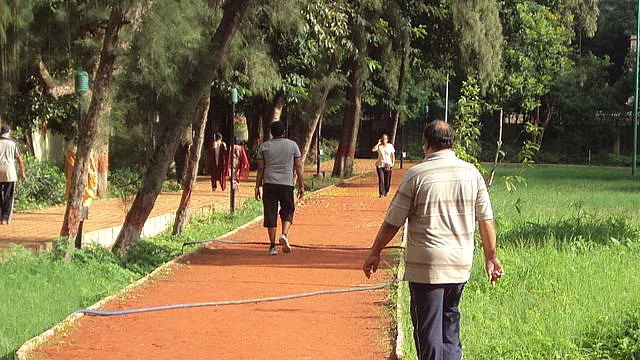
Residents of Sector 15A in Noida have filed a writ petition before the Allahabad High Court, seeking to halt the proposed conversion of Vrindavan Park, a four-decade-old community green space, into a religious site.
The petitioners allege that the move violates statutory planning norms, environmental safeguards, and principles of natural justice. They argue that the park, used by senior citizens, children, and families, is designated as public green land and cannot be repurposed without lawful reclassification, environmental impact assessment, and public consultation.
According to Maktoob Media, more than 200 residents have sought judicial scrutiny over the land’s classification and the transparency of the approval process. The petitioners contend that no environmental evaluation or transparent approval has been disclosed, and unofficial actions on the ground suggest an attempt to pre-empt due process. The petition seeks judicial intervention to restrain authorities from altering the park’s status and to ensure compliance with urban planning laws.
Residents allege that the park, home to nearly 200 mature trees, constitutes essential public infrastructure and cannot be repurposed without a transparent legal process. They claim that an unauthorised board reading “Proposed Site for Religious” appeared inside the park, followed by a replacement board signed by the Noida Authority after objections were raised. The society is reportedly divided, with some supporting the construction of a religious site and others opposing the replacement of the park.
On Wednesday, a confrontation occurred between the two factions, escalating into a verbal altercation and resulting in complaints filed at the local police station. Supporters of the religious site accused those seeking to preserve the park for trespassing. Residents allege that certain groups have begun acting as though the land has already been allotted, raising concerns about decisions being made outside formal procedures as coverage revealed.
“Our concern is not directed toward any faith practice. This is about the rule of law and protection of designated green spaces,” a group of residents said in a joint statement.
Community members emphasise that those most affected were not consulted before the proposal surfaced. Over 50 residents, including elderly citizens and young families, have signed a petition demanding full disclosure of planning documents and consultation records. A citizen-led online campaign to “Save Sector 15A Park” has gained traction on social media, highlighting the park’s role in community health and cohesion as reporting indicated.
Residents warn that losing the park would worsen air quality, reduce recreational space, and create security concerns in the densely populated locality. Public health researcher Madhavi Misra stated that the replacement of the park would destroy a natural habitat and compromise safety, especially given the closed nature of the society. She also raised concerns about increased parking issues and the loss of a vital green space.
“There are already a lot of temples, and if you need one, make a separate one in your house. Why destroy nature, which benefits a lot of us from any religious or commercial establishment?” Misra said.
Many residents have personal and family memories attached to the park, with some stating that it has been integral to their daily lives for decades. The park is described as a source of peace and activity, especially for senior citizens. Residents have organised a public picnic as a show of solidarity, inviting the community to support the preservation of the park as further details emerged.
With the matter now before the Allahabad High Court, residents believe the case could set a precedent regarding the reclassification of public green spaces and the limits of administrative discretion in urban land use decisions. Some residents have questioned whether public land is being informally claimed before approvals are granted, and whether pressure groups are attempting to create a sense of inevitability around the conversion as analysis showed.
“If residents of a well-established sector like ours cannot safeguard a public green space through lawful representation, what hope does the rest of the city have?” said a senior resident.
Note: This article is produced using AI-assisted tools and is based on publicly available information. It has been reviewed by The Quint's editorial team before publishing.