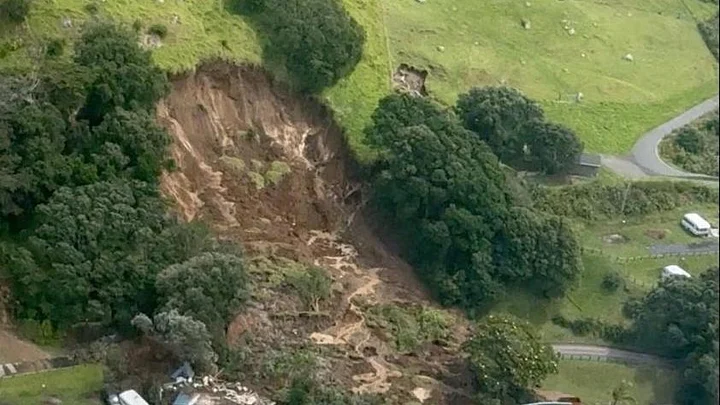
On 22 January 2026, a landslide struck a campsite at Mount Maunganui on New Zealand’s North Island following record-breaking rainfall. Emergency services launched search and rescue operations for several missing individuals, including children. The incident occurred at the Beachside Holiday Park around 9:30 a.m. local time, with hundreds of people present due to the summer holiday season. Additional landslides and flooding were reported in nearby regions, resulting in further casualties and missing persons.
According to The Guardian, helicopter teams were deployed to rescue families trapped on rooftops, and local states of emergency were declared in five regions across Northland and the East Cape. Emergency Management Minister Mark Mitchell described the affected areas as resembling a “war zone” due to the extensive damage caused by days of torrential rain.
As reported by The Hindu, emergency crews responded to both the Mount Maunganui campsite and a house in the Bay of Plenty community, where two people were missing after a separate landslide. Police Superintendent Tim Anderson stated that the number of people missing at the campsite was in the “single figures,” but did not provide further details. The campground was closed following the disaster, and rescue operations continued throughout the day.
Initial rescue efforts were hampered by unstable ground conditions, forcing crews to withdraw temporarily as coverage revealed. Fire and Emergency NZ commander William Pike confirmed that voices were heard from within the rubble shortly after the landslide, but no survivors had been recovered several hours later. Sniffer dogs were brought in to assist with the search, and the presence of children among the missing was confirmed by police.
“Members of the public ... tried to get into the rubble and did hear some voices,” said William Pike. “Our initial fire crew arrived and had the same were able to hear the same. Shortly after our initial crew arrived, we withdrew everyone from the site due to possible movement and slip.”
Eyewitnesses described the suddenness and force of the landslide. In the words of one Australian tourist, “I looked behind me and there’s a huge landslide coming down. And I’m still shaking from it now,” he recounted, adding that he narrowly escaped as the rubble carried a travel trailer behind him following reports. Other witnesses reported hearing a loud noise before seeing a large section of hillside collapse onto the campsite, overturning camper vans and uprooting trees.
Heavy rainfall in the region led to widespread flooding, with Tauranga, the nearest city, receiving 295mm of rain in 30 hours prior to the landslide. Emergency services responded to over 230 weather-related incidents, and thousands of residents were left without power as details emerged. Authorities warned residents to avoid floodwaters and remain vigilant as further rain was forecast.
Prime Minister Christopher Luxon stated, “All those who are putting themselves in harm’s way to keep Kiwis safe, the whole country is grateful.”
Community members assisted in rescue efforts, including helping a 94-year-old man trapped by floodwaters and rescuing a woman by kayak from her inundated home according to updates. The National Emergency Management Agency cautioned that saturated ground increased the risk of further landslides, flooding, and hazardous river conditions.
Note: This article is produced using AI-assisted tools and is based on publicly available information. It has been reviewed by The Quint's editorial team before publishing.