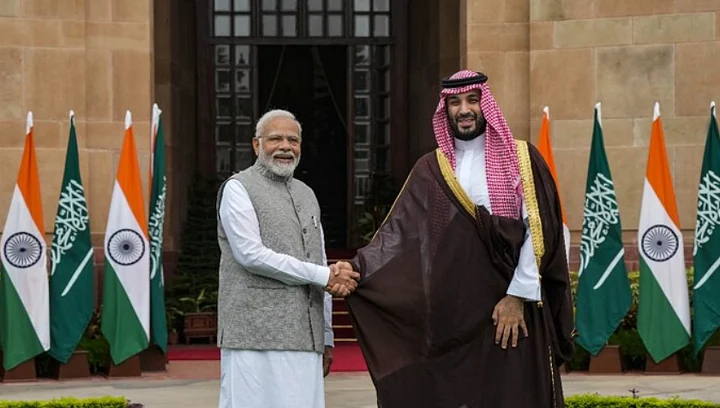
Prime Minister Narendra Modi spoke with the President of the United Arab Emirates, Sheikh Mohamed bin Zayed Al Nahyan, following recent attacks on the UAE. Modi strongly condemned the attacks, expressed condolences for the loss of lives, and reiterated India’s support for de-escalation, regional peace, security, and stability. He also thanked the UAE President for ensuring the safety of the Indian community residing in the Gulf nation.
This was New Delhi’s first official comment after the US-Israel air strikes on Iran and subsequent Iranian retaliatory attacks on Gulf countries. Modi’s statement emphasised India’s solidarity with the UAE and highlighted the importance of protecting Indian nationals in the region.
As reported by The Hindu, Modi stated, “India stands in solidarity with the UAE in these difficult times,” and reiterated support for de-escalation and regional stability. The Indian Embassy in the UAE confirmed it was in contact with local authorities regarding the welfare of Indian nationals affected by the attacks.
In his communication, Modi also acknowledged the efforts of the UAE government in safeguarding the Indian diaspora, which constitutes a significant portion of the country’s population as coverage revealed. The Prime Minister’s outreach was part of a broader diplomatic effort to address the evolving security situation in West Asia.
“Spoke with President of the UAE, my brother Sheikh Mohamed bin Zayed Al Nahyan. Strongly condemned the attacks on the UAE and condoled the loss of lives in these attacks. India stands in solidarity with the UAE in these difficult times. Thanked him for taking care of the Indian community living in the UAE. We support de-escalation, regional peace, security and stability,” Modi posted on X.
India’s Cabinet Committee on Security, chaired by Modi, convened to assess the situation and discuss measures to ensure the safety of Indian nationals in the Gulf region following reports. The meeting included senior ministers and security officials, reflecting the seriousness with which the government is monitoring developments.
External Affairs Minister S Jaishankar also engaged with counterparts in the Middle East, underlining India’s call for dialogue and diplomacy to reduce tensions as analysis showed. The safety and well-being of the Indian diaspora remained a central concern in these discussions.
Security measures were heightened in India, particularly in Delhi, in response to protests and the broader impact of the conflict on Indian nationals abroad at the end. Indian embassies in affected countries maintained communication with citizens to provide updates and assistance as needed.
“We support de-escalation, regional peace, security and stability,” Modi reiterated, underscoring India’s diplomatic stance amid the ongoing crisis.
Note: This article is produced using AI-assisted tools and is based on publicly available information. It has been reviewed by The Quint's editorial team before publishing.