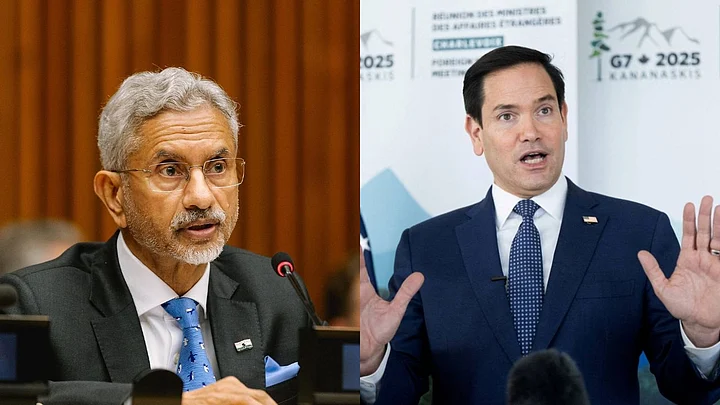
Three Indian seafarers were killed in a US military strike on a commercial vessel in the Gulf of Oman on 10 June 2026. The incident occurred during the enforcement of a US naval blockade targeting Iranian oil shipments. India’s Ministry of External Affairs summoned the US chargé d’affaires twice within three days to protest the deaths and demand accountability. External Affairs Minister Subrahmanyam Jaishankar raised the issue directly with US Secretary of State Marco Rubio in a phone call on 14 June 2026.
According to Hindustan Times, Marco Rubio stated that the United States would not tolerate any violations of its blockade of Iranian ports and insisted that merchant shipping must comply with orders from American forces. The US State Department’s readout of the conversation made no mention of the Indian deaths or any expression of regret, focusing instead on the need for compliance with US directives in the Strait of Hormuz.
As highlighted by The Indian Express, the US Deputy Spokesperson Tommy Pigott reiterated that “violations of the US blockade and the illicit transport of Iranian oil will not be tolerated.” This firm stance has escalated diplomatic tensions between India and the United States, especially as Prime Minister Narendra Modi and President Donald Trump prepare to meet at the G7 summit in France.
Diplomatic sources indicated that the deaths of Indian sailors have complicated bilateral relations, which had been recovering after previous trade disputes. The Indian government has maintained that commercial vessels should not be targeted and has called for unimpeded freedom of navigation and commerce in international waters.
“Such lethal actions against commercial shipping are not justified,” Subrahmanyam Jaishankar stated after his conversation with Marco Rubio, according to official statements.
Political and diplomatic circles in India have expressed concern over the US response. Reactions included criticism from Congress MP Shashi Tharoor, who described the lack of condolences from the US as “deeply shocking” and questioned the necessity of lethal force against non-compliant commercial vessels carrying Indian crew.
Further coverage revealed that the US blockade is part of a broader strategy linked to ongoing negotiations with Iran. The draft agreement between the US and Iran includes a 60-day extension of the ceasefire and the reopening of the Strait of Hormuz, but the US has maintained that enforcement actions will continue until a permanent resolution is reached.
Indian officials emphasised that the targeting of vessels with Indian crew undermines the safety and stability of international maritime commerce. The Ministry of External Affairs has called for all necessary measures to prevent further loss of civilian life and has reiterated its protest to US authorities.
“Such actions are unacceptable and undermine the safety, security and stability of international maritime commerce in a sensitive region at a difficult time,” the Indian statement said.
In the context of the upcoming G7 summit, reporting indicated that the issue of maritime security and the safety of Indian nationals will be a key topic in discussions between Narendra Modi and Donald Trump. The US position, as articulated by Marco Rubio, remains that any attempt to breach the blockade will be met with force, and compliance is mandatory for all commercial shipping in the region.
Note: This article is produced using AI-assisted tools and is based on publicly available information. It has been reviewed by The Quint's editorial team before publishing.