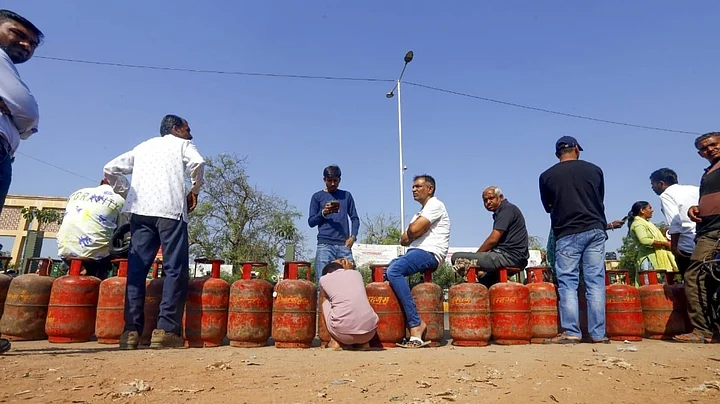
India is experiencing significant disruptions in liquefied petroleum gas (LPG) supply and pricing due to the ongoing conflict in West Asia. The closure of the Strait of Hormuz and attacks on regional energy infrastructure have led to reduced imports, black market price hikes, and operational challenges for industries and households. Migrant workers in affected regions are returning home, and authorities are prioritising domestic supply while curtailing commercial allocations.
According to Financial Express, the LPG shortage has forced many migrant workers to leave Surat, threatening a shutdown of the city’s textile industry. Imports dropped to 265,000 metric tonnes earlier this week, and black market prices have soared to Rs 500 per kg, making cooking gas unaffordable for many workers and their families.
As highlighted by Hindustan Times, commercial LPG allocations are being reduced to protect household supply. The Ministry of Petroleum confirmed that while domestic deliveries remain stable, commercial users face curtailed allocations. Over 11,300 tonnes of commercial LPG were supplied across 18 states and union territories last week, with priority given to hospitals and educational institutions.
Recent protests over LPG shortages and price rises have occurred in Mumbai, where twelve residents of Mankhurd were booked for holding a demonstration without permission. Protesters cited black marketing and unaffordable prices as key grievances, while police maintained that prohibitory orders were in place and due process was followed in handling the assembly.
As noted in an article by The Indian Express, the United States is considering easing sanctions on Iranian oil to stabilise global prices. If implemented, this could allow Indian refiners to resume imports from Iran, potentially alleviating some supply pressures. However, the Petroleum Ministry has stated that any such move remains hypothetical at this stage, and operational adjustments would depend on the scope and durability of sanctions relief.
"The gas price is 500 per kg. What can we do? We have been looking for gas for the past four days but haven’t received any. We used to cook by using wood but the room owner has prohibited us. We will come back when things return to normal," said a migrant worker affected by the shortage.
Indian refiners are preparing to resume purchases of Iranian oil following a temporary waiver of US sanctions, aiming to address the energy crunch caused by the conflict. The government is seeking clarity on payment terms and logistics, while also exploring alternative sources to diversify supply and reduce dependency on West Asian routes.
Mid-sentence attribution from recent coverage indicates that the conflict’s impact on oil and gas prices is affecting ordinary Indians and the broader region. Congress leader Shashi Tharoor has called for international efforts to end the conflict, citing its widespread economic and humanitarian consequences.
End-of-sentence attribution from industry sources confirms that India imports nearly half of its LPG from Qatar, whose infrastructure was recently targeted in the conflict. This has made supply diversification an urgent priority for Indian authorities, who are monitoring the situation and maintaining stable domestic deliveries despite high booking levels.
"Refineries are operating at peak capacity with adequate crude and LPG stocks, ensuring stable supply and normal deliveries despite high booking levels," said Sujata Sharma, Joint Secretary in the Ministry of Petroleum.
Start-of-sentence attribution from further reporting details that black market operations have intensified, with small LPG cylinders that previously sold for Rs 500 now costing up to Rs 2,500. Many workers have been unable to secure gas for over two weeks, leading to temporary factory closures and a significant exodus of labour from industrial hubs.
Middle-of-sentence attribution from recent developments show that public frustration over LPG shortages and price hikes has led to increased scrutiny of black market activities and calls for government intervention to ensure fair distribution and pricing.
"We are going to the village because we have not been getting gas for the last few days. Our companies are also shutting down. We don't have money, that's why we are going back. Nobody is helping us here. We will return once the gas supply resumes. Many people are going back," said a migrant worker from Surat.
Note: This article is produced using AI-assisted tools and is based on publicly available information. It has been reviewed by The Quint's editorial team before publishing.