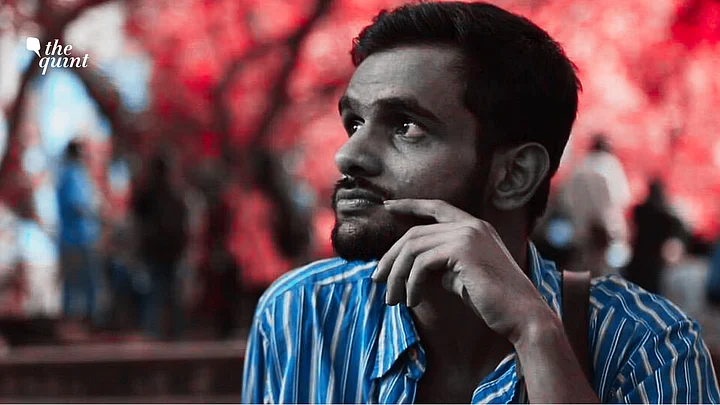
At the Jaipur Literature Festival, a panel of legal experts and former policymakers discussed the issue of prolonged incarceration and the denial of bail to Umar Khalid in the 2020 Delhi riots conspiracy case. The session, titled ‘The Measure of Justice’, addressed the implications of India’s anti-terror laws and the broader impact on constitutional rights and free speech. The panel included senior advocate Vrinda Grover, former Union law minister Ashwani Kumar, and US-based judge Ketu Shah.
According to The Indian Express, Vrinda Grover argued that focusing on individual cases like Umar Khalid and Sharjeel Imam obscures a larger pattern of the state’s use of criminal law to suppress dissent. She stated that neither Khalid nor Imam was accused of any act of violence, and questioned the reasoning in the bail judgment that referenced speeches allegedly destabilising civic life.
Grover emphasised that the use of the Unlawful Activities (Prevention) Act (UAPA) in cases involving dissent is not limited to the Delhi riots. She highlighted that journalists and human rights activists in Kashmir have also faced prolonged detention or transfer to distant prisons as coverage revealed. She further noted that the criminal legal system’s omissions, such as the lack of action on alleged hate speech during the 2020 Delhi violence, are as significant as the cases that are pursued.
Addressing the constitutional aspects, Ashwani Kumar described the denial of bail for over five years without trial as “patently unjust.” He argued that such prolonged pre-trial detention violates both criminal justice principles and constitutional values, stating, “It militates against the first principles not only of the criminal justice system, but also against the first principles of a dignitarian democracy.”
“There is absolutely no reason to deny bail to two people for more than five years without the trial having even commenced,” Kumar said, highlighting the impact on liberty and dignity.
Judge Ketu Shah provided a comparative perspective, noting that judges are human and can make mistakes, but the law evolves over time. He cited the 1923 US Supreme Court decision denying citizenship to Bhagat Singh Thind as an example of how legal interpretations can change, though often after injustice has occurred as analysis showed.
Grover also questioned whether recent criminal law reforms, such as the Bharatiya Nyaya Sanhita, have meaningfully advanced constitutional freedoms. She pointed to continued immunities for public servants, the expansion of speech-related offences, and the absence of a law criminalising torture at the session’s end.
“Was the law decolonised?” Grover asked, challenging the effectiveness of recent reforms in protecting rights and freedoms.
Kumar further criticised public commentary by political leaders on pending criminal cases, arguing that such remarks create perceptions of guilt and undermine the right to a fair trial. He reiterated that the Supreme Court has recognised the right to a fair trial as part of the Constitution’s basic structure as reporting indicated.
The panel concluded that judicial review remains a crucial safeguard within India’s constitutional framework, but restraint should not mean passivity, especially in matters concerning personal liberty. The discussion underscored the need for accountability and reform in the criminal justice system, particularly regarding prolonged pre-trial detention and the use of anti-terror laws as details emerged.
Note: This article is produced using AI-assisted tools and is based on publicly available information. It has been reviewed by The Quint's editorial team before publishing.