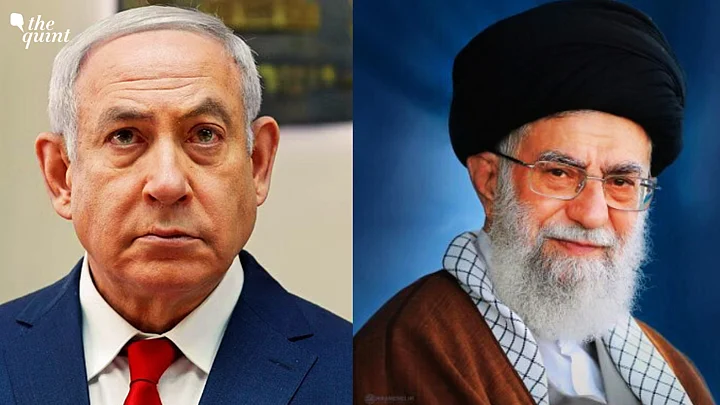
On 28 February 2026, Israel launched a preemptive military strike against Iran, with explosions reported in Tehran. The Israeli Defence Minister announced the operation, citing the removal of threats as the motive.
According to Deutsche Welle, Israel’s Defence Minister Israel Katz confirmed the strike, describing it as a measure “to remove threats.”
The Israeli military issued a proactive alert, preparing the public for potential missile retaliation.
No immediate details were provided regarding the specific targets or casualties in Iran.
As reported by The Indian Express, explosions occurred in Tehran following the Israeli missile attack, with witnesses noting blasts near the offices of Iran’s Supreme Leader Ayatollah Ali Khamenei.
Iran responded by shutting down its airspace, while Israel declared a state of emergency and sounded air raid sirens nationwide.
As highlighted by Hindustan Times, the attack coincided with ongoing nuclear negotiations between Iran and the United States, mediated by Oman. US President Donald Trump expressed dissatisfaction with the pace of talks, stating, “We have a big decision to make. You know that. Not easy. We have a very big decision to make.”
As noted in an article by The Guardian, Israel closed its airspace and declared a state of emergency in anticipation of possible Iranian drone and missile strikes.
The Israeli military spokesperson stated that the operation was a pre-emptive measure to address threats to the state.
“Israel has launched a preemptive strike against Iran to remove threats to the state of Israel,” an Israeli military spokesperson said, as cited in multiple reports.
As further confirmed, the Israeli Defence Forces issued advance alerts to civilians, instructing them to stay near protected spaces. Sirens were sounded throughout Israel as a precautionary measure against potential missile launches.
Eyewitness accounts described a blast in downtown Tehran, with thick smoke visible over the city. The Israeli Defence Minister reiterated the declaration of a nationwide state of emergency as the situation developed.
Several countries issued advisories for their citizens in Iran and Israel amid escalating tensions. The United States, United Kingdom, Canada, Italy, France, Germany, Poland, China, and others urged their nationals to leave the region or exercise heightened caution. Diplomatic staff withdrawals and travel advisories were implemented due to fears of further military escalation.
Ongoing negotiations between the United States and Iran continued despite the attack as coverage revealed.
The talks, mediated by Oman, have not yet produced a conclusive agreement, with both sides maintaining firm positions on nuclear and missile issues.
“No nuclear weapons. Not ever. Zero stockpiling. Comprehensive verification. Peacefully and permanently. Let’s support the negotiators in closing the deal,” Oman’s foreign minister Badr Albusaidi stated regarding the ongoing discussions.
Note: This article is produced using AI-assisted tools and is based on publicly available information. It has been reviewed by The Quint's editorial team before publishing.