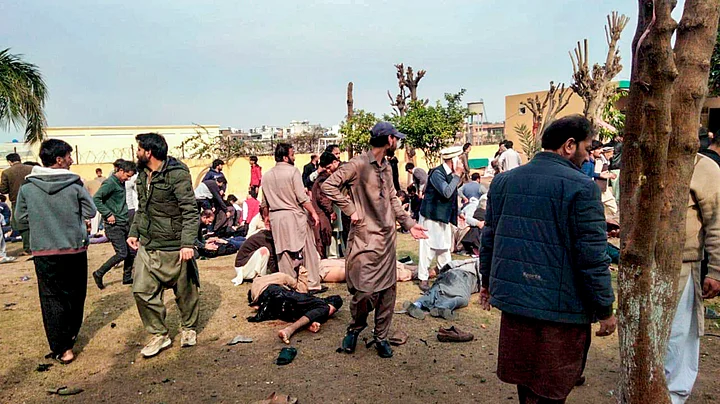
At least 31 people were killed and 169 injured in a suicide bombing at a Shia mosque in Islamabad’s Tarlai Kalan area during Friday prayers on 6 February 2026. The attacker opened fire at the mosque’s gates before detonating explosives after being confronted by security guards. Emergency services responded immediately, and hospitals issued urgent appeals for blood donations. The incident is the deadliest attack in Islamabad in over a decade, prompting a state of emergency in the capital.
According to Maktoob Media, the explosion occurred at the Khadija Tul Kubra mosque, with police confirming that the attacker was stopped at the entrance before triggering the blast. The Islamabad administration reported that 169 people were transferred to hospitals, and the United Nations Secretary-General António Guterres condemned the bombing, expressing solidarity with Pakistan in combating terrorism.
As reported by The Hindu, the Islamic State group (IS) claimed responsibility for the attack, stating that one of its militants targeted the congregation and detonated an explosive vest. The SITE Intelligence Group, which monitors jihadist communications, confirmed IS’s claim. The attack was the deadliest in Islamabad since the 2008 Marriott hotel bombing.
Eyewitness accounts described gunfire preceding the explosion, with the attacker firing at security guards before entering the mosque. Survivors reported chaos and severe injuries among worshippers. The mosque’s caretaker and other witnesses recounted scenes of devastation, with bodies and debris scattered throughout the prayer hall. Hospitals received a large influx of casualties, and emergency services worked to rescue and treat the injured.
As coverage revealed, nearly 170 people were wounded in the attack, which took place during Friday prayers when mosques are typically crowded. The Islamic State’s claim was made via its Telegram channel, and the group released the name and image of the alleged attacker.
Pakistan’s Prime Minister Shehbaz Sharif and President Asif Ali Zardari both condemned the attack, calling it a crime against humanity. The government declared a state of emergency and launched an investigation to identify those responsible. The Deputy Prime Minister described the incident as a “heinous crime against humanity and a blatant violation of Islamic principles.”
“Targeting innocent civilians is a crime against humanity,” President Asif Ali Zardari stated, while Prime Minister Shehbaz Sharif expressed “deep grief” and vowed to bring the perpetrators to justice.
Official statements from India condemned the bombing and extended condolences to the victims’ families. India’s Ministry of External Affairs rejected allegations from Pakistan’s Defence Minister Khawaja Asif, who suggested external involvement, including India and Afghanistan, without providing evidence. India described these claims as “baseless and pointless.”
Attribution of blame for the attack led to diplomatic tensions. Statements from officials in Pakistan alleged links to India and Afghanistan, while Afghanistan’s Taliban government denied any involvement and called the accusations regrettable. The Indian government reiterated its position, urging Pakistan to address internal security challenges rather than attributing blame externally.
As further reporting indicated, the suicide bomber was stopped at the mosque’s gate but managed to detonate the explosives, causing mass casualties. The attack occurred amid heightened security concerns in Pakistan, with recent violence in other regions, including Balochistan, contributing to a tense national atmosphere.
Note: This article is produced using AI-assisted tools and is based on publicly available information. It has been reviewed by The Quint's editorial team before publishing.