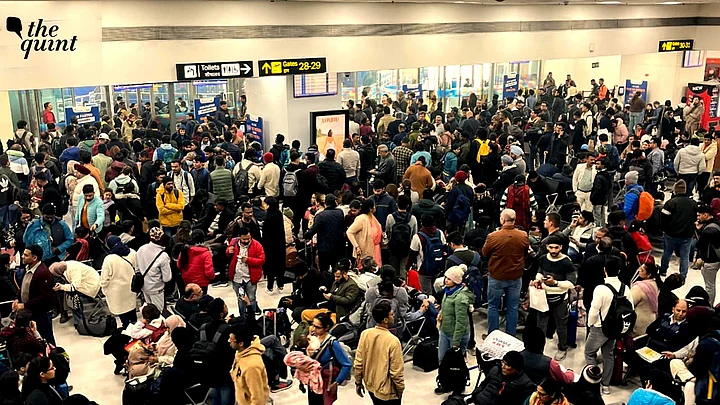
Indian airports have experienced significant disruption following the escalation of conflict between Iran and the United States, with hundreds of flights cancelled, widespread delays, and thousands of passengers stranded.
According to Hindustan Times, over 100 international flights at Delhi’s Indira Gandhi International Airport were cancelled in a single day, with both arrivals and departures affected. Passengers reported frustration over miscommunication and delays in retrieving luggage, while airport authorities urged travellers to check with airlines for the latest updates and assured that ground staff were working to minimise inconvenience.
As reported by Financial Express, Indian airlines cancelled approximately 750 international flights over two days, with IndiGo, Air India, Air India Express, SpiceJet, and Akasa Air all significantly affected. The financial impact on the aviation sector is estimated to reach Rs 18,000 crore for the current financial year, as airlines face increased operating costs and lost revenue due to rerouting and cancellations.
Airlines have implemented alternative routes and technical stops to maintain critical westbound connectivity. Air India, for example, has rerouted flights to North America via Rome, while other carriers have extended flight times and introduced additional layovers. The Ministry of Civil Aviation is closely monitoring the situation and coordinating with stakeholders to support affected passengers.
"The weekly impact to Indian and international airlines flying to and from India stands at an extremely conservative estimate of Rs 875 crore," an industry expert stated, reflecting the scale of the disruption.
As noted by The Indian Express, the crisis has deeply affected the Indian diaspora in West Asia, with nearly ten million Indians living and working in the region. Many families in India are anxiously awaiting news from relatives, while thousands of travellers remain stranded at airports in Dubai, Abu Dhabi, and Doha. Community organisations have stepped in to provide temporary accommodation and support for those unable to return home.
Political leaders from Punjab have urged Prime Minister Narendra Modi and External Affairs Minister Subrahmanyam Jaishankar to prioritise the evacuation of stranded Indians. Calls for special flights and emergency support have intensified as the situation remains volatile and airspace closures persist.
As officials confirmed, several Indians were among those injured in missile and drone attacks in the UAE and Oman. The Ministry of External Affairs has issued advisories and is working with Indian missions to assist citizens, including students and professionals, who are unable to leave affected areas due to ongoing flight suspensions.
"Thousands of passengers from India and other countries are stranded at Abu Dhabi, Dubai and Sharjah airports due to flight disruptions," a Dubai-based Indian community leader said, highlighting the humanitarian challenges faced by travellers.
Travel disruptions have also impacted international passengers transiting through Middle Eastern hubs, with major airlines such as Emirates, Etihad, and Qatar Airways suspending operations. The closure of airspace over Iran, Iraq, Israel, and neighbouring countries has left thousands of travellers, including Australians and Indians, stranded or forced to seek alternative routes.
Escalating military action, including missile strikes and retaliatory attacks, has contributed to the uncertainty and operational challenges at airports across the region as coverage revealed. The situation remains fluid, with authorities and airlines continuing to adapt to rapidly changing conditions and prioritising the safety of passengers and crew.
Note: This article is produced using AI-assisted tools and is based on publicly available information. It has been reviewed by The Quint's editorial team before publishing.