Iran has publicly reaffirmed its refusal to transfer enriched uranium abroad, maintaining that its nuclear programme is peaceful and within its sovereign rights. The country’s officials have stated that ongoing negotiations with the United States remain unresolved, with fundamental disagreements persisting over nuclear material and the reopening of the Strait of Hormuz. No agreement has been reached on the future of Iran’s enrichment activities or the fate of its uranium stockpile.
According to The Guardian, Iranian deputy foreign minister Saeed Khatibzadeh explicitly stated that Iran will not hand over its enriched uranium to the United States, directly contradicting earlier claims by Donald Trump. Khatibzadeh described the idea of shipping enriched material to the US as a “non-starter” and emphasised that Iran is prepared to address concerns but will not accept demands it considers excessive.
As noted in an article by The Indian Express, international experts have raised concerns about Iran’s Pickaxe Mountain facility, an underground site believed to be heavily fortified and potentially used for uranium enrichment. Satellite imagery and analysis suggest that the site is deeper and more secure than previous facilities, making it difficult to access or destroy through conventional military means. Iran has not permitted International Atomic Energy Agency inspections at this location.
As highlighted by The Indian Express, Iranian officials have also rejected claims that they agreed to transfer any “nuclear dust” or enriched uranium to the US. Foreign Ministry spokesperson Esmaeil Baghaei reiterated that Iran would not export its enriched uranium, and the Iranian Embassy in Zimbabwe issued a public statement dismissing US assertions regarding the Strait of Hormuz and nuclear negotiations.
“I can tell you that no enriched material is going to be shipped to United States,” Khatibzadeh said. “This is non-starter and I can assure you that while we are ready to address any concerns that we do have, we’re not going to accept things that are nonstarters.”Iran
Recent coverage indicated that Iran’s parliamentary speaker Mohammad Bagher Ghalibaf described the gap between the two sides as significant, with “many gaps and some fundamental points” remaining. He confirmed that Iran would continue to restrict maritime passage through the Strait of Hormuz until the US lifts its blockade of Iranian ports, linking nuclear negotiations to broader regional security issues.
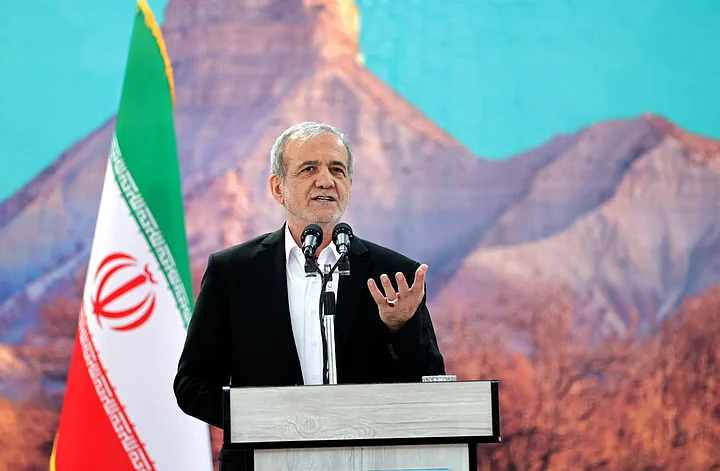
Diplomatic sources confirmed ongoing tensions over the ceasefire and nuclear rights, with Iranian President Masoud Pezeshkian stating that Tehran will not abandon its nuclear programme and questioning Washington’s authority to impose restrictions. Deputy foreign minister Saeed Khatibzadeh criticised the US for maintaining “maximalist” demands, and no timeline has been set for renewed talks.
“We are still not there yet to move on to an actual meeting because there are issues that the Americans have not yet abandoned their maximalist position,” Khatibzadeh said.
Further analysis showed that the US administration’s public statements about Iran’s nuclear commitments have not been matched by Iranian actions or official confirmations. The situation remains fluid, with both sides holding firm to their positions on uranium enrichment and regional security arrangements.
Note: This article is produced using AI-assisted tools and is based on publicly available information. It has been reviewed by The Quint's editorial team before publishing.