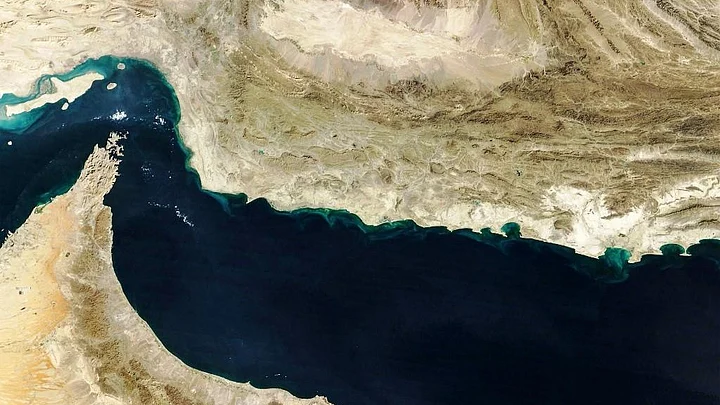
Iran’s Parliament Security Committee has formally approved a plan to impose tolls on vessels transiting the Strait of Hormuz, introducing new restrictions and financial requirements for passage through the critical maritime chokepoint. The plan, advanced during the ongoing conflict in West Asia, includes explicit bans on American and Israeli vessels and aims to reinforce Iran’s sovereign control over the strait, which is vital for global oil shipments.
According to Hindustan Times, the approved Strait of Hormuz Management Plan outlines security arrangements, ship safety protocols, environmental protections, and a rial-based toll system for all vessels except those from countries under unilateral sanctions or directly involved in the conflict. The plan also details cooperation with Oman to establish a legal framework for the strait’s management.
As reported by The Hindu, Iranian state media confirmed that the parliamentary commission’s decision is part of a broader strategy to assert Iran’s authority over the waterway. The plan’s financial arrangements and toll systems are designed to generate revenue and regulate passage, while also serving as a tool for diplomatic leverage amid heightened tensions with the United States and its allies.
Coverage revealed that the United States has issued warnings of “severe consequences” if Iran continues to block or restrict access to the Strait of Hormuz. U.S. officials have stated that freedom of navigation must be maintained, and discussions are ongoing regarding possible responses, including multinational naval escorts for commercial shipping.
In the middle of these developments, analysis showed that U.S. President Donald Trump has threatened to target Iran’s civilian infrastructure, including power plants and oil facilities, if Tehran does not reopen the strait. Trump’s statements have heightened concerns about further escalation and the potential for retaliatory actions affecting critical infrastructure across the Gulf region.
“The plan involved, among other things, ‘financial arrangements and rial toll systems’ and ‘implementing the sovereign role of Iran’, as well as cooperation with Oman on the other side of the Strait,” Iranian state media reported.
At the start of the week, reporting indicated that the closure and new restrictions at the Strait of Hormuz have already disrupted global shipping, with only a limited number of vessels able to pass through after negotiating individual deals with Iranian authorities. The market has responded with increased oil prices and concerns over energy security.
Further details emerged as diplomatic sources noted that the U.S. administration is considering winding down its military campaign against Iran even if the strait remains closed, potentially shifting the responsibility for reopening the waterway to regional allies and international partners.
Recent updates highlighted that the conflict has already led to attacks on critical infrastructure, including desalination plants and oil facilities, further complicating the security environment in the Gulf. The new Iranian plan is seen as both a revenue measure and a strategic tool in the ongoing standoff.
“The market is well supplied and we are seeing more and more ships go through on a daily basis as individual countries cut deals with the Iranian regime for the time being. Over time, the US is going to retake control of the straits and there will be freedom of navigation, whether it is through US escorts or a multinational escort,” said U.S. Treasury Secretary Scott Bessent.
At the end of the day, as details emerged, Iran’s move to formalise tolls and restrictions on the Strait of Hormuz marks a significant escalation in its efforts to assert control over the region’s most important maritime corridor, with global economic and security implications still unfolding.
Note: This article is produced using AI-assisted tools and is based on publicly available information. It has been reviewed by The Quint's editorial team before publishing.