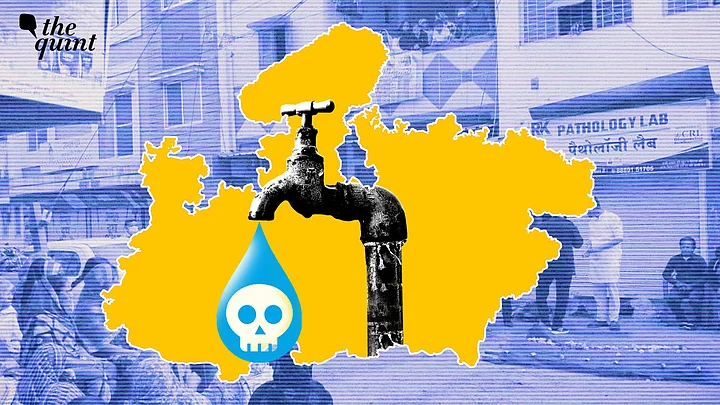
Indore’s Bhagirathpura area experienced a severe water contamination crisis, resulting in at least 21 deaths and widespread illness. Water supplied from tube wells was found to be contaminated with E. coli bacteria, leading to a large-scale outbreak.
The crisis prompted the Madhya Pradesh High Court to question the state’s response and the effectiveness of measures taken to identify and address the source of contamination.
According to The Indian Express, the High Court scrutinised the state government’s handling of the crisis, asking how the contamination became so severe that it proved fatal to human life.
The court was informed that the source of contamination was traced to a public toilet, which allowed sewage to mix with the water supply, rendering it unfit for consumption.
During the hearing, the state government presented data confirming that 51 tube wells in the affected area tested positive for E. coli.
The Chief Secretary stated that all contaminated tube wells were immediately shut down, and potable water was supplied through tankers. Testing reports indicated the presence of E. coli, which was identified as the cause of the widespread infection.
As highlighted by The Hindu, administrative action followed public outrage, with the Indore Municipal Corporation Commissioner and several civic officials suspended or transferred. However, questions about accountability persisted, as some officials received new postings soon after the incident.
The article noted, “The government suspends or transfers officials in the eye of the storm. In most cases, it initiates an inquiry. However, the same officials soon find their way back into the system with new postings.”
“There are 51 tube wells which have been identified as having contaminated water. The water was tested, and there are water testing reports which actually reflect that E. coli was present,” Chief Secretary Anurag Jain told the court.
Court proceedings revealed that the contamination likely resulted from sewage mixing with borewell water, particularly in areas near the Kanh river. Petitioners argued that the authorities failed to identify the responsible officers and that the response was insufficient, with only transfers rather than suspensions or firings.
Midway through the crisis, coverage revealed that the government’s approach focused on immediate action to manage public anger, but long-term accountability and systemic improvements remained unaddressed.
The article cited a former Chief Secretary who stated, “If the government takes action against an official, it means that prima facie, it considers the official responsible. But if it gives the official an important posting soon after the episode, it makes the decision look like an effort to dial down public anger.”
Further details emerged as the investigation continued, with the High Court emphasising the need for expert reports to substantiate the state’s claims about the source and severity of contamination. The court also highlighted the broader issue of joint pipelines for sewage and water supply in urban areas, raising concerns about infrastructure and public health safety.
“This joint pipeline of sewage and water supply is not new in the city. We have noticed it all over, in all major towns. We don’t know why it has been done by the local authorities or by the government, but why has it become so severe here — this contamination — which proved fatal for human life?” the court asked.
At the end of the month, reporting indicated that the death toll remained under review, with local sources suggesting higher numbers than official figures.
The government’s response, including the formation of a high-level committee, was met with scepticism by petitioners, who described it as an “eyewash” and called for greater transparency and accountability in addressing the crisis.
Note: This article is produced using AI-assisted tools and is based on publicly available information. It has been reviewed by The Quint's editorial team before publishing.