India has reiterated that it does not recognise the 1963 boundary agreement between Pakistan and China regarding the Shaksgam Valley and maintains that the region is an integral part of its territory. The Indian government has consistently objected to Chinese infrastructure projects in the area, asserting that any such activity is illegal and invalid. China, meanwhile, has reaffirmed its claim over the Shaksgam Valley, describing its actions as justified and within its sovereign rights.
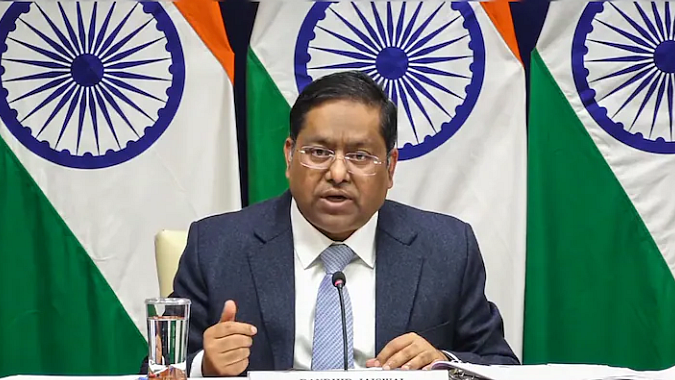
According to The Indian Express, the Ministry of External Affairs spokesperson Randhir Jaiswal stated that India has never recognised the so-called China-Pakistan boundary agreement of 1963, under which Pakistan ceded the Shaksgam Valley to China. Jaiswal emphasised that the entire union territories of Jammu and Kashmir and Ladakh are integral and inalienable parts of India, and this position has been clearly conveyed to both Pakistani and Chinese authorities.
As reported by The Hindu, Chief of Army Staff General Upendra Dwivedi reiterated that India considers the 1963 agreement illegal and does not approve of any activities in the Shaksgam Valley. He noted that the situation along the Line of Actual Control with China remains stable but requires constant vigilance. China, in response, has maintained that its infrastructure projects in the region are "beyond reproach."
As highlighted by Hindustan Times, Ladakh lieutenant governor Kavinder Gupta strongly rejected China's claim over the Shaksgam Valley, asserting that the entire region of Pakistan-occupied Kashmir belongs to India.
Gupta stated, "The whole of (Pakistan-occupied) Kashmir is ours. We do not know what Pakistan has traded with China. China should understand that nothing will be achieved through its expansionist policy. India is capable. It is not the India of 1962, it is the India of 2026. Any such attempts will be foiled."
"Shaksgam Valley is Indian territory. We have never recognised the so-called China-Pakistan boundary agreement that happened in 1963. We have consistently maintained that the agreement is illegal and invalid. We do not recognize the so-called China-Pakistan Economic Corridor either, which passes through Indian territory that is under forcible and illegal occupation of Pakistan," said Randhir Jaiswal, Ministry of External Affairs spokesperson.
As noted in an article by Financial Express, Chinese Foreign Ministry spokesperson Mao Ning reiterated that the territory in question belongs to China and justified infrastructure construction in the area. Mao Ning stated that the China-Pakistan boundary agreement was a lawful decision between two sovereign nations and that the China-Pakistan Economic Corridor is intended to promote local development.
Statements from the Indian Army have further underlined that any misadventure in the region will be dealt with effectively, and that India reserves the right to take necessary measures to safeguard its interests. The Army chief also highlighted ongoing operations and the need for continued vigilance along the northern front.
Political reactions have intensified, with recent coverage showing the Congress party criticising the Bharatiya Janata Party for engaging with the Chinese Communist Party amid ongoing territorial disputes. Congress leaders have questioned the optics of such meetings, especially as China continues to assert its claims over the Shaksgam Valley.
Historical context provided in recent analysis indicates that the 1963 agreement was significant for both Pakistan and China, as it established a common boundary.
However, the agreement includes a clause that allows for renegotiation after the settlement of the Kashmir dispute between Pakistan and India.
Further details emerged that India continues to protest Chinese activities in the Shaksgam Valley and maintains that the region is under illegal occupation. The government has reiterated its stance that the China-Pakistan Economic Corridor, which passes through the area, is not recognised by India.
"We have consistently protested with the Chinese side for its attempts to alter the ground reality in the Shaksgam Valley. We further reserve the right to take necessary measures to safeguard our interests," said Randhir Jaiswal.
China, for its part, has maintained through official statements that its position on the Kashmir issue remains unchanged and that its activities in the Shaksgam Valley are consistent with its agreements and policies. The dispute continues to be a focal point in India-China relations, with both sides holding firm to their respective positions.
Note: This article is produced using AI-assisted tools and is based on publicly available information. It has been reviewed by The Quint's editorial team before publishing.