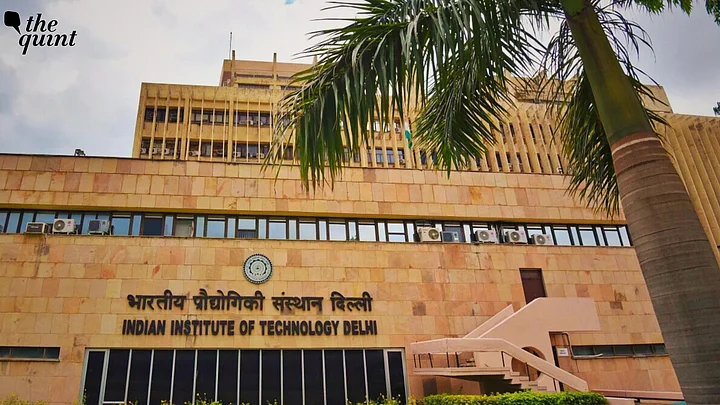
The Indian Institute of Technology Delhi has established a fact-finding committee following concerns raised about a conference on caste and race held on its campus in January 2026. The conference, titled “Critical Philosophy of Caste and Race (CPCR3): Celebrating 25 Years of Durban: Indian Contributions to Combatting Caste and Racism,” took place between 16 and 18 January and included participation from scholars and activists from India and abroad. The institute has stated that it will review the organisation and content of the event, as well as adherence to institutional protocols.
According to Scroll, IIT Delhi announced the formation of the committee after criticism emerged online regarding the speakers and topics addressed at the conference. The institute also requested an explanation from the faculty members responsible for organising the event, which was supported by the Department of Humanities and Social Sciences.
As reported by The Indian Express, the conference featured keynote lectures and panel discussions on caste-, race-, and descent-based discrimination. The event included presentations by academics, writers, and activists, such as Thenmozhi Soundararajan and P Sivakami. The institute’s official statement noted that “serious concerns have been raised over the choice of speakers and content of the conference.”
Coverage revealed that the fact-finding committee was tasked with examining whether the event followed proper procedures, including obtaining prior permission and complying with campus event norms. The committee will submit its findings to the authorities, and the institute has not disclosed the committee’s composition or a timeline for the inquiry.
The conference’s concept note stated that it aimed to document and theorise descent-based discrimination and promote ethical sensitivity to the harms caused by such discrimination. Reporting indicated that the event was intended to foster advocacy for social equality in law, policy, and daily life. The organisers included Professor Divya Dwivedi of IIT Delhi and Associate Professor Sowjanya Tamalapakula of Woxsen University.
“The conference is academic in its aim and scope, which is to generate critical thinking on social inequalities towards an egalitarian and sustainable world, and it builds on existing academic research and publications including mine which can be looked up,” Professor Divya Dwivedi stated in response to questions about the event.
In the days following the conference, social media posts criticised the event, with some users objecting to what they described as a “one-sided narrative on caste.” Analysis showed that this was the first time the institute had responded to such concerns by establishing a fact-finding committee, despite previous conferences on similar or other sensitive topics being held on campus.
The institute’s statement emphasised its commitment to academic integrity, national goals, and established guidelines. As details emerged, IIT Delhi reiterated its support for dialogue and debate on social issues within the framework of academic freedom and institutional rules.
“The institute encourages dialogue and debate on social issues within the framework of academic freedom and institutional rules,” the official statement added.
Note: This article is produced using AI-assisted tools and is based on publicly available information. It has been reviewed by The Quint's editorial team before publishing.