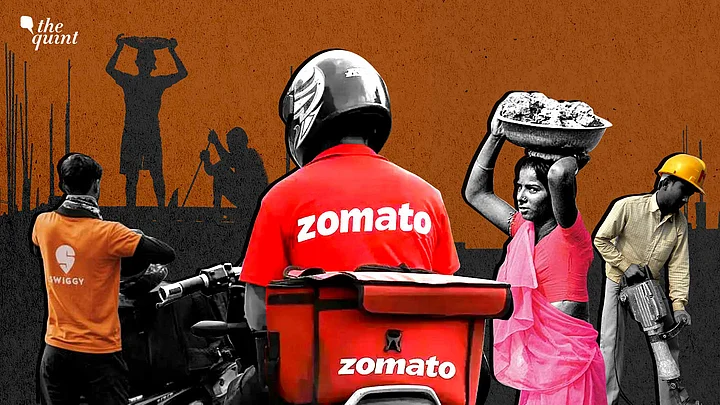
Gig workers in Gurugram staged coordinated protests on 25 December 2025, resulting in significant delays in food deliveries across multiple city sectors. The strike, organised by the Gig & Platform Service Workers Union, aimed to draw attention to longstanding issues of pay, safety, and working conditions. In contrast, Noida reported minimal disruption, with most services operating normally.
According to Hindustan Times, the Gurugram protests saw 70-80 delivery partners gather at the Rodeo Drive Market Complex in Sector 47, with similar demonstrations at Baani Square, ILD Tower, Eros City Square, and HUDA Market. Workers temporarily logged off their apps, leading to lengthy delivery delays in areas such as Badshahpur, Sohna Road, and Sectors 31, 47, and 48.
The report highlighted, that some restaurant owners had to deploy their own staff for deliveries, with order completion times stretching to two hours. Workers cited low earnings, with one delivery executive reporting only ₹49 for an 11 km delivery, and called for a rate of ₹10-14 per km to meet rising costs.
As reported by Hindustan Times, the nationwide strike was called for Christmas Day and New Year's Eve, targeting peak business periods for major platforms. Key demands included withdrawal of the "10-minute delivery" model, fair pay, transparent incentives, job security, and robust social security measures. The unions criticised unsafe work models and the lack of welfare protections.
The article added, that the Code on Social Security, 2020, now requires aggregators to contribute 1-2% of annual turnover to gig worker social security, capped at 5% of total payments. This legal framework aims to extend welfare benefits to an estimated 40 crore unorganised sector workers.
“Food delivery companies pay us around ₹5-6 for each kilometre traveled... fuel expenses take away a major chunk,” a protesting worker said, highlighting the financial strain faced by gig workers.
As highlighted by The Indian Express, similar protests occurred in Maharashtra, where gig workers demanded a minimum rate of ₹15 per kilometre, guaranteed minimum wages, and coverage under Provident Fund and health insurance schemes. The Maharashtra strike was supported by multiple labour organisations and aimed to address falling compensation and lack of statutory protections.
The news report said, that between 2 lakh and 2.5 lakh workers across major cities participated in the Maharashtra strike.
“Incentives are usually given if we manage to complete 31 orders, which is difficult. This should be brought down to 25 or less,” another delivery partner said, calling for more achievable targets.
Note: This article is produced using AI-assisted tools and is based on publicly available information. It has been reviewed by The Quint's editorial team before publishing.