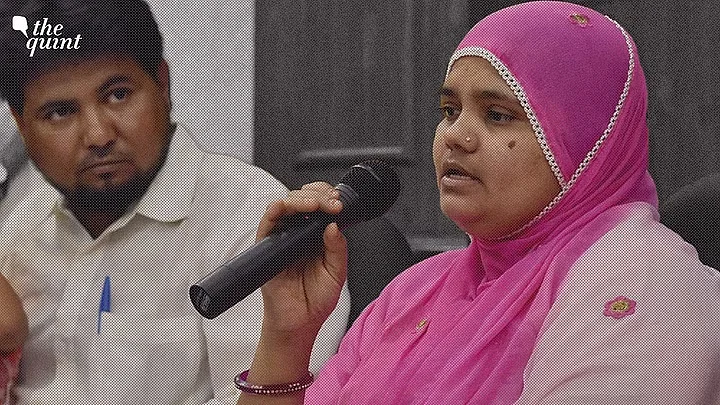
The Gujarat High Court has granted a seven-day parole to Radheshyam Shah, one of the eleven individuals convicted in the 2002 Bilkis Bano case. Shah is serving a life sentence for his involvement in the gang rape of Bilkis Bano and the murder of several members of her family during the communal violence in Gujarat. The parole was granted after the court considered the grounds presented in Shah’s petition and the remarks from prison authorities.
According to Live Law, Justice Sanjeev J Thaker partly allowed Shah’s plea for parole, noting that the court was inclined to exercise discretion in favour of the petitioner after reviewing the petition’s averments and jail remarks. The order specified that Shah would be released on parole for seven days upon furnishing a personal bond of ₹10,000 to the satisfaction of the jail authority, with conditions including marking his presence at the nearest police station on the third and fifth days of release.
As highlighted by Maktoob Media, the court cited the “economic condition” of Shah’s family as a key reason for granting parole. Shah’s counsel informed the court that the parole was sought to assist with his family’s finances. The order stated, “Having heard and considering the averments made in the petition, more particularly, the ground mentioned therein as well as the jail remarks, this court is inclined to exercise discretion in favour of the present petitioner.”
The parole order follows a complex legal history. Further details indicate that Shah and ten others were convicted in 2008 for offences including gang rape and murder, with the Bombay High Court upholding the convictions in 2017. The Supreme Court dismissed the convicts’ appeals later that year. In 2022, the Gujarat government granted remission to all eleven convicts, but the Supreme Court quashed these orders in January 2024, ruling that the Gujarat government lacked jurisdiction and directing the convicts to return to prison.
“The petitioner is ordered to be released on parole for a period of seven days from the date of his/her actual release on his furnishing a personal bond of Rs.10,000/- (Rupees Ten Thousand) to the satisfaction of the concerned jail authority on usual terms and conditions, with a direction that the petitioner shall surrender to the jail authority on expiry of the parole leave period forthwith with a further condition that the applicant shall mark presence before the nearest police station every 3rd and 5th day from the date of release,” the court stated.
Analysis showed that the Supreme Court’s intervention in 2024 was based on the finding that the Gujarat government was not the “appropriate government” to decide on remission, as the trial had been conducted in Maharashtra. The Supreme Court’s order led to the surrender of all eleven convicts, including Shah, who returned to Godhra jail within the stipulated period.
Coverage revealed that the Bilkis Bano case has been emblematic of the struggle for justice by survivors of the 2002 violence in Gujarat. Bano, who was five months pregnant at the time of the attack, lost seven family members, including her three-year-old daughter. The case was transferred to Maharashtra for trial due to concerns over witness safety and impartiality.
At the end of the proceedings, the parole granted to Shah is subject to strict conditions, including immediate surrender after the parole period and regular reporting to the police, as details emerged.
Note: This article is produced using AI-assisted tools and is based on publicly available information. It has been reviewed by The Quint's editorial team before publishing.