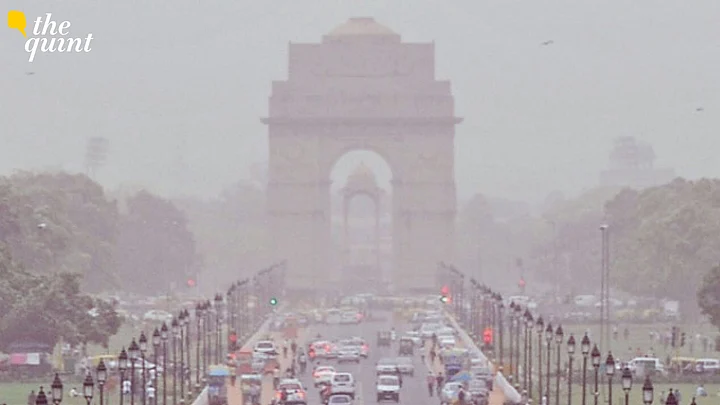
Restrictions under the Graded Response Action Plan (GRAP) Stage 4 were revoked in Delhi following a marginal improvement in air quality. The Air Quality Index (AQI) in Delhi dropped to 378, moving from the ‘Severe’ to the ‘Very Poor’ category.
Noida and Gurgaon also recorded AQI values in the ‘Very Poor’ range. GRAP Stage 3 restrictions remain in place, including curbs on certain vehicles and hybrid teaching for schools up to Class 5.
As reported by The Indian Express, the Commission for Air Quality Management (CAQM) decided to lift GRAP 4 measures after the AQI improved from ‘Severe’ levels observed earlier in the week.
Under the current GRAP 3 restrictions, BS-III petrol and diesel vehicles, as well as BS-IV diesel light commercial vehicles registered outside Delhi, are not permitted to enter the city except for essential services.
According to Deccan Herald, the CAQM informed the Supreme Court that vehicular emissions are the largest contributor to air pollution in Delhi-NCR. The commission recommended 15 long-term measures, including phasing out polluting vehicles, expanding public transport, and accelerating the transition to electric vehicles, to address the persistent air quality challenges.
As highlighted by The Indian Express, the Supreme Court has given state agencies four weeks to submit action plans for implementing CAQM’s recommendations.
The court emphasised that these measures must be enacted without delay and stated it would not entertain objections regarding their necessity.
The bench also addressed concerns about traffic congestion at toll plazas, directing the installation of barrier-free systems to reduce vehicular stoppage and emissions.
“There can be no doubt that these long-term measures as recommended by the Commission are required to be given effect without delay,” the Supreme Court bench stated.
Recent analysis showed that the CAQM has launched a new source apportionment study to create a high-resolution emissions inventory for Delhi-NCR.
Experts noted that Delhi’s pollution profile varies seasonally, with road dust and construction dominating in summer, while combustion-related emissions, especially from transport, become the primary source in winter.
Findings indicated that secondary particulates formed from vehicle and industrial emissions account for a significant portion of winter pollution, with transport contributing 23 percent to the seasonal load.
“The initiatives undertaken by the Commission since its inception reflect a systematic, evidence-based and collaborative approach aimed at achieving long-term improvement in the air quality of the region,” the CAQM stated.
Note: This article is produced using AI-assisted tools and is based on publicly available information. It has been reviewed by The Quint's editorial team before publishing.