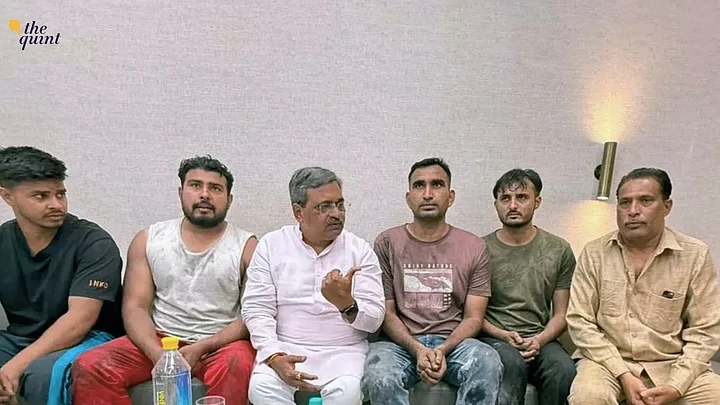
On 3 June 2026, a fire broke out at the Flourish Stay bed-and-breakfast in Malviya Nagar, Delhi, resulting in 21 fatalities and dozens of injuries. Before emergency services arrived, local residents, including five Muslim men, led rescue efforts, helping trapped guests escape the burning building. The incident prompted widespread recognition of their actions, including public praise from BJP MLA Satish Upadhyay.
According to The Observer Post, Amir Khan, Mohammad Shoaib, Wasim Raja, Mohammad Afzal, and Riyazuddin were among the first responders. They entered the smoke-filled building, spread mattresses on the street for people to jump safely, and performed CPR on unconscious victims. Their intervention was credited with saving numerous lives before fire officials reached the scene.
As reported by Deccan Herald, Satish Upadhyay, BJP MLA from Malviya Nagar, accompanied Delhi Chief Minister Rekha Gupta to Max Saket Hospital to meet the injured. Upadhyay acknowledged the efforts of local residents, specifically highlighting the bravery of the five Muslim men who risked their lives to rescue others during the fire.
Eyewitness accounts confirmed that these men acted quickly, using mattresses, ropes, and other improvised tools to facilitate escape routes. They broke windows, carried victims out, and administered first aid, often before emergency personnel could access the building. Many survivors attributed their escape to the immediate actions of these neighbours.
“We quickly understood that the fire had started on the ground floor and people on the upper floors were trapped because the staircase was filled with smoke. We told them to jump and assured them we had spread mattresses below,” said Riyazuddin, one of the rescuers.
Coverage revealed that the hotel’s single electronic gate became inoperable when the electricity failed, complicating escape efforts. The rescuers’ use of mattresses and quick thinking provided a critical lifeline for those trapped inside, especially as smoke and flames intensified.
In the aftermath, official statements noted that the Delhi government announced compensation for victims’ families and injured survivors. The role of local residents, particularly the five Muslim men, was repeatedly cited in both government briefings and community discussions as exemplary civic action.
“The first faces of rescue were neighbours,” a local resident stated, emphasising the significance of community response during the critical early moments of the disaster.
Analysis showed that the coordinated efforts of these men, alongside other residents, were instrumental in reducing the death toll. Their actions have been widely recognised across social and political circles, with Satish Upadhyay’s public commendation underscoring the importance of unity and courage in times of crisis.
Note: This article is produced using AI-assisted tools and is based on publicly available information. It has been reviewed by The Quint's editorial team before publishing.