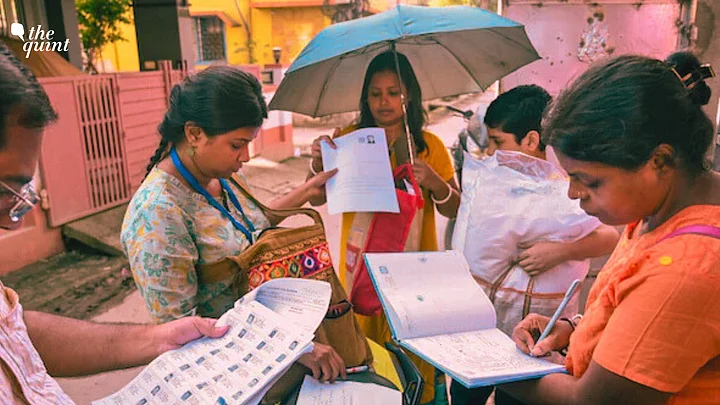
During the ongoing Special Intensive Revision (SIR) of electoral rolls in Assam, numerous cases have emerged where objection forms were allegedly forged to seek the deletion of thousands of voters, particularly from minority communities. The process, which includes door-to-door verification and a claims and objections phase, has led to widespread anxiety among affected residents, with many summoned to hearings to prove their eligibility as voters.
According to Scroll, several booth level officers reported receiving bulk objection forms, many of which were “half-printed and half-handwritten,” challenging the inclusion of large numbers of Muslim voters. In one instance, a complainant’s own name and those of his relatives appeared among the objected voters, and he denied filing any such objections. The Election Commission has received complaints across multiple districts, with allegations that the process is being manipulated to disenfranchise specific groups.
As reported by Scroll, even BJP workers and booth agents have found their names, signatures, and voter identification details misused in objection forms without their consent. Some individuals were misled into signing documents under false pretences, while others were threatened or coerced. The scale of the issue prompted district administrations to suspend hearings in several constituencies after numerous complaints of fake objections.
As highlighted by The Indian Express, a single individual filed objections against 64 voters from the same polling booth, including claims that living individuals were deceased. Public hearings in affected constituencies were placed in abeyance, and district officials issued warnings that filing false or misleading complaints could result in legal action under the Representation of the People Act, 1950. The administration reiterated its commitment to transparency and fairness in the revision process.
“The district administration is conscious of prevailing public concerns and remains fully committed to maintaining transparency, fairness and public confidence in all electoral and administrative processes… It is reiterated that no eligible voter shall be excluded or left behind, and all lawful claims and objections shall be addressed as per the prescribed procedure,” stated a public notice from the Nagaon District Commissioner.
As noted in an article by Live Law, the Supreme Court questioned the Election Commission of India regarding the official reasons for the SIR, noting that the notification did not explicitly cite illegal cross-border migration as a motive. The Court sought clarification on whether the SIR was intended to verify citizenship in light of amendments to the Citizenship Act, 2003, and emphasized the need for clear and transparent reasoning behind such large-scale revisions.
Further legal scrutiny revealed that the Election Commission maintained the SIR’s primary objectives were to address issues of urbanisation, migration, and duplication in electoral rolls, rather than specifically targeting illegal immigrants. The Supreme Court pressed for clarity, highlighting that the notification’s language did not directly address illegal migration, and stressed the importance of procedural fairness in the revision process.
In response to the controversy, coverage revealed that the SIR row has become a political flashpoint, with public protests and debates extending beyond Assam into neighbouring states. The issue has been prominently featured in public events and has sparked discussions on voter rights, identity, and the integrity of the electoral process.
“We wanted to show the anxiety, the humiliation, the feeling of being erased… This puja is our prayer that this harassment must stop immediately,” said a student organiser at a Saraswati Puja event in Kolkata, reflecting the broader public sentiment surrounding the SIR process.
Administrative guidelines for the SIR process require applicants to submit detailed documentation to establish age and residence, as officials clarified. These measures are intended to ensure accuracy in the electoral rolls, but the emergence of forged forms has raised questions about the effectiveness of verification mechanisms and the potential for misuse.
Note: This article is produced using AI-assisted tools and is based on publicly available information. It has been reviewed by The Quint's editorial team before publishing.